Black Letters, Bold Spirit: A Sign of Resilience
Turning onto 53rd Street, those bold black letters came into view – MOMA. Strange how a simple sign can feel like greeting an old friend. I found myself smiling, even offering a quiet thanks to those familiar characters for standing strong through the pandemic. These weren’t just letters; they were a reassuring signal that some things had weathered the storm unchanged.
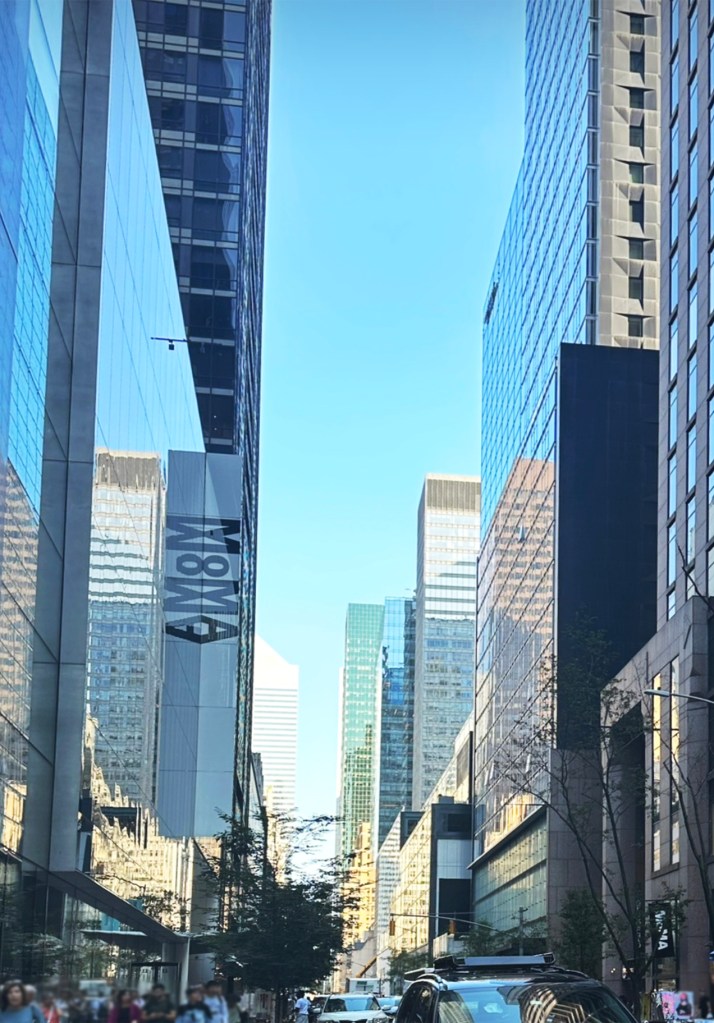
Later, while sketching in my notebook, I realized how deeply this typography had influenced my own sense of modern design. The clean lines of Franklin Gothic that MOMA chose aren’t just letters – they speak the same language as the art within. In a city where even signage follows strict rules, these characters have become as iconic as the artworks they announce. I noticed how this visual voice carries through every gallery card, every pamphlet in my hand, creating a subtle thread that ties my whole visit together.
Urban Oasis: Where Steel Meets Sky
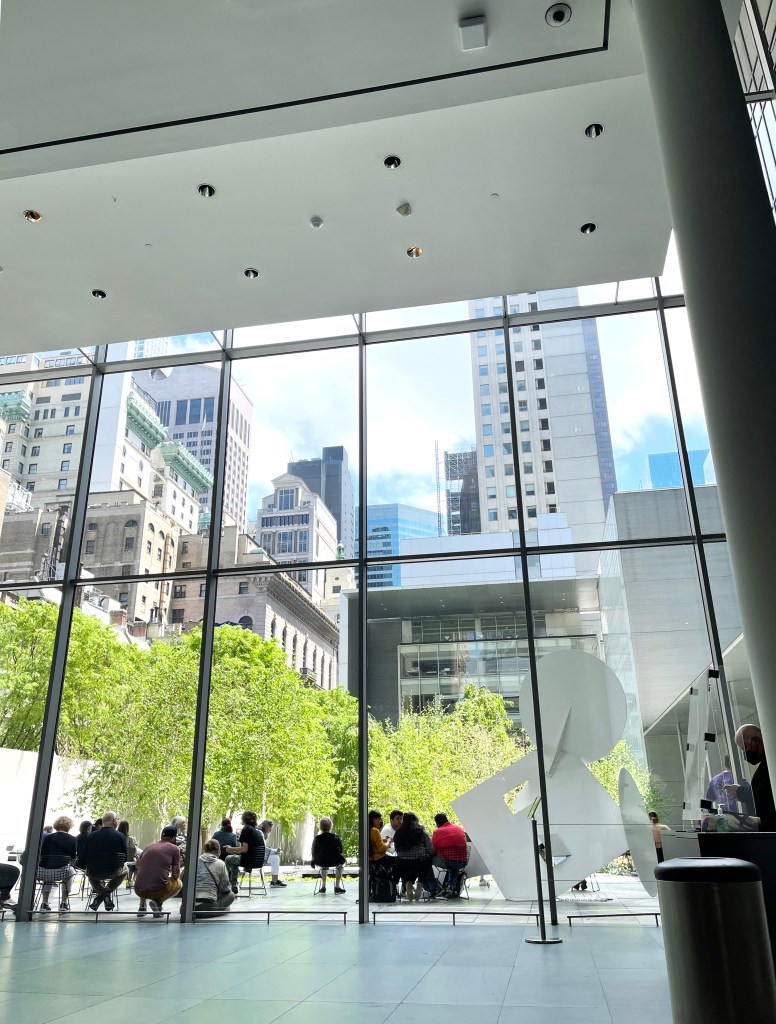
The first breath of fresh air in MOMA doesn’t come from art – it comes from the sculpture garden that opens up behind glass walls at the entrance. Today’s visit brought a small surprise – the familiar silhouette of the 36-foot “Soaring Rose” that had long marked the garden’s entrance was gone, replaced by a new piece. Change, it seems, touches even our most familiar spaces.
This garden, carved from Manhattan’s grid in 1939, reminds me why museums are more than art containers. Here, between steel and sky, MOMA created a space where art breathes alongside visitors. Before heading back inside, I pulled down my mask for a moment – fresh air and inspiration, equally essential.
Magnets of Modern Art: The Fourth and Fifth
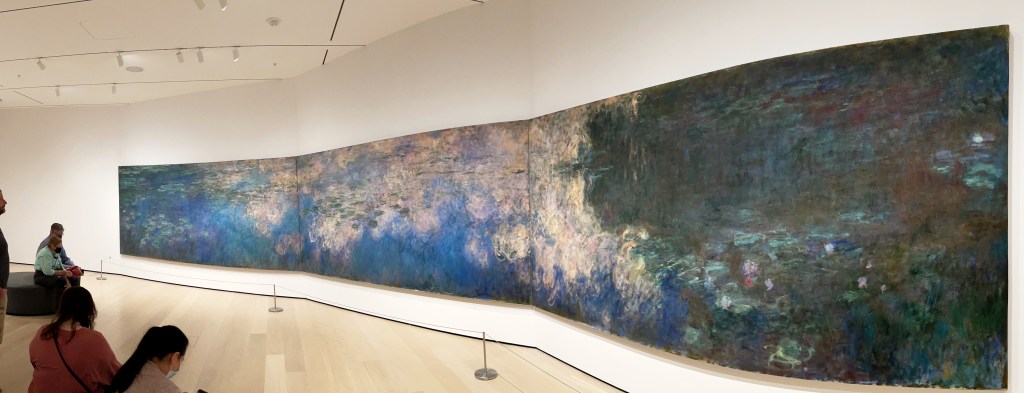
The 4th and 5th floors pulse with the same energy I remember from pre-pandemic days. Van Gogh’s “The Starry Night,” Monet’s “Water Lilies,” and Klimt’s “Hope, II” still draw crowds, their magnetic pull seemingly unchanged by time or circumstance. Watching people gather before these masterpieces, I found myself wondering about what brought them here. In the before-times, I was just one among many tourists ticking off must-see artworks. But today, seeing masks still dotting the crowd, the question feels different. Are they here simply seeking an escape from isolation, hungry for any form of public experience? Or did months of digital reproductions deepen their desire to stand before these originals, regardless of the barriers? Looking at their intent faces before each canvas, I want to believe it’s the latter – that art’s power to move us has only grown stronger through our separation from it.
Boccioni’s Dynamic Vision
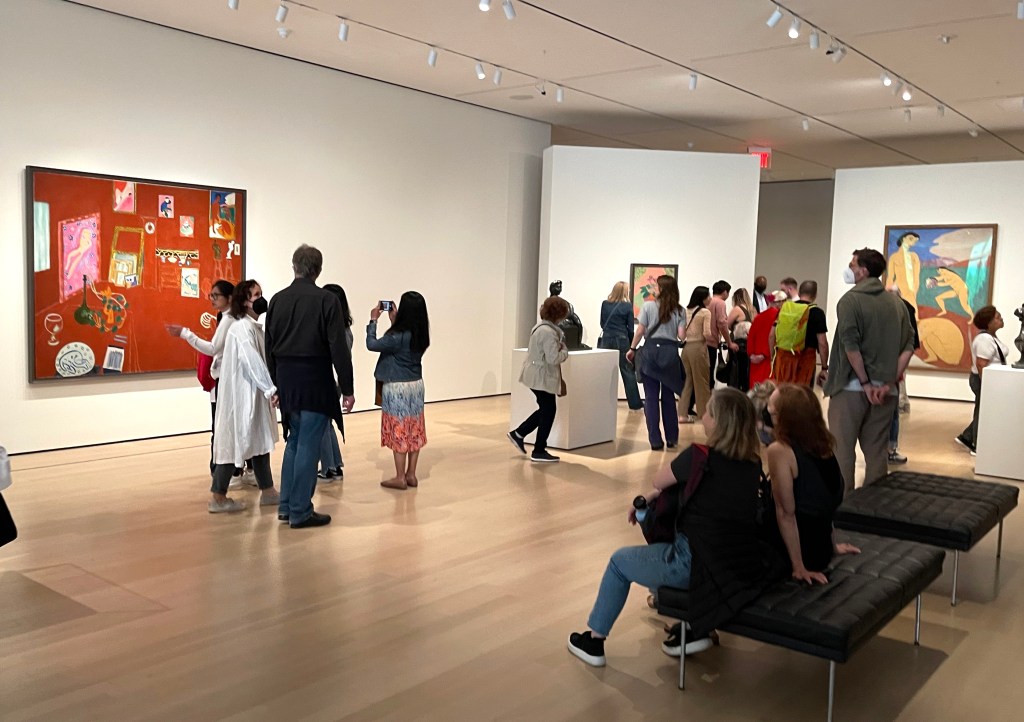
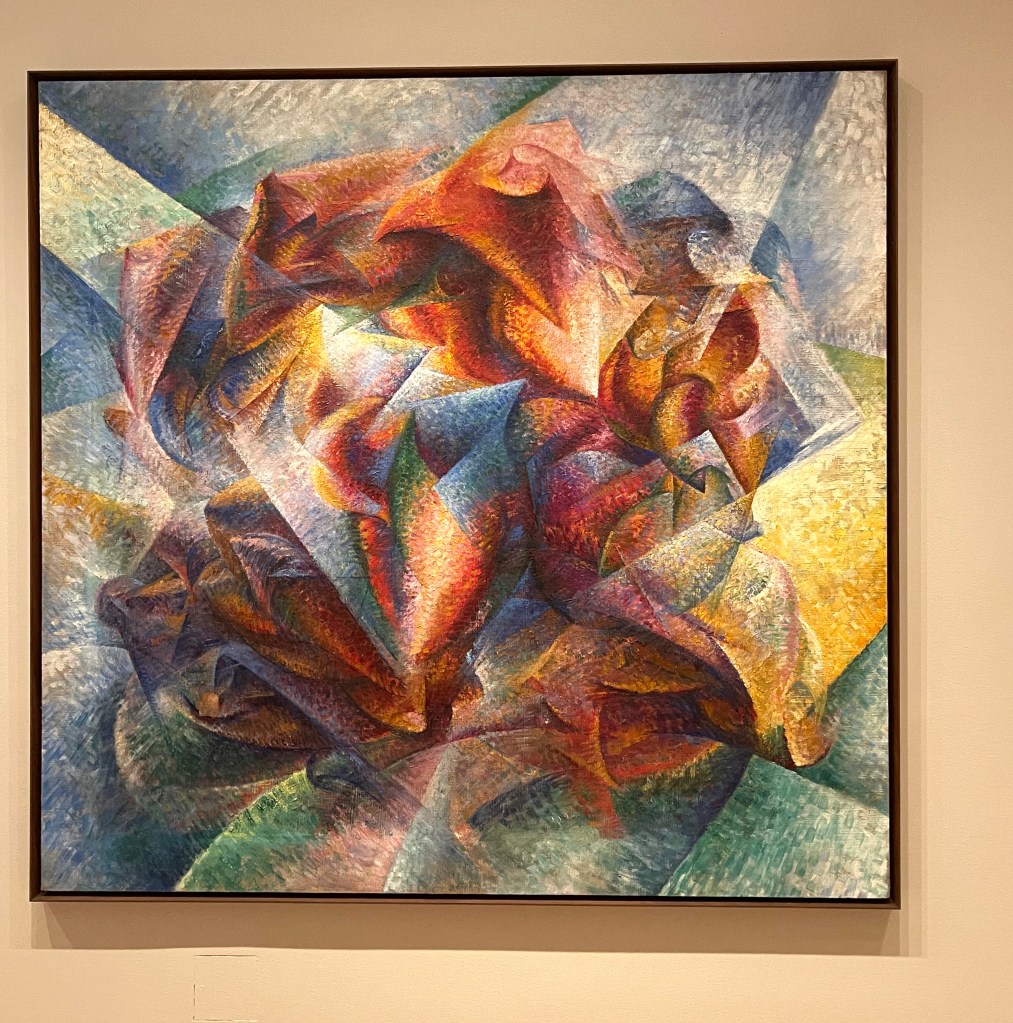
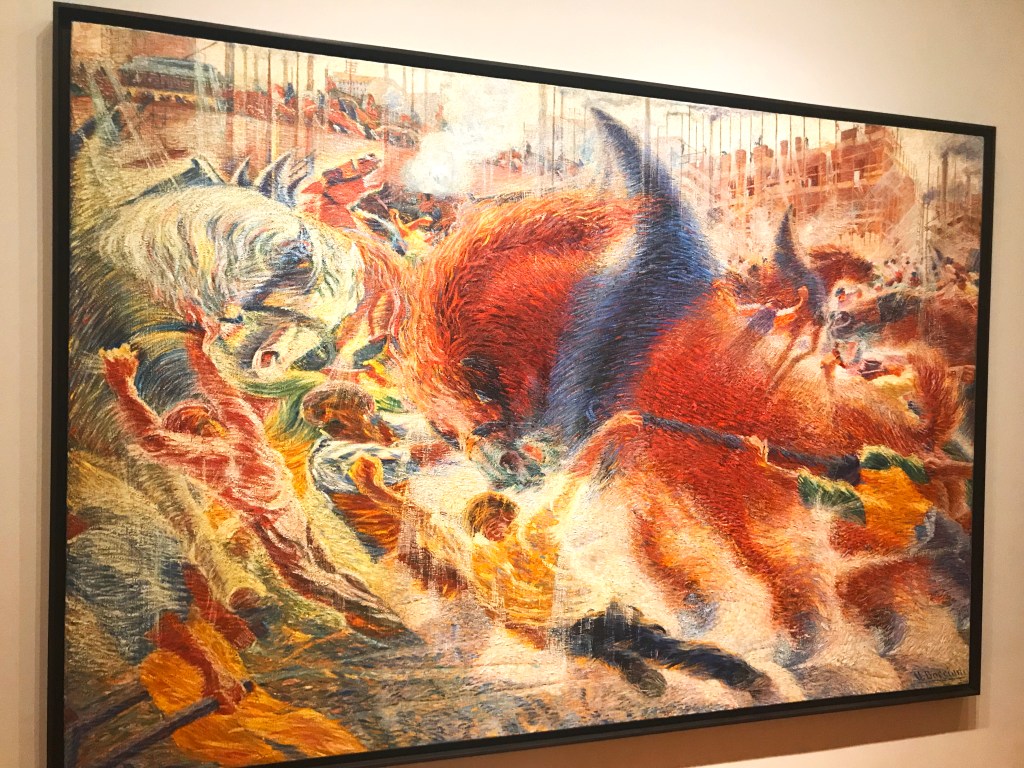
Away from the crowds drawn to more famous works, I always find myself returning to Umberto Boccioni’s gallery. “The City Rises” and “Dynamism of a Soccer Player” command their space with an energy that feels almost physical. Years of visiting these works has only deepened my fascination with how Boccioni captured motion on canvas.
Standing before “The City Rises,” I’m struck again by its raw power. The massive canvas pulses with movement – human and horse figures merge and separate in a whirlwind of stippled brushstrokes and bold color. What captivates me most is Boccioni’s masterful contrast: the horse’s face retains just enough realism to anchor us, while its body dissolves into pure motion alongside the human forms. Above this organic chaos, industrial buildings and factory smoke create an unexpected harmony of natural and mechanical energy.
Every visit reveals new details in his technique. The geometric forms don’t just suggest movement – they seem to embody it. Having studied Boccioni’s work extensively, I understand his theoretical approach to depicting dynamism, but standing here, theory falls away. The paintings simply move, pulse, live. This is why I return: not just to see, but to feel the revolutionary energy of early modernism still vibrating on these walls.



Leave a Reply