
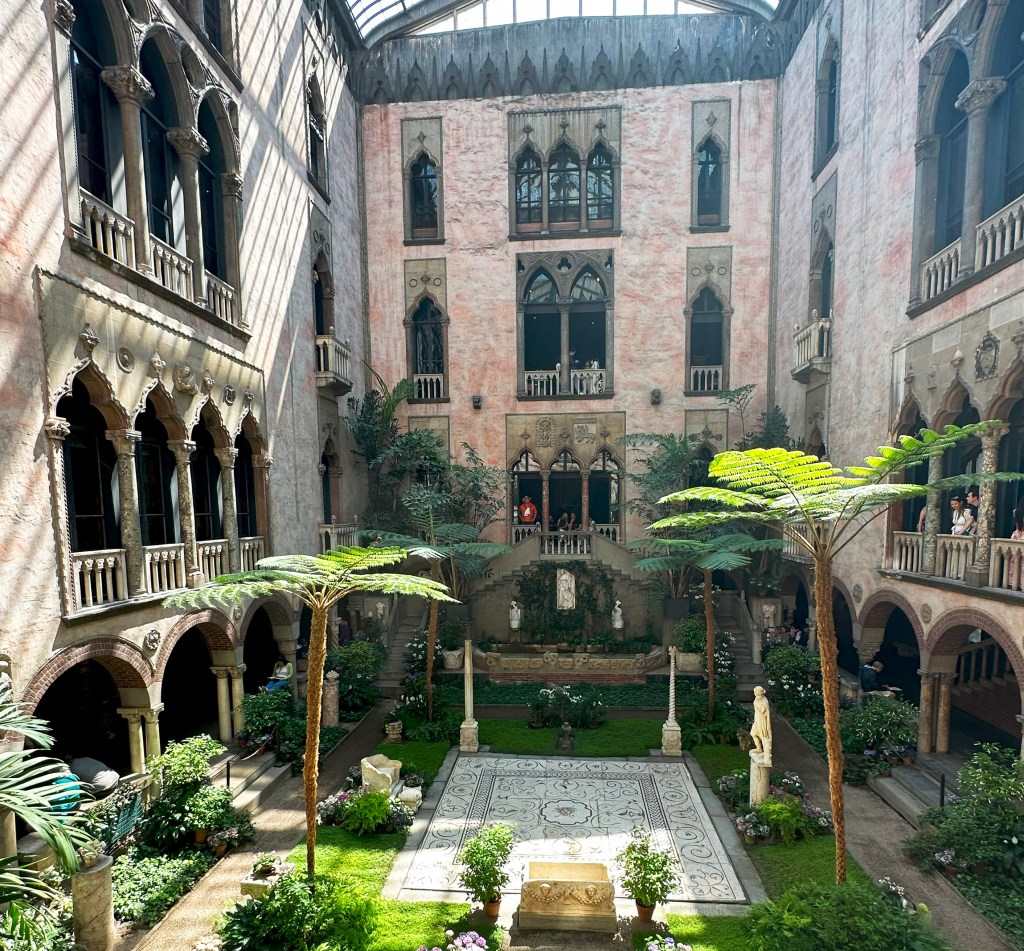
A Venetian Palace in Boston:
As an art student exploring Boston’s museums, I found the Isabella Stewart Gardner Museum distinctly different from other institutions. While most museums have evolved over decades, this one preserves its founder’s original vision: a 15th-century Venetian palace recreated in New England. The architecture itself tells a story about American collectors’ fascination with European art at the turn of the 20th century.
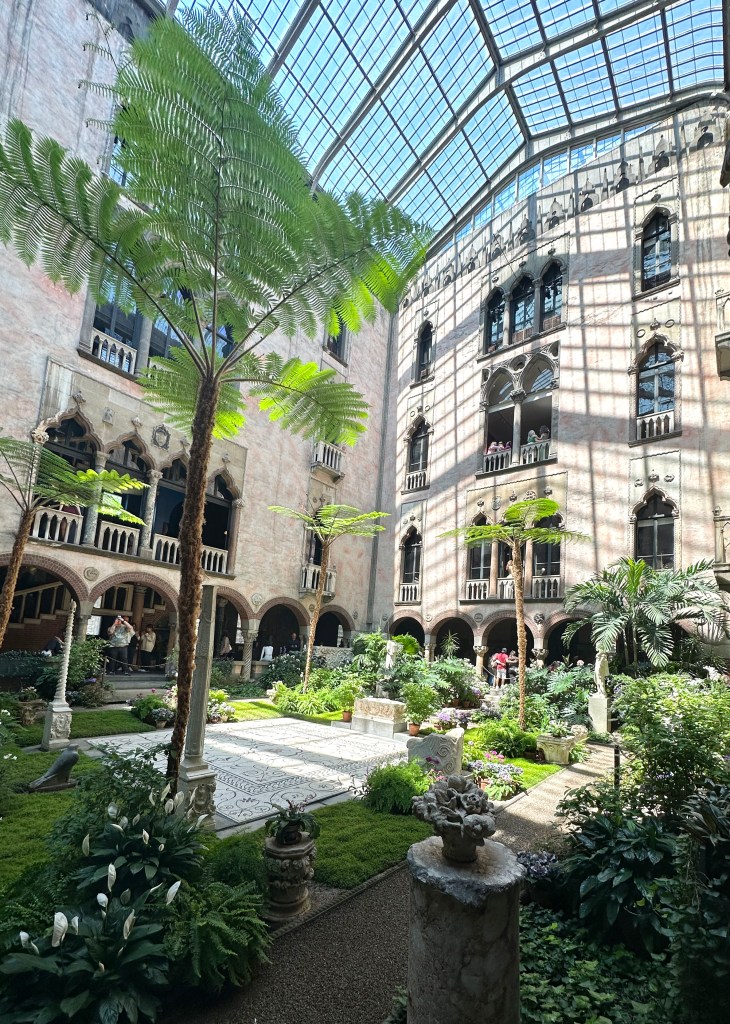
The courtyard garden, which I visited on a late spring afternoon, demonstrates Gardner’s innovative approach to creating a year-round art space. The gentle sound of the courtyard’s fountain echoes through the galleries, creating an unexpected harmony between the visual and auditory experience. This consistent water melody changes subtly as you move through different rooms, connecting the spaces in a way that typical museums don’t. The glass ceiling floods the garden with natural light, creating different viewing conditions for the surrounding artworks throughout the day. This architectural feature, unusual for its time, shows how Gardner understood not just the visual relationship between art, nature, and architectural space, but also how sound could enhance the viewing experience.
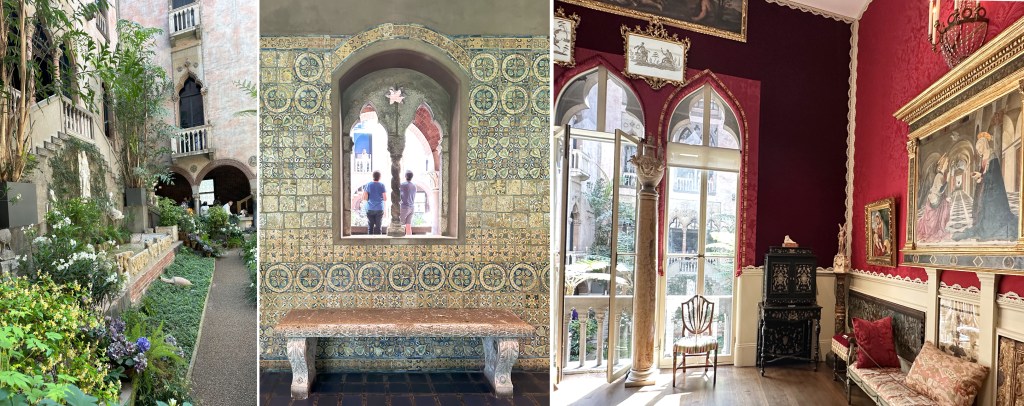
What interests me most is how Gardner challenged the conventional museum model of her era. Instead of organizing art by period or region, she created conversations between different cultures and times through careful placement. In one room, I noticed Italian Renaissance paintings displayed alongside Spanish leather wall coverings and Asian textiles – an curatorial approach that was revolutionary for its time and remains striking today.
The intimate scale of the galleries and the integration of furniture, textiles, and decorative arts with paintings and sculptures offers valuable lessons about displaying art. As someone interested in both art history and exhibition design, I found Gardner’s arrangement particularly educational – it shows how context shapes our experience of art.
A Palace of Artistic Dialogues
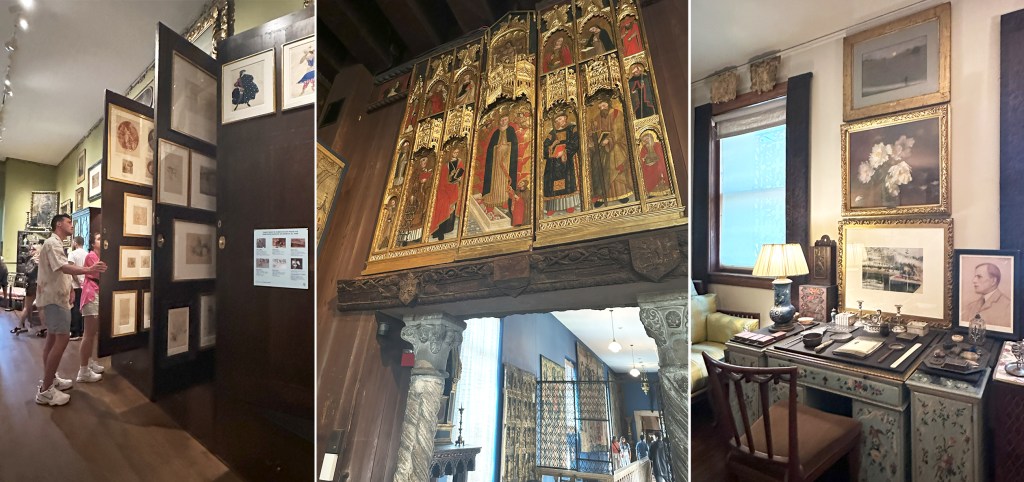
Moving through the palace-like rooms, I discovered how Gardner’s precise arrangement of art and artifacts creates each gallery’s own distinct atmosphere. In the Dutch Room, where 17th-century landscapes share space with ornate period furniture, I noticed how natural light from the courtyard highlights different elements throughout the day. The absence of traditional museum labels made me pause longer at each piece, though I frequently consulted the museum’s digital guide to identify works by Rembrandt and Titian.
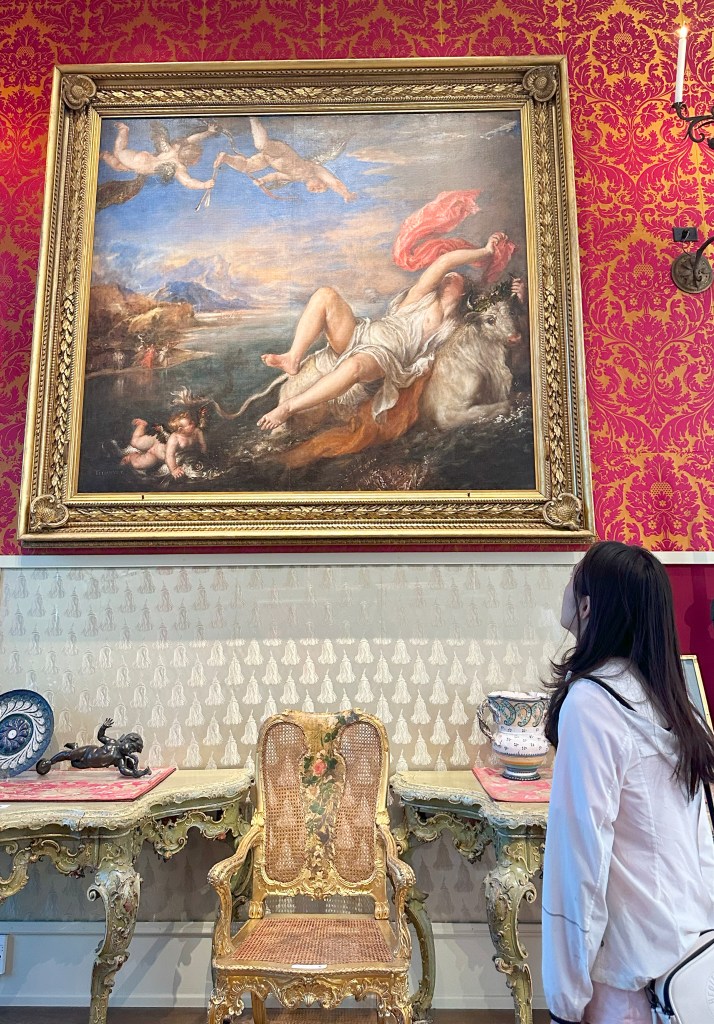
What struck me most was how Gardner arranged her collection to create conversations between different art forms. In the Titian Room, I observed Renaissance paintings displayed alongside Spanish leather wall coverings and Chinese bronze vessels. This unconventional mixing of periods and cultures, I realized, offers a different perspective from the chronological arrangements I’ve seen at other museums.
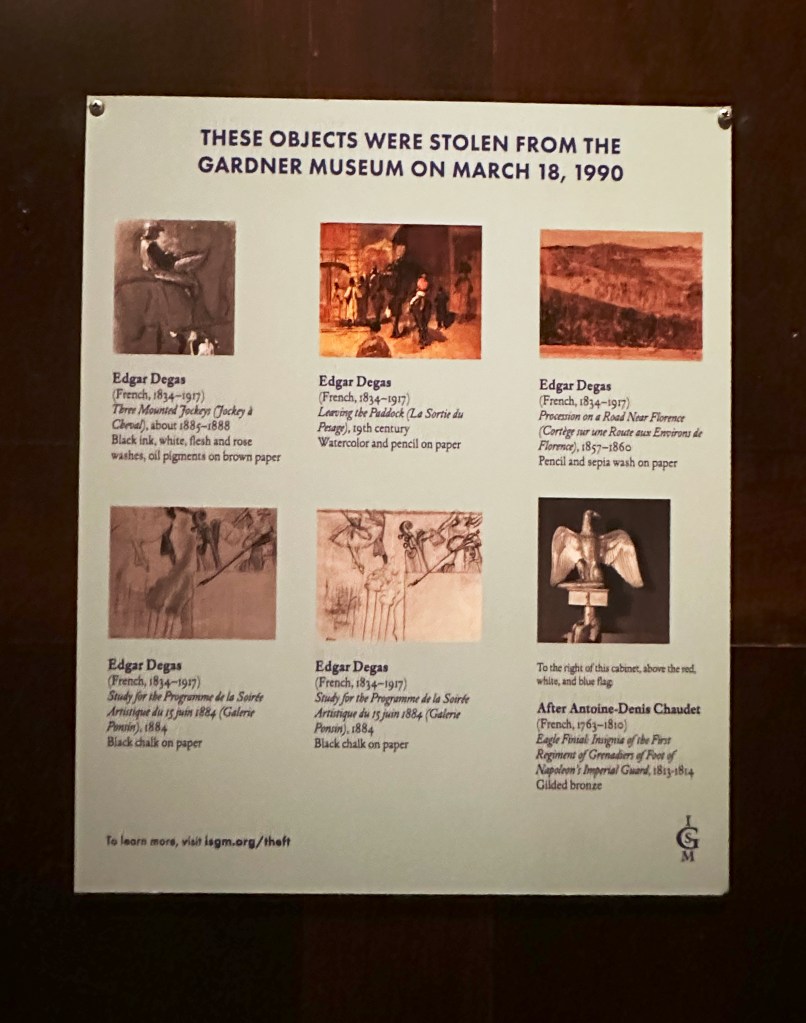
The empty frames hanging on the walls tell their own powerful story. During my visit, I stood before the space where Vermeer’s ‘The Concert’ once hung, now marked only by its vacant frame. Unlike other museums that might hide such losses, Gardner preserves these empty spaces as part of its ongoing narrative. The missing artworks, including Degas’ sketches of horses and jockeys, have left visible gaps in the collection, yet somehow these absences make the remaining works feel even more precious.
My Highlight: El Jaleo – Where Painting Meets Performance
In the Spanish Cloister, I encountered Sargent’s “El Jaleo” in a setting unlike any other painting I’ve seen in my museum visits. The massive canvas (237 x 352 cm) dominates its own intimate space, where I found the painting dramatically lit from below – mirroring the actual footlights in the painted scene. This thoughtful installation choice transforms the viewing experience into something closer to watching a live performance.
Standing before the work, I observed how Sargent captured the explosive energy of flamenco. The dancer emerges from deep shadows, her white skirt catching the light as it swirls in motion. The musicians, barely visible in the background, seem to fade in and out of the darkness, just as they would in a real performance space. Having studied figure drawing, I was particularly drawn to how Sargent handled the dancer’s outstretched arm – its graceful line leads the eye across the entire composition while perfectly capturing the distinctive gestures of flamenco.
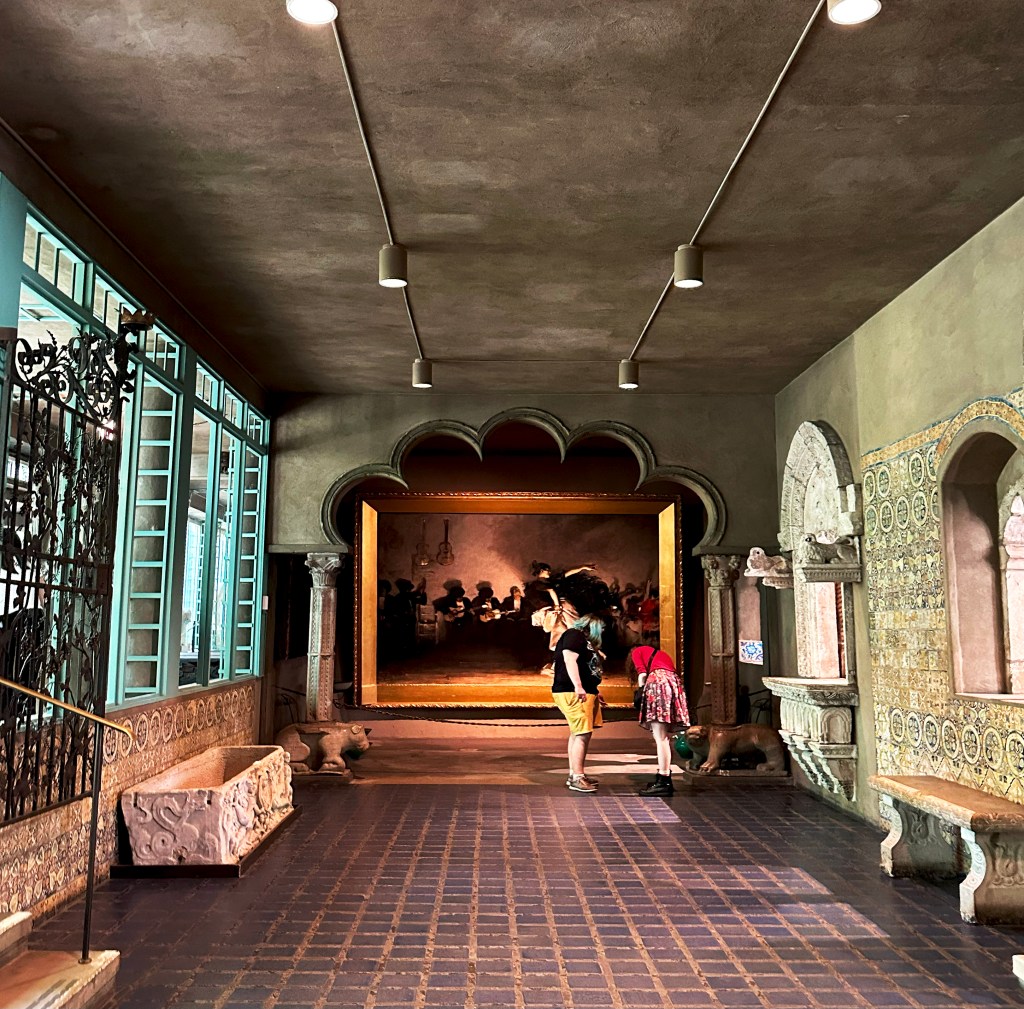
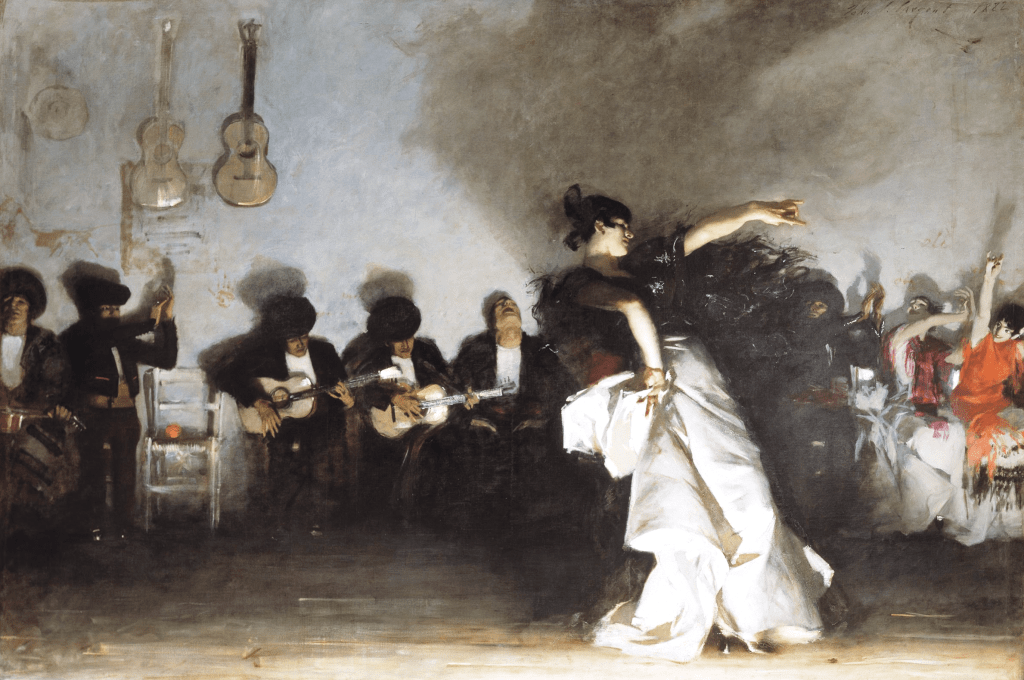
The painting’s placement in this specialized gallery space shows Gardner’s understanding of how the environment affects art viewing. Unlike the crowded walls of other rooms, this focused presentation allows viewers to fully immerse themselves in the dramatic moment Sargent captured. The painting’s scale and setting work together to blur the line between artwork and actual performance space.


Leave a Reply