
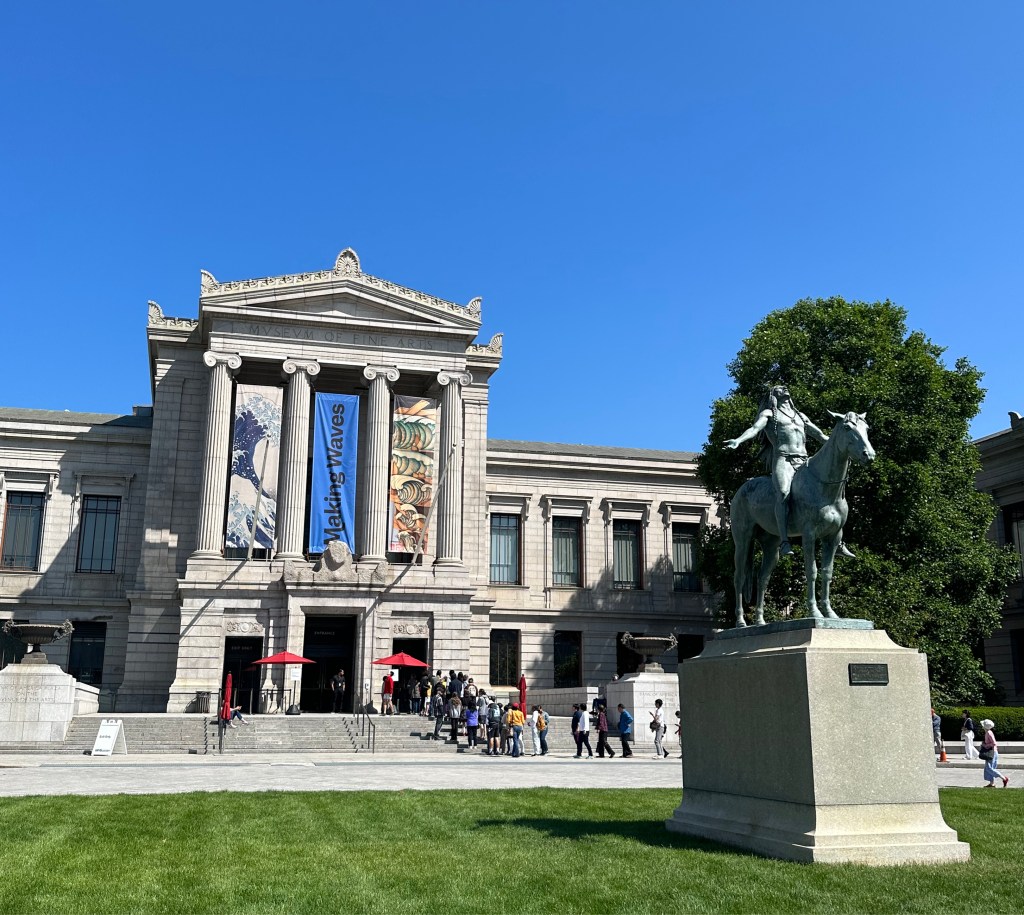
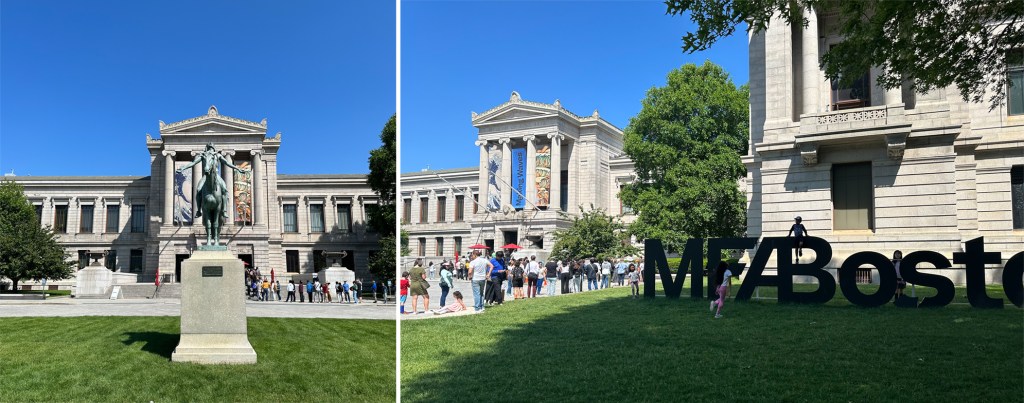
I arrived right at opening time at the Museum of Fine Arts Boston, eager to see the special Hokusai exhibition. What greeted me was a sight I never expected – a queue wrapping around the building that looked more suited to a theme park than a museum! On this cloudless morning, the scene was striking: a long line of visitors snaking past the imposing Native American statue that seemed to touch the crystal-clear sky. For twenty minutes, as I waited in line, my mind swung between anxiety (“What if they close admission for the day?”) and excitement (“This must mean the exhibition is extraordinary!”). Finally, after what felt like the longest twenty minutes of my life, I made it inside.
Museum of Fine Arts Boston: Where Art Fills Every Corner
It’s hard not to feel tiny standing before the MFA’s classical columns, but don’t let that intimidate you. Push through those doors, and you’ll find yourself in a space that feels surprisingly current – all glass, light, and open space. As America’s 4th largest museum (a fact I had to double-check because it seemed even bigger walking through it), the MFA somehow manages to feel both massive and welcoming at the same time.
What sets the MFA apart is how it treats its walls – they’re not just barriers between rooms, they’re prime real estate for art. Walking through, I noticed something unusual: art isn’t just in the galleries, it’s everywhere. Even the corridors and stairwells are transformed into mini-galleries. While other museums might give you breathing room between masterpieces, the MFA takes a “more is more” approach that I found oddly refreshing.
The hanging style here is fascinating – imagine your Instagram feed but with priceless artworks. Instead of the usual single row at eye level, paintings climb the walls in double and triple tiers. At first, I thought this might feel overwhelming, but it actually made me more active in my viewing. I found myself stepping back, craning my neck, and really engaging with the art in a physical way.
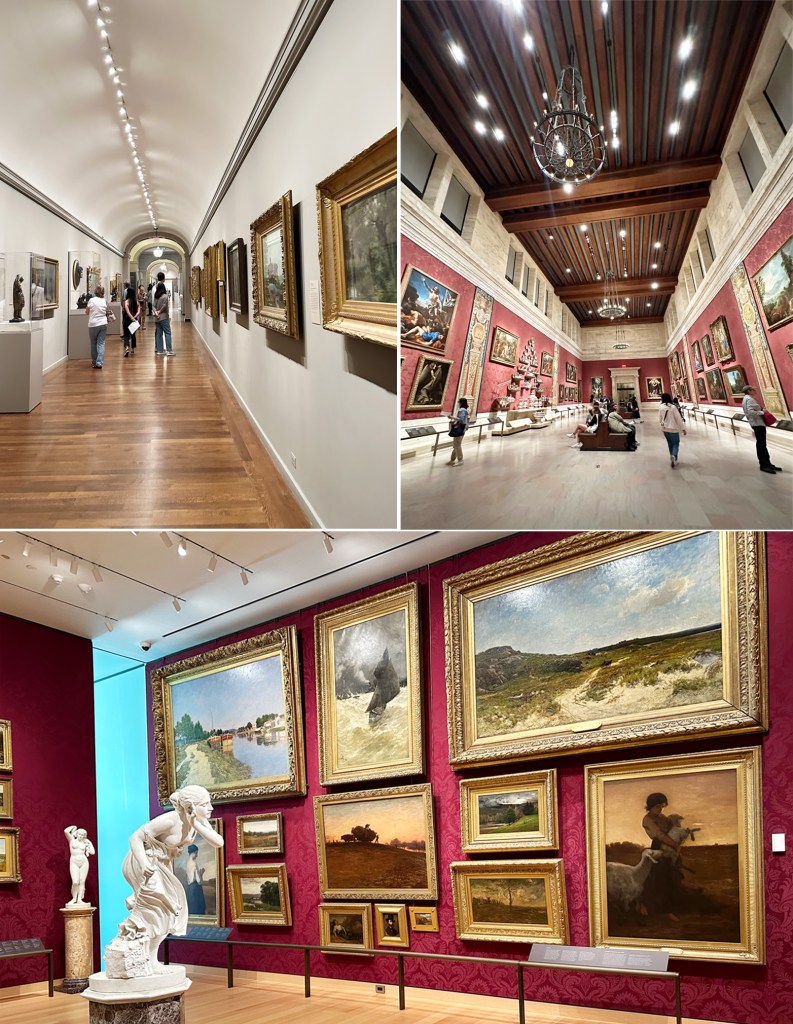
Here’s a pro tip I discovered: this museum actually wants you to get comfortable. Unlike some museums where you’re expected to keep moving, the MFA has scattered cozy seating throughout its galleries. I spent a good 20 minutes just sitting, soaking in a room full of Impressionist works. It’s clear they understand that good art takes time to appreciate.
[Unfortunately, during my visit, their famous Asian art wing – home to one of the finest Japanese art collections outside Japan – was closed for renovation. But honestly? That just gives me an excuse to come back.]
Special Exhibition: “Hokusai: Inspiration and Influence”
Walking into the Hokusai exhibition at the MFA felt like stepping into an artistic time machine. The museum, which holds the largest collection of Japanese art outside Japan, crafted a narrative that brilliantly connected past to present.
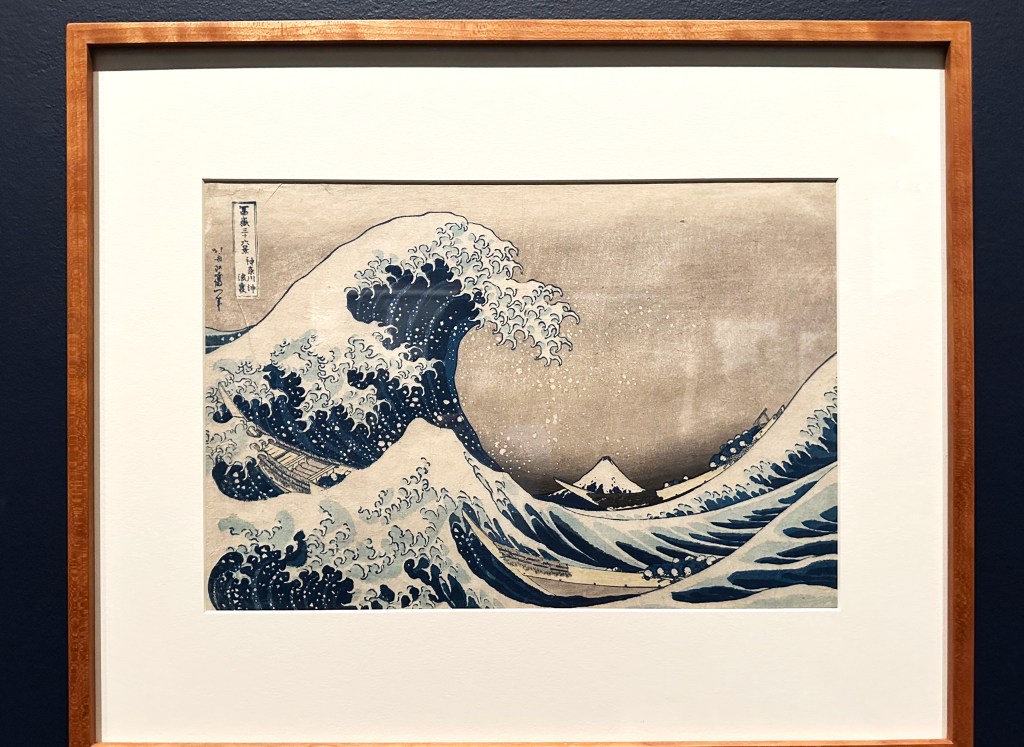
The exhibition opened with a revelation – Hokusai’s famous “Great Wave” is actually tiny!
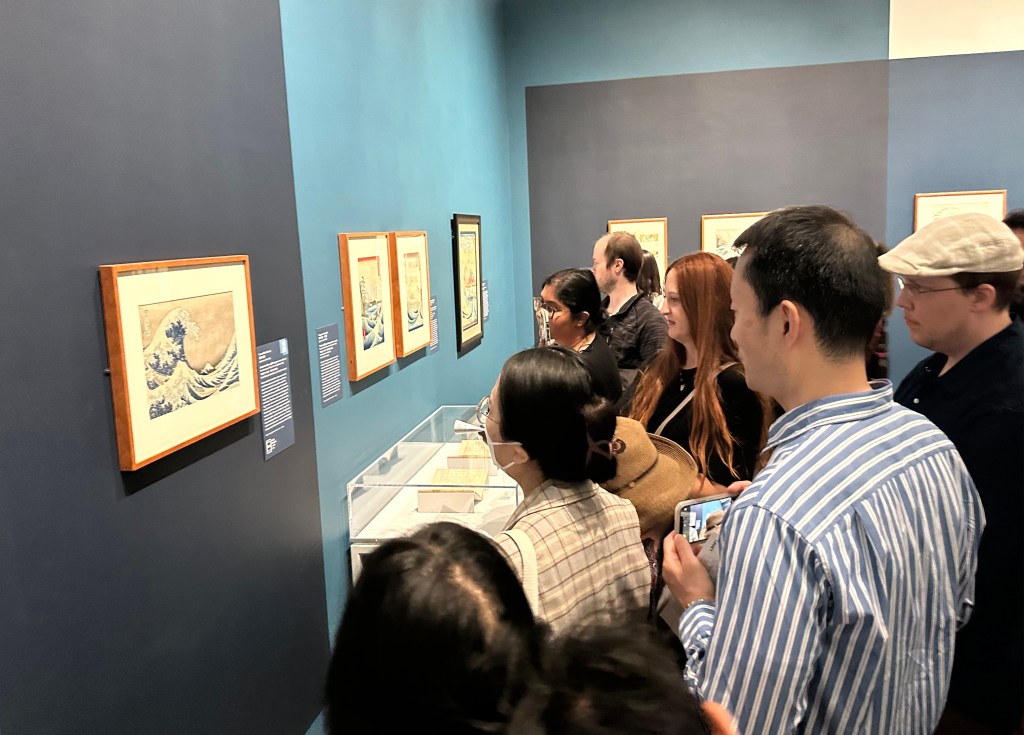
Seeing it in person stopped me in my tracks. In photos, you miss the delicate details: the spray of water like needle points, the tiny fishermen braving the wave, and Mount Fuji sitting quietly in the background. Standing there, I finally understood why this small print changed the course of art history.
What made this exhibition special was how it traced Hokusai’s ripple effect through time. The curators created fascinating visual conversations: Hokusai’s waves next to Monet’s water lilies, his bridge prints alongside photos of Monet’s Japanese bridge at Giverny. Even modern manga artists got their moment, showing how Hokusai’s dynamic style lives on in contemporary Japanese animation.
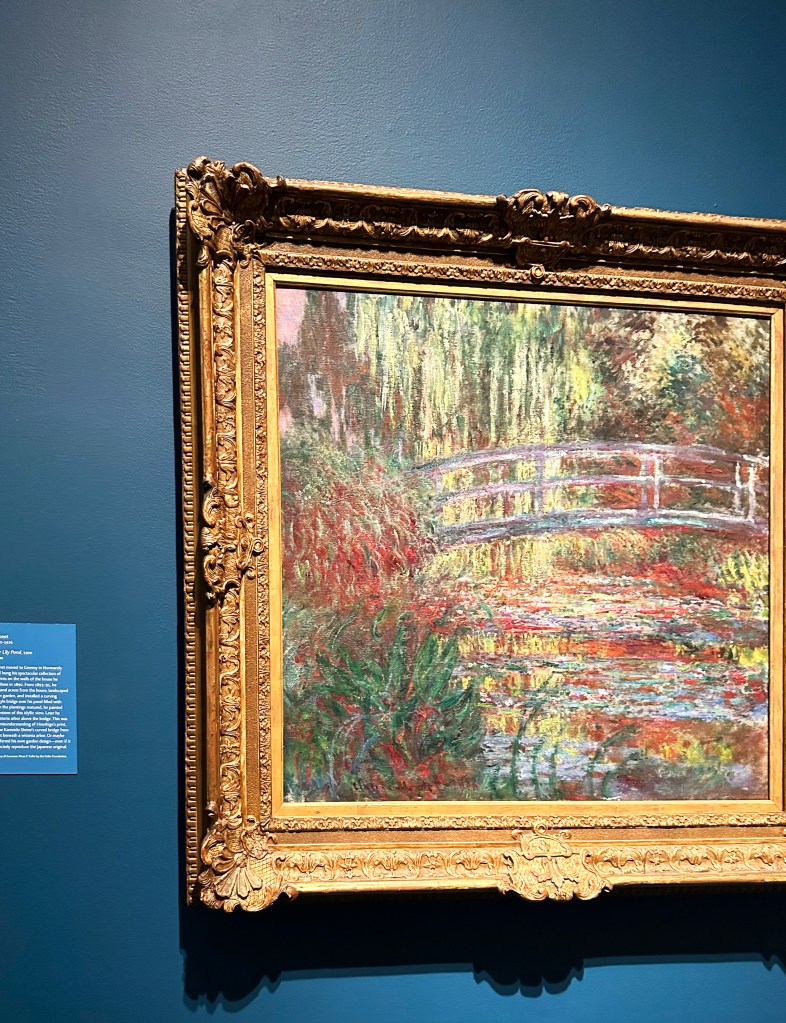
Ukiyo-e artists often depicted bridges from a low perspective at the river’s surface level, looking up to reveal the arched underside. This composition drew a lot of interest from Western painters. Monet was also inspired by this perspective, and he built a Japanese-style bridge in his own garden, incorporating this low, upward-looking viewpoint into many of his Water Lilies series paintings.
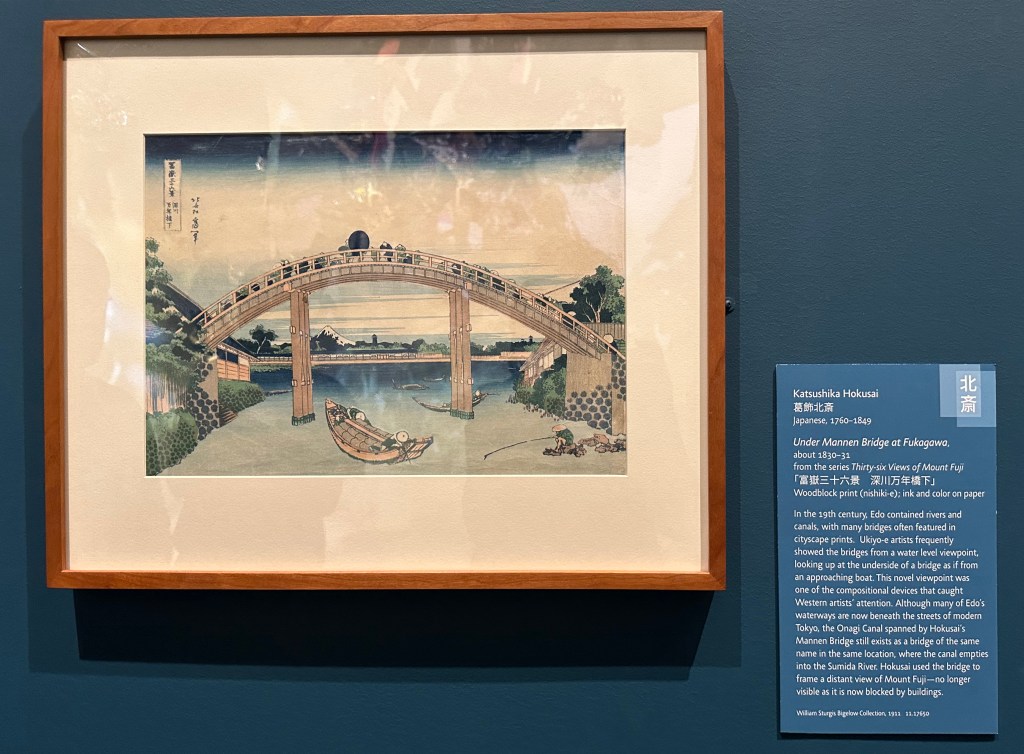
The chronological layout helped me follow the story of Japonisme – how Japanese art revolutionized Western painting. I never realized how many Impressionist artists had been collecting ukiyo-e prints like teenage fans! The exhibition’s clever pairing of Eastern and Western works made these connections crystal clear, showing how Hokusai’s bold compositions and flat perspective changed how artists saw the world.
My Favorite: Monet’s “Grainstack” Series – Nature’s Light Show
In the Impressionist gallery upstairs, I found my personal treasure: Monet’s “Grainstack” paintings displayed side by side. These aren’t just haystacks – they’re Monet’s light catchers, each canvas capturing a different moment of day, a different mood of weather.
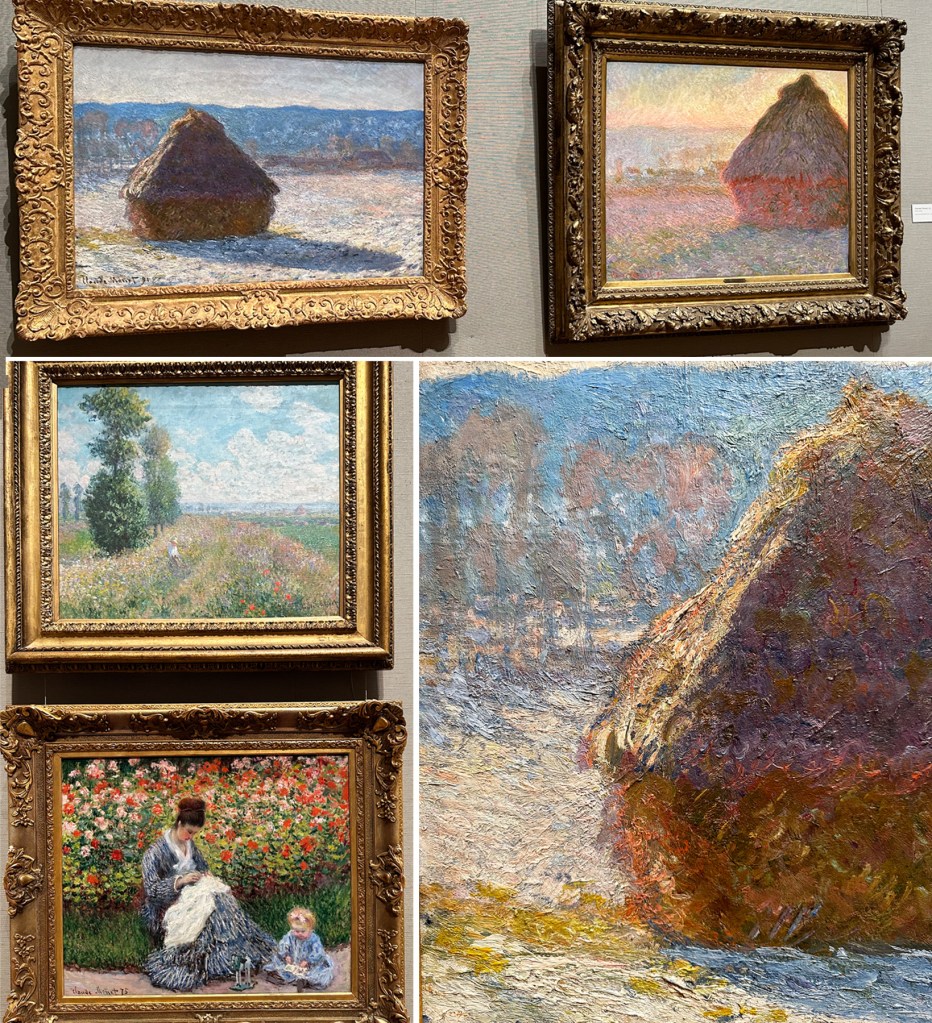
Standing there, switching my gaze between the paintings, I watched dawn turn to dusk, summer fade into winter. The same humble haystack transformed through Monet’s eyes: sometimes golden in morning light, sometimes purple in winter twilight, sometimes barely visible through heavy snow.
This display hit me with an idea for my own art – what if I did the same with Central Park? Monet showed me how a single subject could become an endless exploration of light and time. Who knew haystacks could be such incredible teachers of art?
My Surprise Discovery: Monet’s “La Japonaise”
In a room full of Monet’s familiar water lilies and landscapes, a massive portrait stopped me in my tracks. “La Japonaise” (1876) towers at nearly 7.5 feet tall, showing Monet’s wife Camille draped in a striking red kimono. It’s so different from his usual work that I had to double-check the artist’s name.
The painting is fascinating mix of East and West – a blonde French woman playing dress-up in a Japanese kimono, surrounded by decorative fans. There’s something almost theatrical about it, like she’s performing “Japanese-ness” for the viewer. It’s both beautiful and slightly uncomfortable to modern eyes.
Learning about this piece opened up a whole new side of Monet for me. Like many Western artists of his time, he was completely obsessed with Japanese art. He collected ukiyo-e prints, decorated his Giverny home with them, and even designed his famous garden with Japanese aesthetics in mind. This painting, despite its cultural complexities, stands as vivid evidence of the Japonisme fever that swept through Paris in the 1870s.
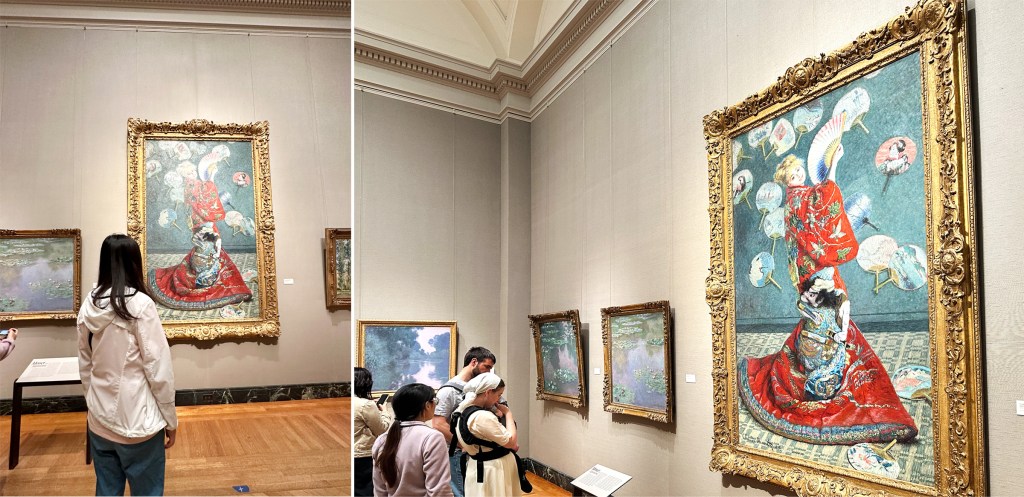
This unexpected encounter with “La Japonaise” led me deep into researching Monet’s relationship with Japanese art. The painting sparked my curiosity so much that I wrote a research paper, “Monet’s Unified View: The Fusion of Eastern and Western Cultures”. What started as a surprising museum moment turned into months of fascinating research about how Japanese aesthetics transformed Monet’s later abstract works.


Leave a Reply