
Hopper in Nyack: Following His Early Years
My research on Josephine Hopper led me to an unexpected destination – the Edward Hopper House Museum in Nyack. While Jo never lived in this house, my growing interest in her artistic relationship with Edward made this visit feel essential. The museum had recently hosted an exhibition of her original works – a rare opportunity I’d missed, yet another reminder of Jo’s artwork’s scarcity.
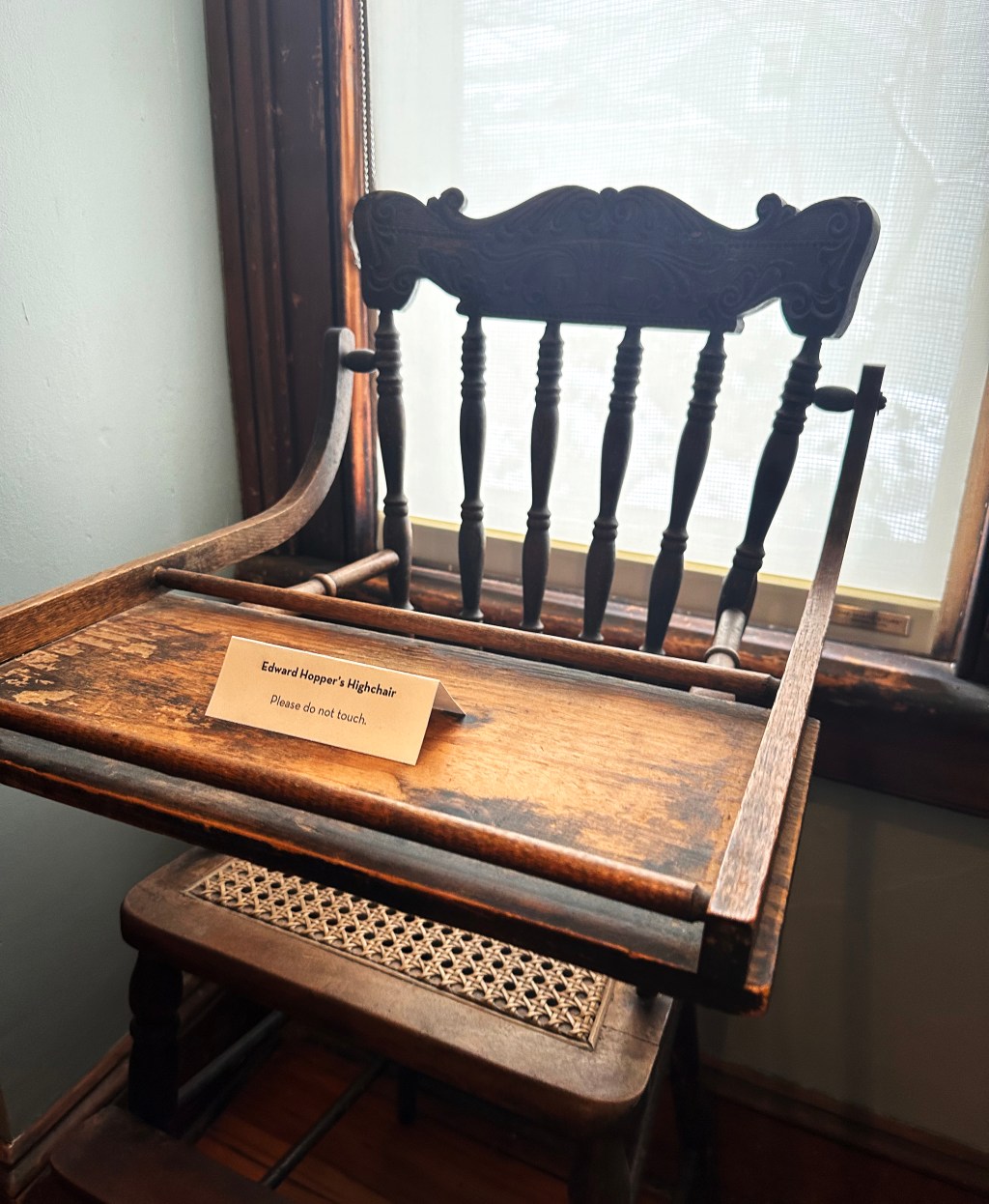
The Victorian house sits just a block from the Hudson River, more modest than I’d anticipated. This house isn’t a traditional art museum displaying Hopper’s iconic paintings. Instead, the house serves as a research center and living archive of the artist’s formative years. Edward spent four decades of his life in these rooms, now carefully preserved and studied.
What lingers in my mind is the curious fate of Jo’s own artwork. After Edward’s death, she meticulously donated his entire collection to museums, preserving each piece for future generations. Yet her own paintings have vanished – lost or discarded somewhere along the way. The museum’s recent exhibition of her work offered rare glimpses into her art, though mostly through photographs and written records now. As an art student, I can’t help but wonder where all those canvases have gone.
Finding Jo: A Single Painting Speaks
-The second floor held an unexpected treasure – a small oil painting of the Hudson Tower placed between two doorways. Unlike Jo’s usual watercolors, this piece showed a different side of her work. The thick brushstrokes and warm golden light on the buildings revealed her own artistic voice, distinct from Edward’s more well-known style. Standing there, I couldn’t stop taking pictures of this modest painting, clicking away on my phone as if each image might help preserve this rare piece of Jo’s artistic legacy.
The ground floor featured an intriguing photography project that traced Hopper’s footsteps across America. A contemporary photographer had visited and documented the exact locations from Hopper’s paintings, creating then-and-now comparisons. These photographs, displayed in a quiet corner, added another layer to the house’s role as more than just a museum – it’s become a starting point for new artistic dialogues with Hopper’s work.
The museum, though small, serves as a meaningful stop for those interested in understanding Hopper’s world. It’s not about grand exhibitions or famous paintings but rather about connecting threads – between past and present, between two artists’ lives, and between art and the places that inspired it.
 Gallery Tales: Monica Yoon Art Journey
Leave a comment