
Return to the Harlem Renaissance: A Student’s Second Look
My school’s interdisciplinary Humanities program, combining History and English, has quite a reputation in the area – and not for being easy. True to form, our latest assignment requires visiting the Met’s Harlem Renaissance exhibition to select and analyze specific works through both historical and aesthetic lenses. This isn’t just art analysis; it demands connecting historical themes with artistic expression – the kind of integrative thinking that makes our program notorious.
I had hoped to write about pieces from my first visit, but our teacher had other plans. The assignment requires detailed photos of our chosen works – with us in the frame. A clear message: don’t even think about substituting internet research for actual museum visits. So here I am again, back at the Met.
With historical context as my new focus, I take my time with each piece, looking more carefully than before. It’s remarkable how different this second viewing feels – new details emerge, overlooked pieces suddenly catch my attention. The sculptures, which I barely noticed during my first enthusiastic rush through the galleries, now reveal themselves as essential parts of the story.
The Silent Scream: Meeting Meta Fuller’s Sculpture
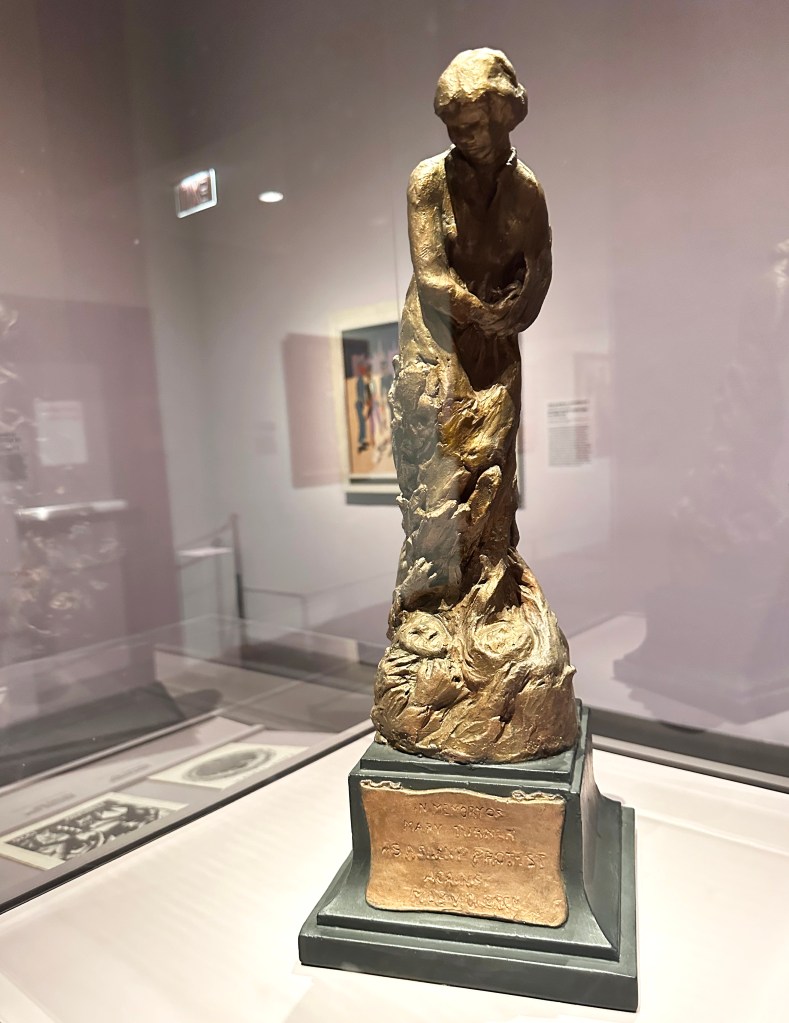
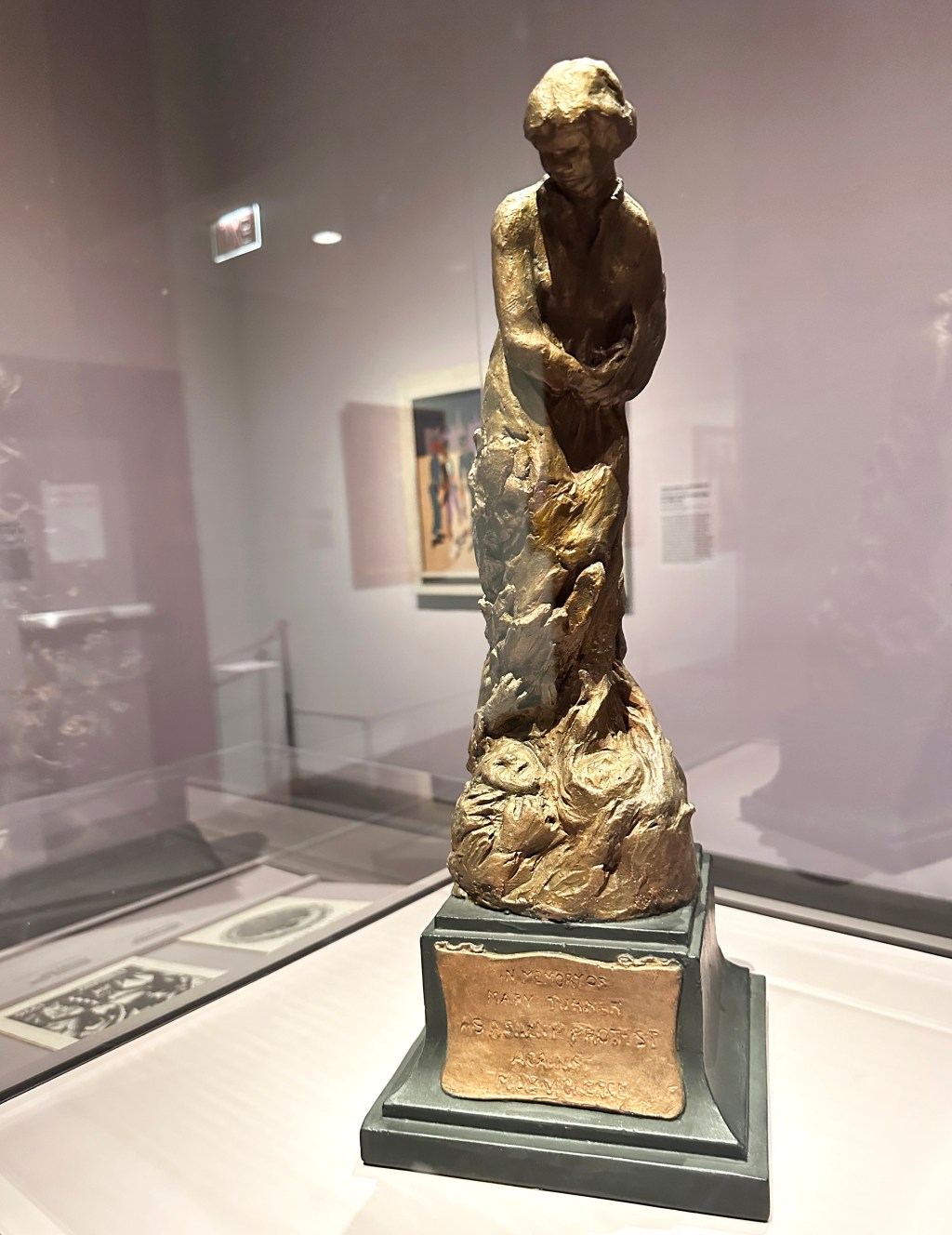
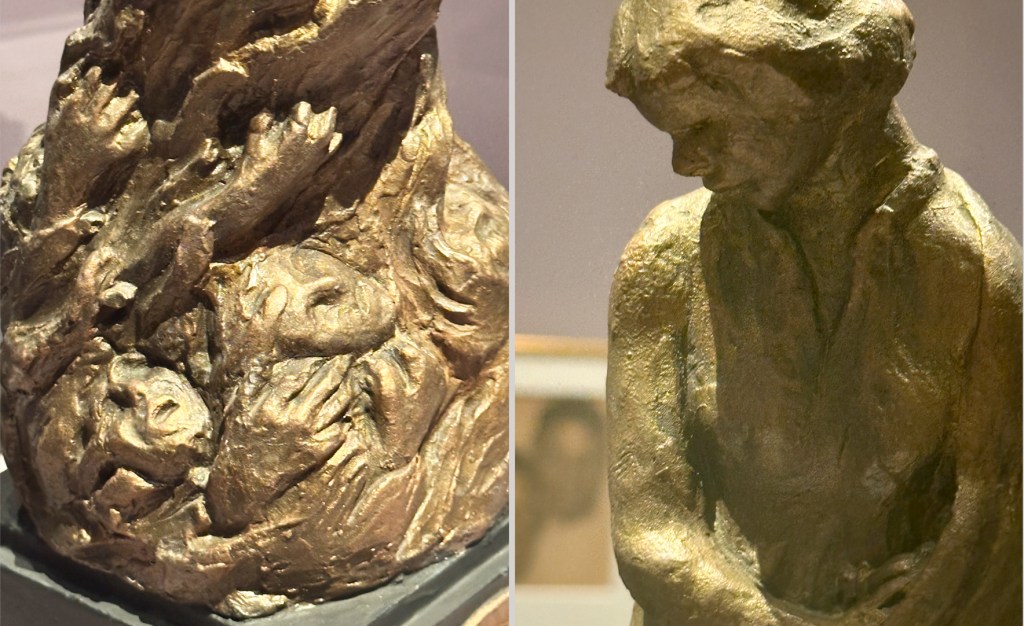
Small bronze sculptures were placed at the center of the rooms. I must have missed them while focusing on the paintings during my first visit. Each sculpture displayed unique characteristics – distinctive gestures, varied patinas, modernist silhouettes – but one piece, notable for its minimal detail and static pose, drew me closer precisely because of its stark simplicity. As I approached for a better look, the figure’s downturned face remained hidden in shadow, while only strange, grotesque forms etched into her skirt became visible under the gallery lighting.
As I leaned in closer to the display case, nearly pressing my nose against the glass box, a security guard’s voice broke my concentration. Instead of the expected warning, he asked, “Do you know this piece?” He told me gravely about Mary Turner, a pregnant woman who was lynched, his brief words heavy with the weight of the tragedy. Then he walked away, leaving me to re-read the label: “Silent Protest.”
The faces I had mistaken for decorative elements on her skirt were actually symbols of those who died without reason. The small, crouching figure, contrasted with these grotesque faces, paradoxically amplifies the horror of this historical tragedy. Fuller’s sculpture delivered a powerful message – proving that sometimes the quietest protests echo the loudest. This single piece taught more about history than any textbook chapter could.
Mother and Daughter: A Quiet Revolution
During my second visit, Laura Waring’s “Mother and Daughter” revealed itself in an entirely new light. Noticeably smaller than her other works and lacking her typically vibrant palette, this intimate portrait initially seemed unremarkable. The canvas, filled with two overlapping profiles against a plain background, had been easy to overlook.
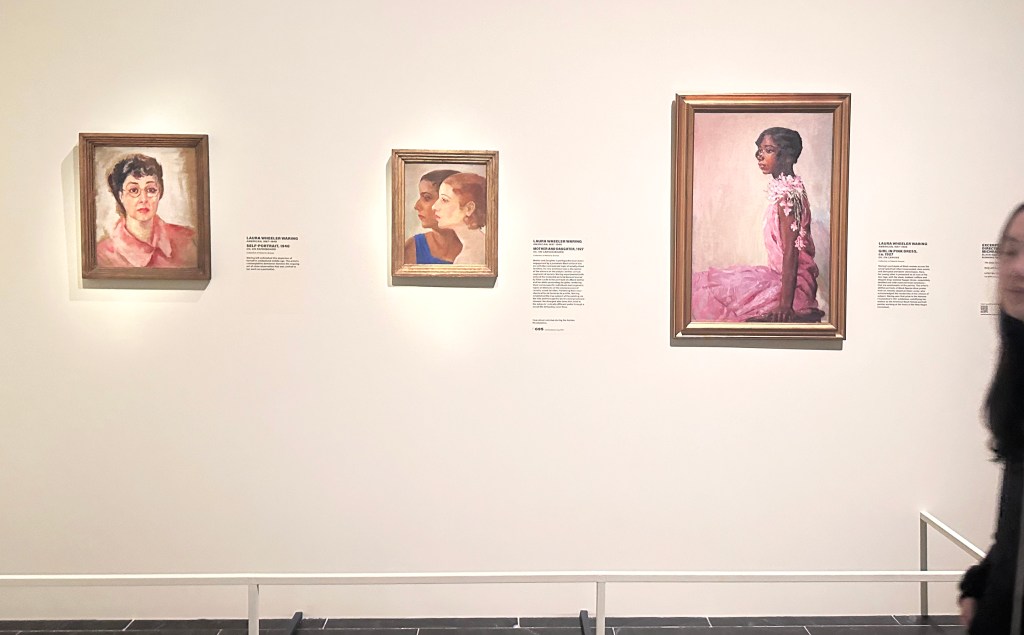
But now, walking slowly, I notice the subtle yet striking contrast – mother and daughter’s faces aligned in the same direction, sharing the same melancholic expression but different skin tones. The composition creates an unusual intimacy, their profiles almost merging into one another. The wall text provides crucial context: a Black mother and her white-passing daughter, addressing the complex issue of colorism within the Black community.

While Manet’s Olympia shocked aristocratic viewers with its defiant direct gaze, Waring takes a different approach to confronting social taboos. These aligned profiles, with their shared sadness, disarm potential criticism while delivering an equally powerful message. The cheerful blue dress adds a subtle vitality to the otherwise spare composition, suggesting that this mother-daughter story, despite its complexities, carries hope.
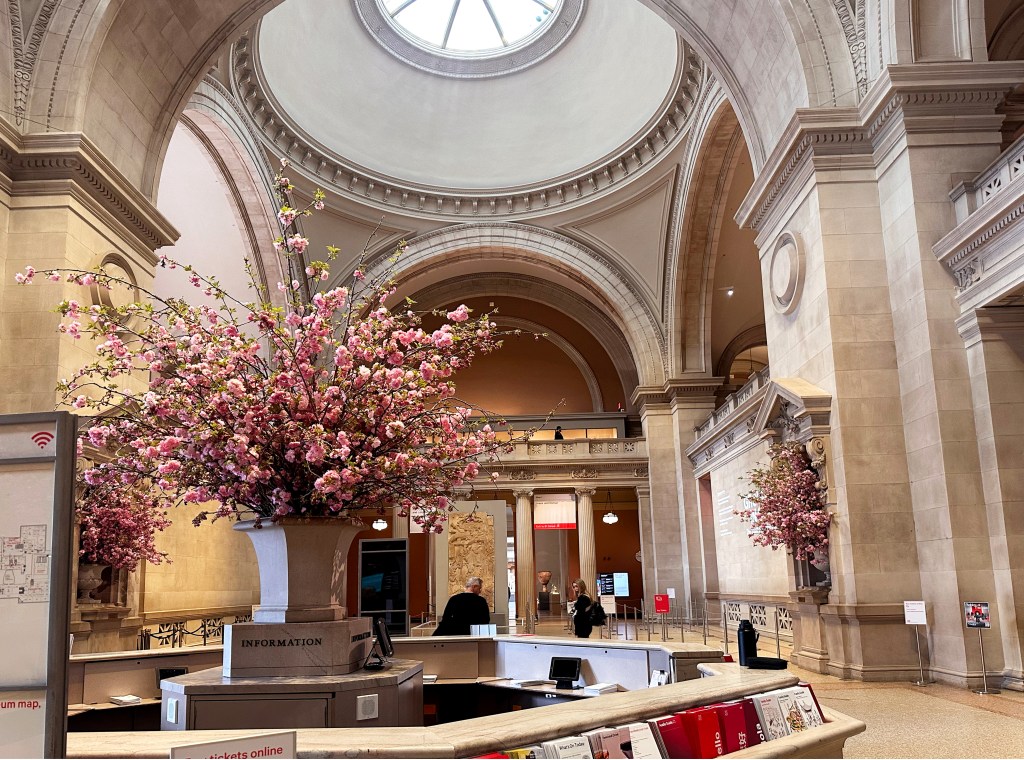
Unexpectedly, despite the vibrant scenes of Harlem’s jazz culture and creative energy, I was drawn to these quieter yet more challenging pieces. The weight of their messages feels heavy on my assignment pages. Still, the pink cherry blossoms in the Met’s lobby offer their cheerful greeting.


Leave a Reply