
Where Light Meets Art
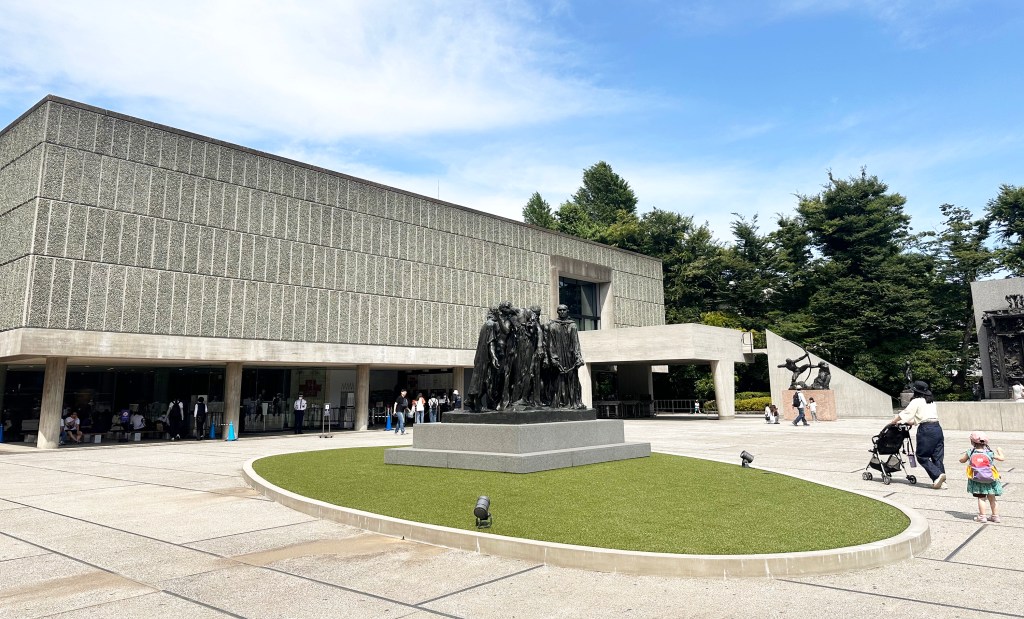
The National Museum of Western Art stands apart from typical Japanese architecture in Ueno Park. Unlike the vertical lines of surrounding buildings, it spreads horizontally across its site, its distinctive gray form suggesting movement despite its solid concrete frame. Le Corbusier’s design feels both foreign and fitting in this space – a modernist statement that somehow manages to respect its traditional surroundings.
Rodin’s “The Thinker” greets visitors at the entrance plaza, but it’s the building’s unique relationship with light that creates the real art experience inside. Unlike conventional museums with their controlled overhead lighting, here natural light flows in through a series of high side windows. This unusual approach bathes the galleries in soft, indirect light that changes subtly throughout the day. Walking through these spaces, the Matsukata Collection takes on different moods as clouds pass and sunlight shifts, creating an ever-changing dialogue between art and architecture.
Unexpected Discoveries
My visit started with Monet’s Water Lilies, its warm red blooms distinct from his usual palette. But it was his lesser-known Vétheuil that held my attention longer than expected. The river scene captures light in a way I hadn’t seen in his other works – lavender and golden reflections ripple across the water while the village above glows in soft peach tones. The cathedral spires pierce through a purple-tinged sky, creating a gentler, more intimate mood than his famous garden series.
In another gallery, Marie-Gabrielle Capet’s self-portrait offered a surprising connection to a recent exhibition I’d seen about women artists in Baltimore. Her confident gaze and precisely rendered lace speak of both technical skill and artistic confidence, adding another voice to the ongoing story of women’s contributions to art history.
What stayed with me most was Matsukata’s unique presentation choices. Many paintings hung in tall, vertical frames – a subtle detail that felt distinctly Japanese. It was a reminder that art collections often reflect not just the artists, but also the cultural perspective of those who gather and display them.


Leave a Reply