
Where Art Feels Like School
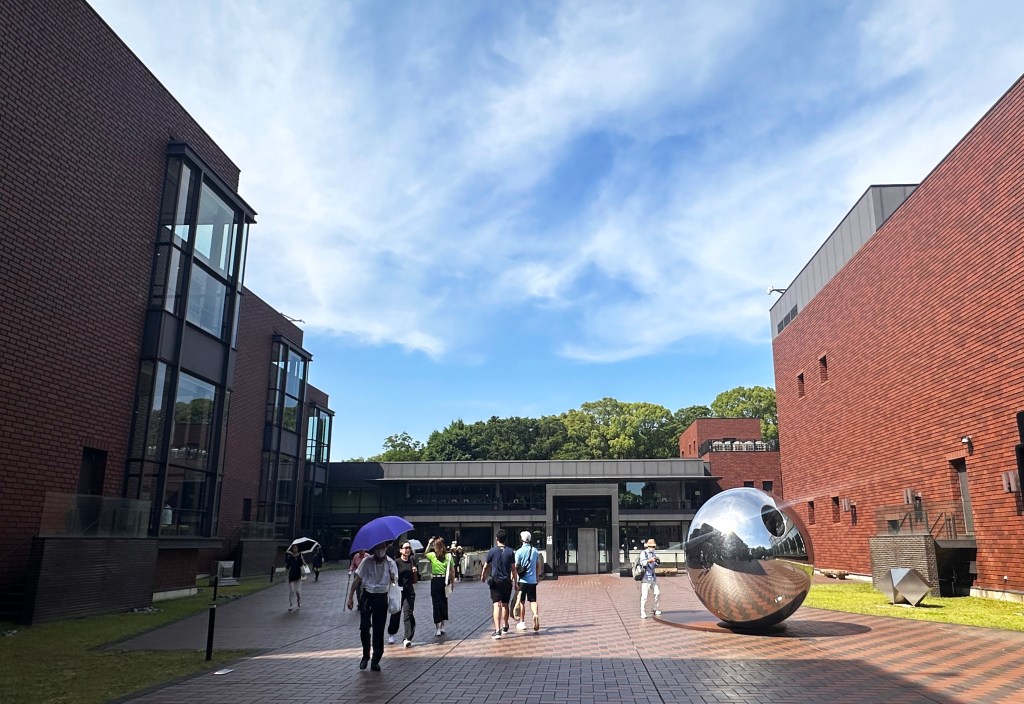
The Tokyo Metropolitan Museum of Art appears through Ueno Park’s trees like a familiar campus building. Its red brick exterior and clean lines feel more welcoming than the usual museum grandeur, setting a different tone before you even step inside.
Walking into the lobby reminds me instantly of art school – not because of any academic design, but the energy. Different exhibition halls branch off the main space like classroom corridors, each requiring its own ticket – a bit like choosing courses for the semester. The walls carry exhibition posters and announcements, while visitors and art students alike move between spaces with casual purpose.
The museum calls itself a “Doorway to Art,” and watching people move between galleries and workshop spaces, I understand why. This isn’t just a place to view art behind glass – it’s where art feels accessible, almost educational. Some visitors sketch in corners, others discuss techniques in small groups. It’s the kind of space where everyone becomes a bit of a student again.
Exploring De Chirico’s World
The De Chirico exhibition opened with a surprise – traditional portraits that showed a different side of the artist I knew mainly for mysterious cityscapes. His early self-portraits and figure studies revealed careful brushwork and Renaissance techniques, each face captured with remarkable detail and sensitivity.
The galleries opened up to De Chirico’s most distinctive period – his metaphysical paintings from the 1910s that transformed quiet Italian plazas into mysterious dreamscapes. Empty squares stretch under impossible shadows, while classical statues seem more present than the occasional human figures. The architectural elements – arches, towers, colonnades – follow their own strange logic. These scenes share something with Edward Hopper’s quiet cityscapes, but while Hopper shows us real places in moments of solitude, De Chirico creates spaces that exist somewhere else entirely. His use of bright Mediterranean light and colors only emphasizes their dreamlike quality, like finding familiar objects arranged in ways that don’t quite make sense.
The exhibition’s thoughtful curation revealed De Chirico’s evolution through color and space. Each gallery’s walls, painted in the same bold yellows, greens, and blues found in his paintings, amplified the power of his work. His figures without facial features, exaggerated architectural perspectives, and dreamlike spatial compositions feel strikingly contemporary, though created in the early 20th century. Even while pushing artistic boundaries, he wove in classical Greek elements – a nod to tradition within his revolutionary vision.
Moving between these styles – from precise portraiture to metaphysical scenes, and even into his later ventures in sculpture and fashion design – revealed De Chirico as an artist who constantly pushed forward. His work from a century ago speaks to contemporary audiences with remarkable clarity, proving that true artistic innovation can transcend its time.


Leave a Reply