
Hudson River: Beyond the Scenic View
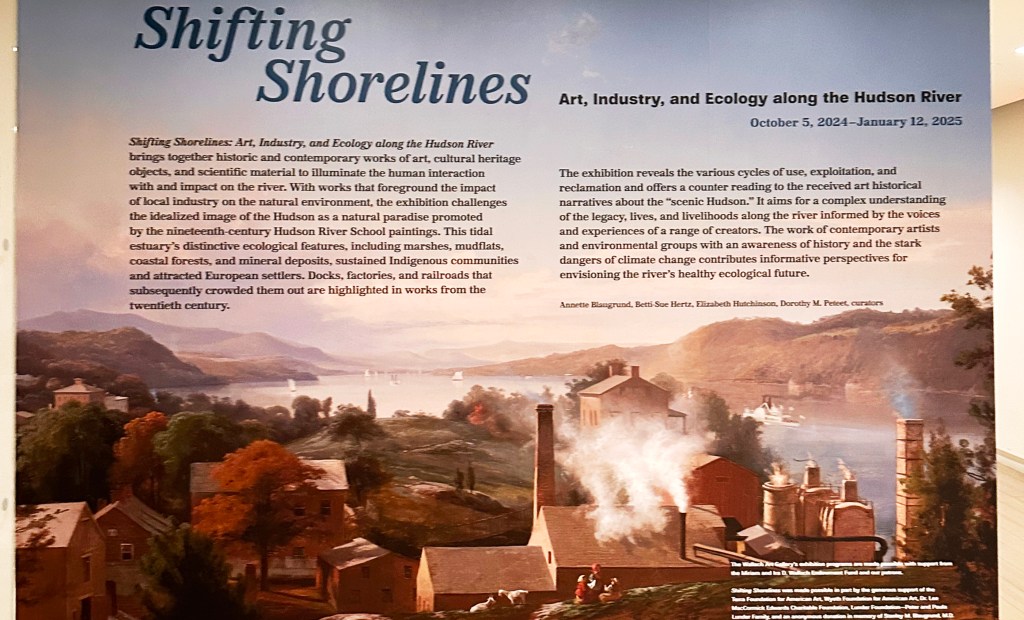
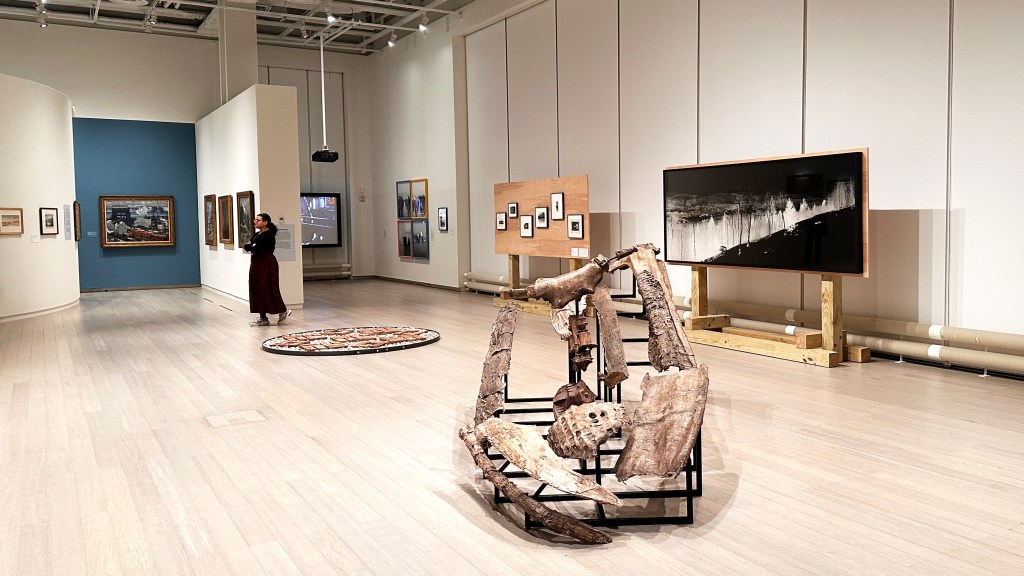
The announcement of a Hudson River exhibition at Wallach Art Gallery initially brought to mind the romantic landscapes of the Hudson River School painters. Yet this exhibition wove together two centuries of American history through art – industrial development, environmental destruction, and humanity’s complex relationship with nature, all centered around this iconic river. The exhibition used art as a lens to examine ecology, presenting everything from industrial growth to environmental concerns. While these themes could easily have become a historical documentary using photographs and archival footage, the choice of artistic media transformed the experience. Seeing these complex issues through paintings, installations, and artistic interpretations opened up new ways of understanding the river’s role in shaping both American landscape and consciousness. It reminded me how art can serve as a powerful tool for environmental awareness without losing its aesthetic impact.
The River’s Transformation
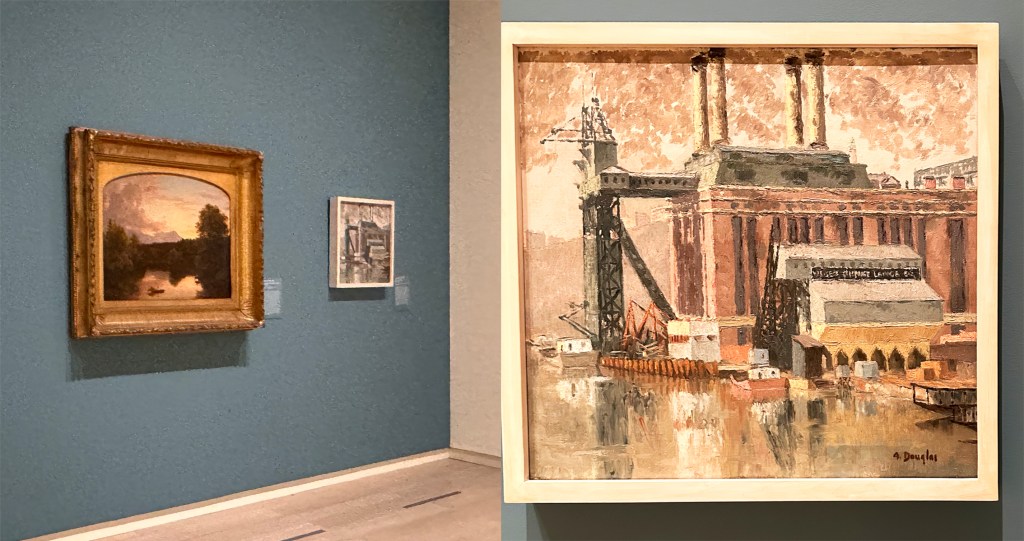
Thomas Cole’s familiar ‘Catskill Wild‘ greeted me at the entrance, its Hudson River landscape instantly recognizable. But my attention quickly shifted to the unexpected piece beside it – Aaron Douglas’s ‘Inwood Power Plant.‘ Douglas, known for his powerful Harlem Renaissance works with bold Egyptian-inspired silhouettes, surprised me with this intimate, differently styled piece. The painting captured the Inwood Park power plant in soft pastels, revealing the industrial pulse behind Harlem’s northern edge. Here was an artist showing another side of his creative range – trading his signature bold strokes for a more delicate approach to urban industrial life. Seeing these works side by side offered a compelling narrative of the Hudson’s evolution. While Cole celebrated untamed nature, Douglas found beauty in the very infrastructure that would alter the river’s landscape. Their contrasting perspectives seemed to trace the river’s journey from natural wonder to urban lifeline.
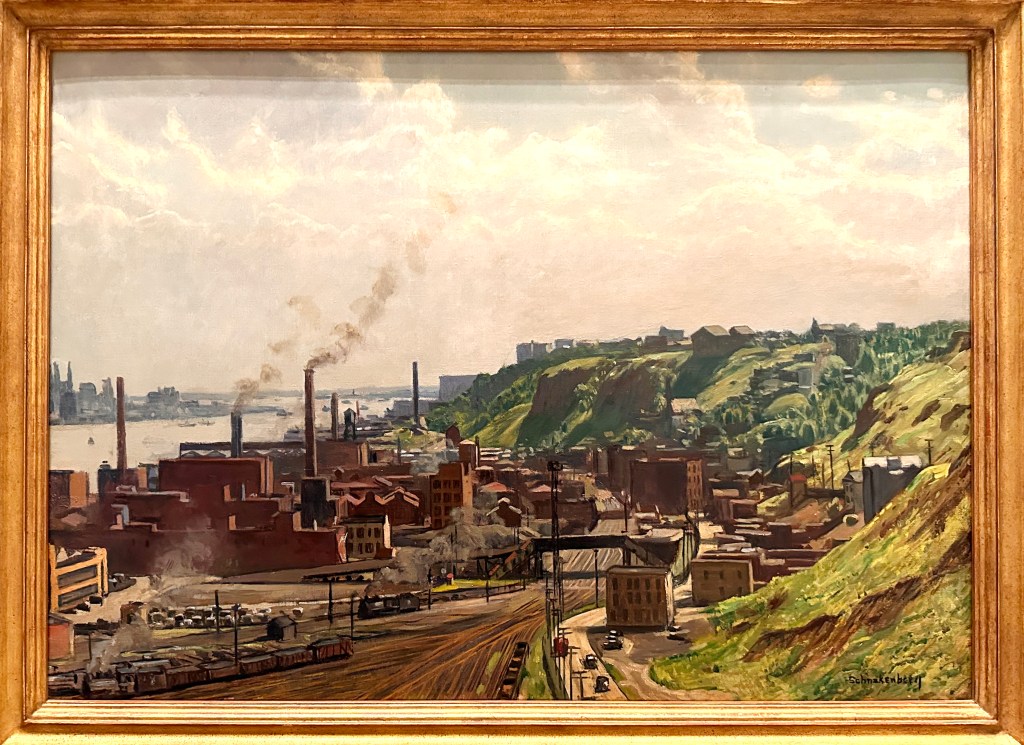
As I moved deeper into the gallery, this transformation became more stark. The following works revealed the true cost of industrialization – not through documentary photographs or historical records, but through artists’ interpretations of environmental change.
Each piece traced how industry’s promise of progress left its mark on the river, leading viewers to confront our present relationship with this living waterway.
Industrial Legacy Through Artists’ Eyes
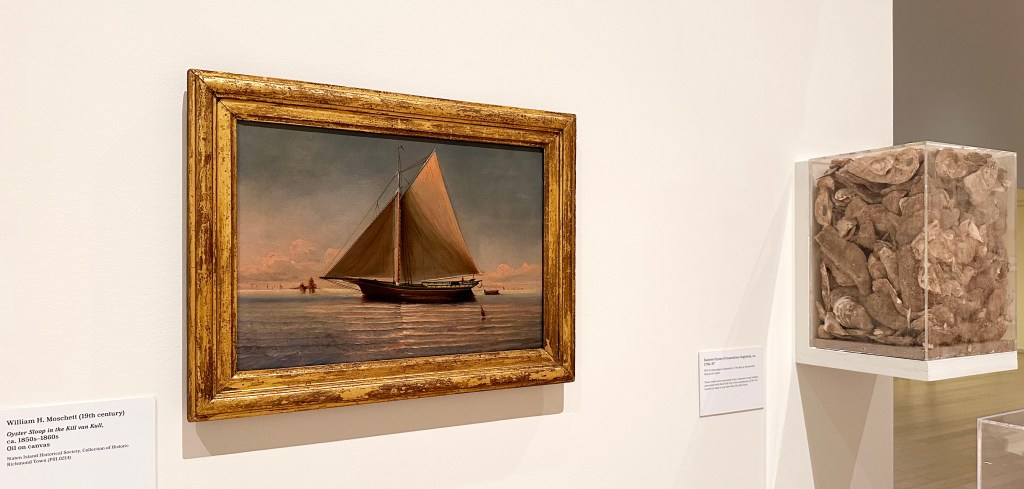
Around the corner, glass cases displayed old oyster shells – artifacts from the Hudson’s past as a major oyster bed until the 19th century. These physical remnants, paired with paintings of oyster harvesting, created an immediate connection to the river’s lost history.
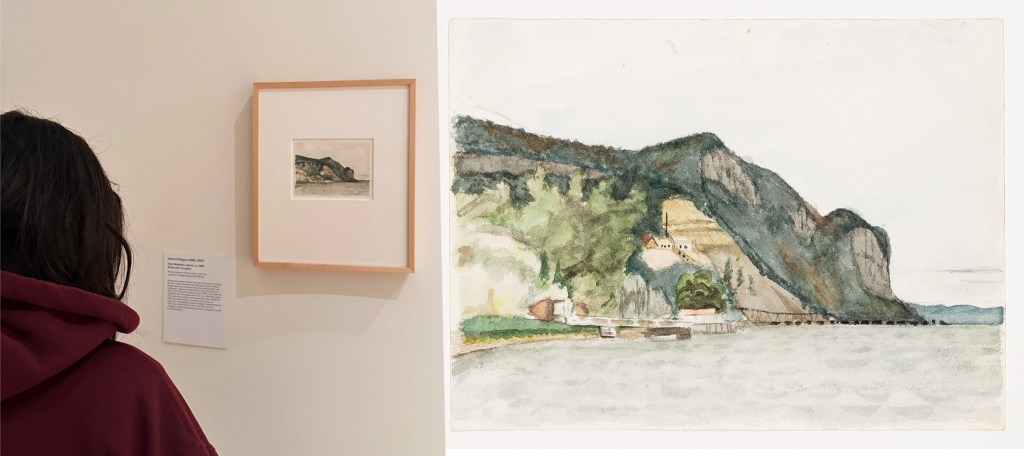
The exhibition then shifted to quarries, showing how artists captured these industrial scars on the landscape. A small watercolor by Edward Hopper caught my attention. Without understanding this industrial context, I might have seen it as just another romantic view near Nyack. Instead, it revealed itself as a subtle commentary on environmental change.
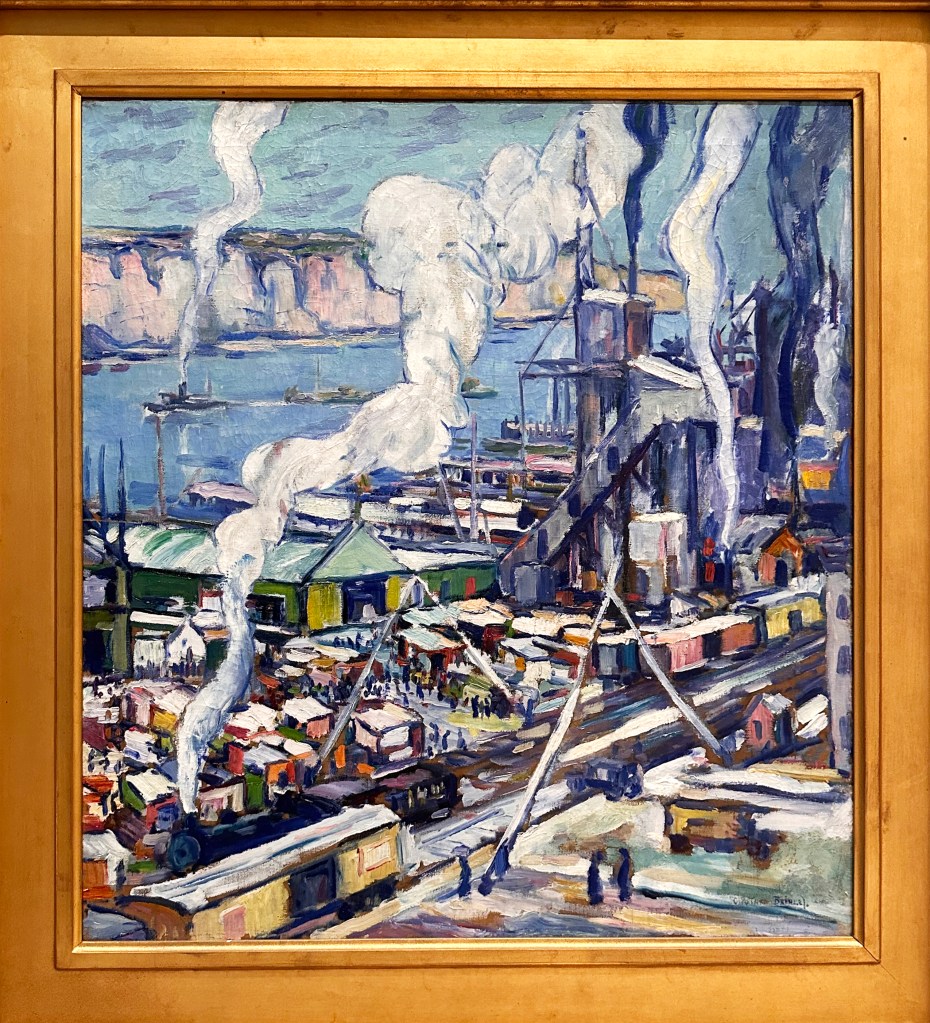
Daniel Putnam Brinley’s ‘Hudson River View (Sugar Factory at Yonkers)’ stood out through its masterful contrast of pastel colors against black outlines. The smoke rising into the sky, set against the distant Hudson, created a powerful statement about industry’s impact on the natural landscape.
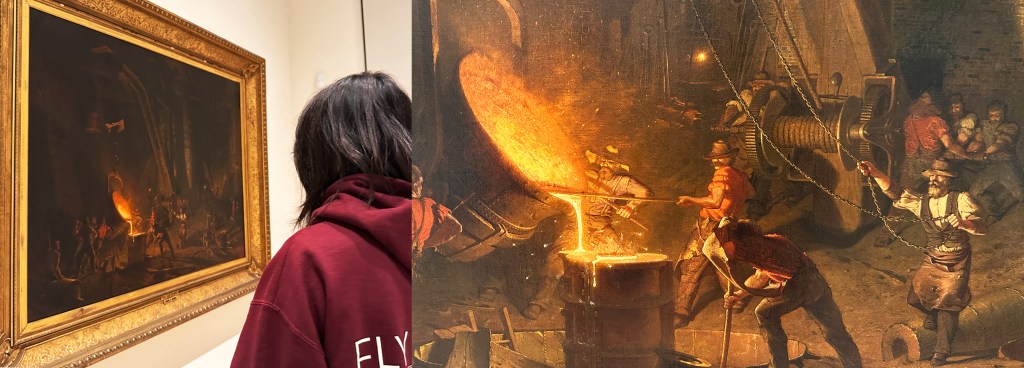
Equally striking was John Ferguson Weir’s ‘The Gun Foundry’ – its glowing molten steel initially seemed disconnected from the river theme. Yet the work told the story of West Point’s foundries, which boosted American military power while contributing to the river’s degradation.
While these industries have largely vanished in the 21st century, their story told through art rather than photographs carries a unique resonance. These artists, documenting their present, unknowingly created a powerful environmental narrative for future generations. Their works, now curated to tell an environmental story, speak across time with unexpected urgency.


Leave a Reply