Finding Van Gogh in the Pandemic Summer
Finally escaping our apartment after months of lockdown, Mom and I headed to “Van Gogh: The Immersive Experience” in NYC. After endless Netflix shows and takeout dinners, we were desperate for something – anything – different. Even if it meant seeing digital Van Goghs instead of the real ones in still-closed museums.
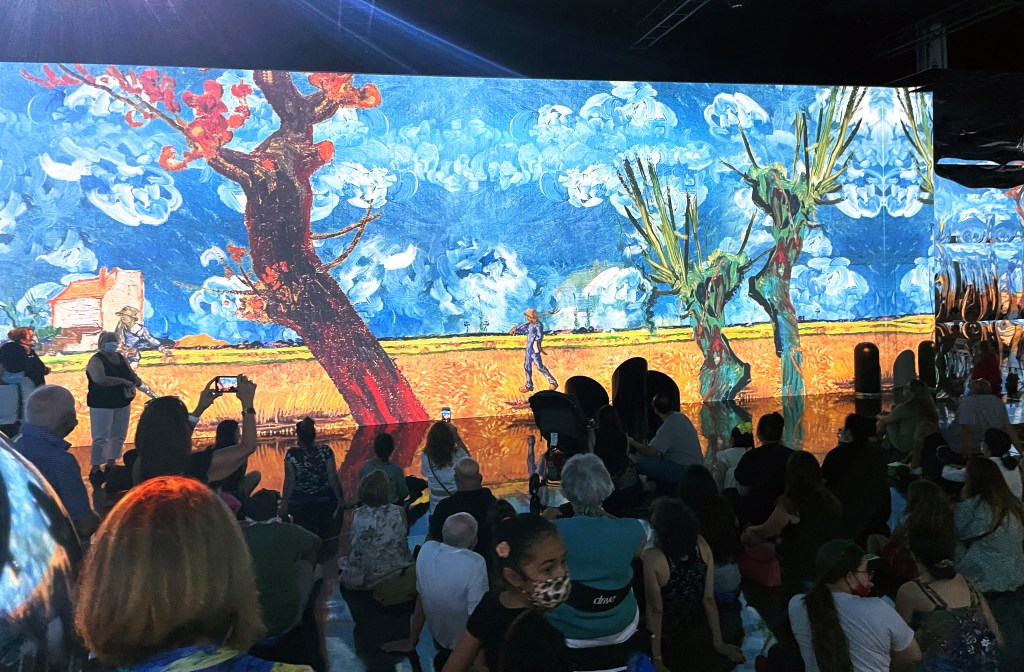
Imagine walking into Pier 36 and finding yourself inside a Van Gogh painting. The massive space transforms into a 360-degree canvas where “Starry Night” swirls around you and sunflowers bloom across entire walls. Classical music fills the air, making you forget you’re wearing a mask in the middle of a pandemic.
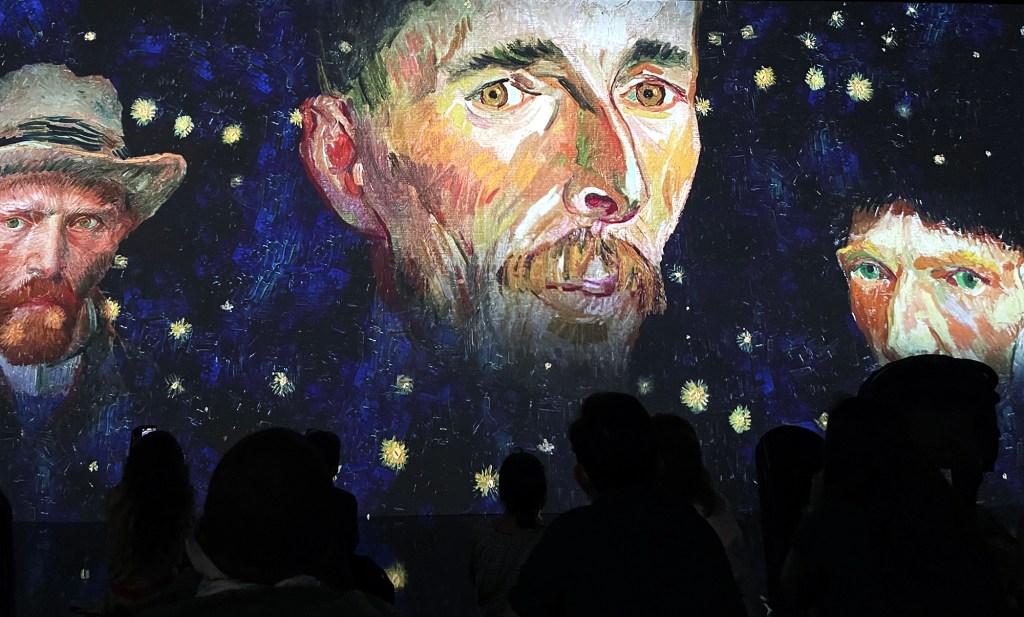
The show unfolds like a dream – you can sit, stand, or even lie down while Van Gogh’s world moves around you. Each ten-minute section tells a different story. I knew the basics about Van Gogh (you know, the ear thing, the sunflowers), but watching his self-portraits come alive made me feel like I was meeting the real person behind those famous brushstrokes.
A Fusion of Art and Modern Technology
Watching Van Gogh through media art felt like an inevitable marriage. His signature elements – those deeply textured brushstrokes, his mastery of color that earned him the title “color magician,” and that vibrant energy bordering on unease – seem almost predestined for digital animation. It’s as if his paintings were already in motion, waiting for technology to catch up.
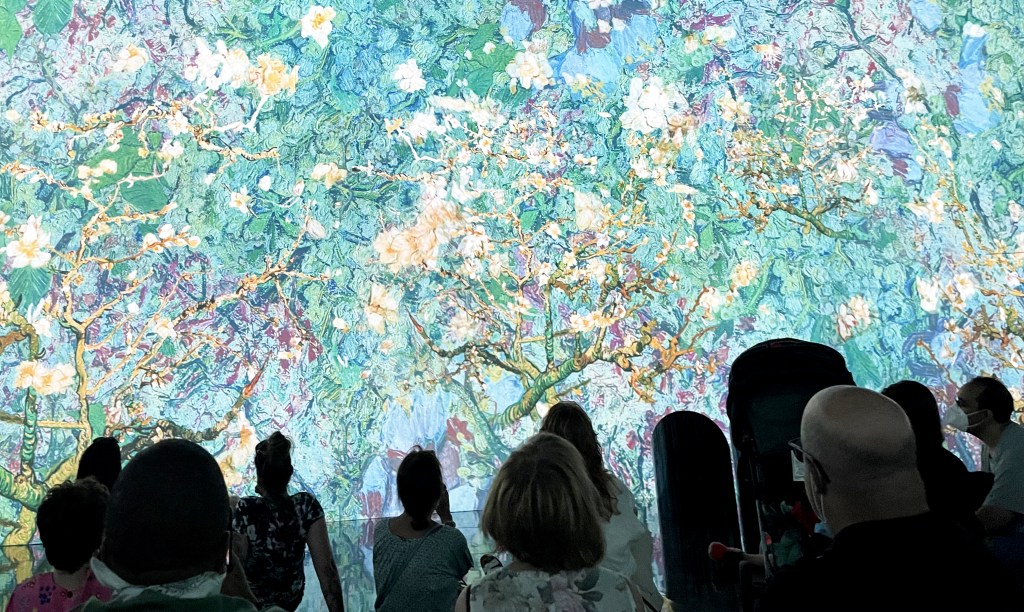
The way each artwork dissolved into another, sharing elements like petals becoming stars, or wheat fields transforming into cypress trees, created something magical. Sitting there, I felt like I was inside Van Gogh’s imagination, seeing the world through his eyes. His famous impasto technique gained new life through projection mapping, each brushstroke casting actual shadows that danced across the walls.
This wasn’t just technology meeting art – it was technology revealing art’s hidden dimensions. For someone like me who’s studied Van Gogh’s works in books and museums, this immersive experience offered a new perspective. It made his art accessible in a way that even the original paintings, protected behind museum glass, sometimes can’t achieve. The digital space became a bridge between Van Gogh’s 19th-century vision and our modern way of experiencing art.

Gallery Tales: Monica Yoon Art Journey


Leave a Reply