
Iconic Reunion: Two Giants Meet
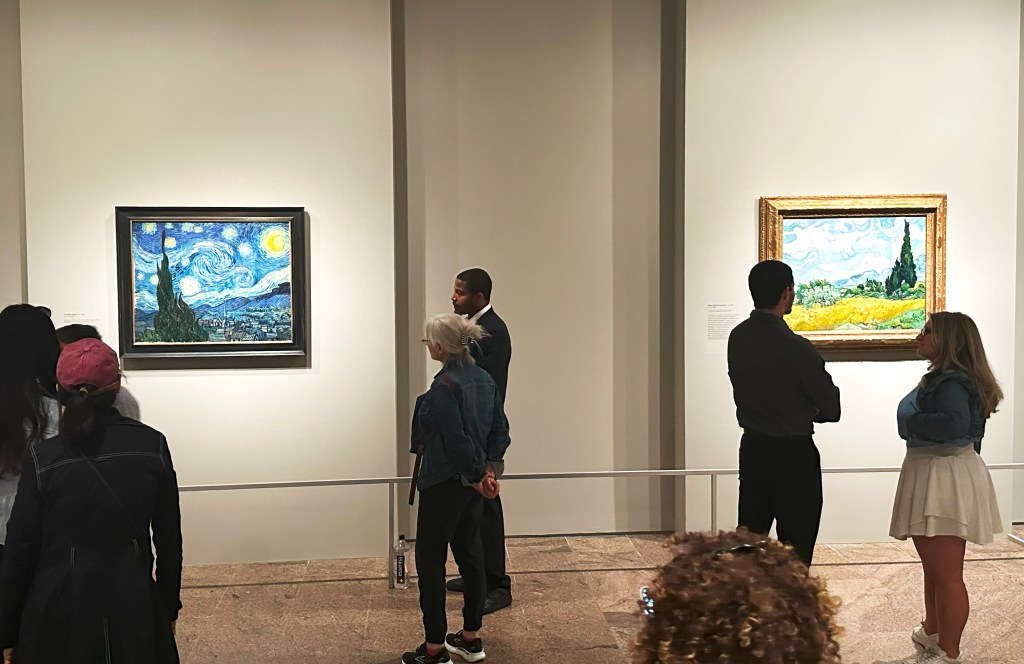
The MET’s special exhibition creates an unexpected encounter – “The Starry Night,” normally at MoMA, now hangs beside the MET’s own “Wheat Field with Cypresses.” Both painted in 1889, these masterworks reveal Van Gogh’s fascination with cypress trees during his time in Saint-Rémy. The gallery’s thoughtful arrangement, with soft green walls and strategic lighting, allows visitors to trace how Van Gogh approached these towering subjects from different perspectives.
Fresh Perspectives: Wheat Field with Cypresses
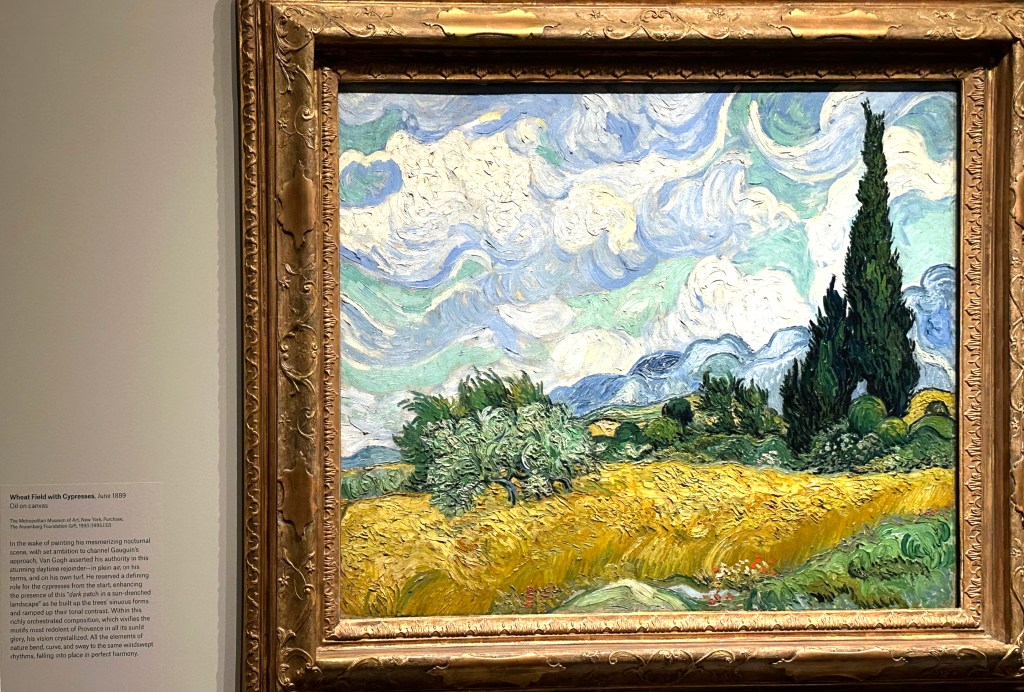
Even during the crowded Sunday opening, I found myself noticing previously overlooked details – how the tree’s dark form anchors the swirling patterns of wheat and sky, creating a dynamic balance rather than domination. Placed next to “The Starry Night,” the MET’s “Wheat Field with Cypresses” offers a notably more settled composition. The horizontal line of the wheat field sits closer to the center, while the cypress tree, color palette, and even the sky’s swirls feel more harmonious than its famous neighbor. Unlike other works in the exhibition where cypress trees dominate through size or central placement, here the tree exists in peaceful dialogue with its surroundings, suggesting hope rather than isolation.
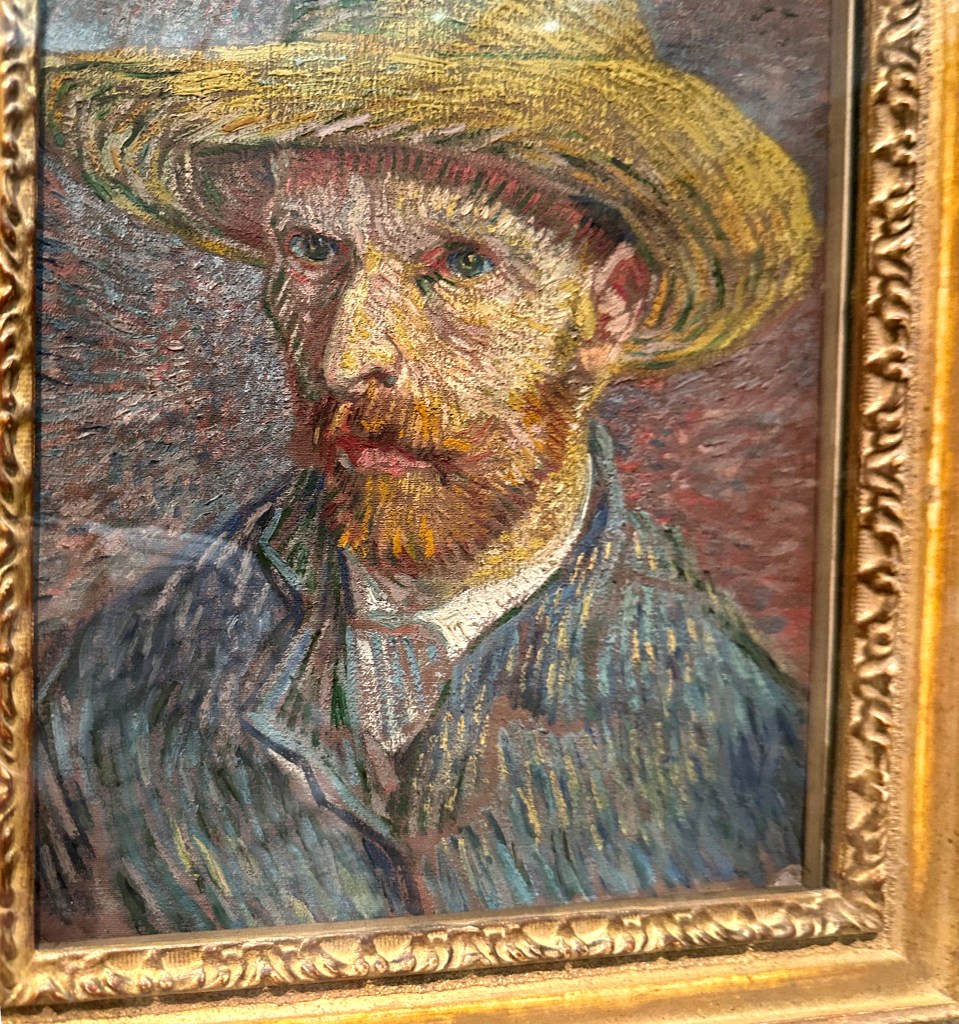
After the infamous ear incident, Van Gogh turned to cypresses repeatedly. Each canvas shows his signature brushwork – thick, almost sculptural strokes that bring these trees to life. Though I’ve never seen a real cypress, Van Gogh makes me feel their presence, especially in “Cypresses” (1889).
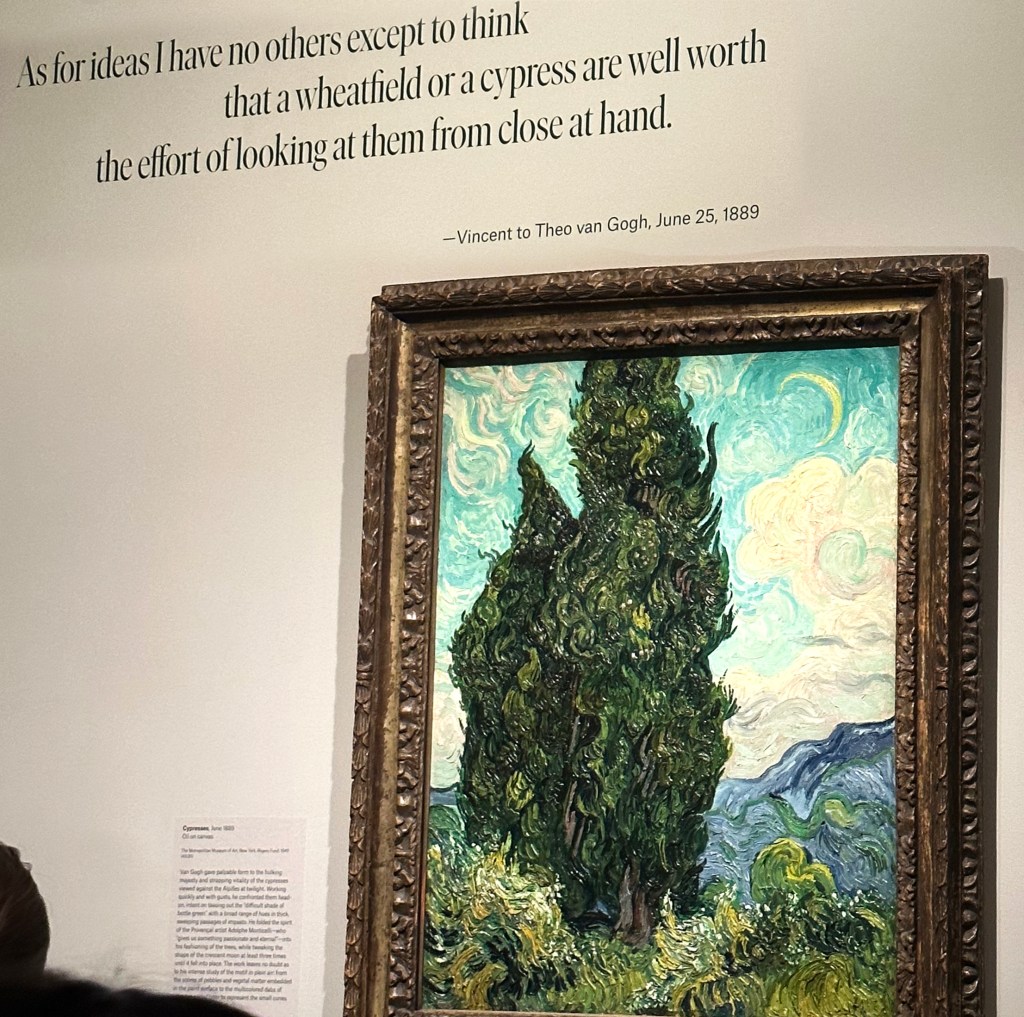
The dark greens and blacks dance together, making the tree seem alive with inner fire. Unlike the more famous pieces in the exhibition, this painting focuses solely on the tree itself. The cypress fills the canvas like a dark flame against the sky. Van Gogh’s brushstrokes create a sense of movement – the tree appears to be reaching upward, full of energy and life. Standing before it, I felt the same intensity Van Gogh must have experienced while painting it.
Beyond Canvas: Space as Narrative
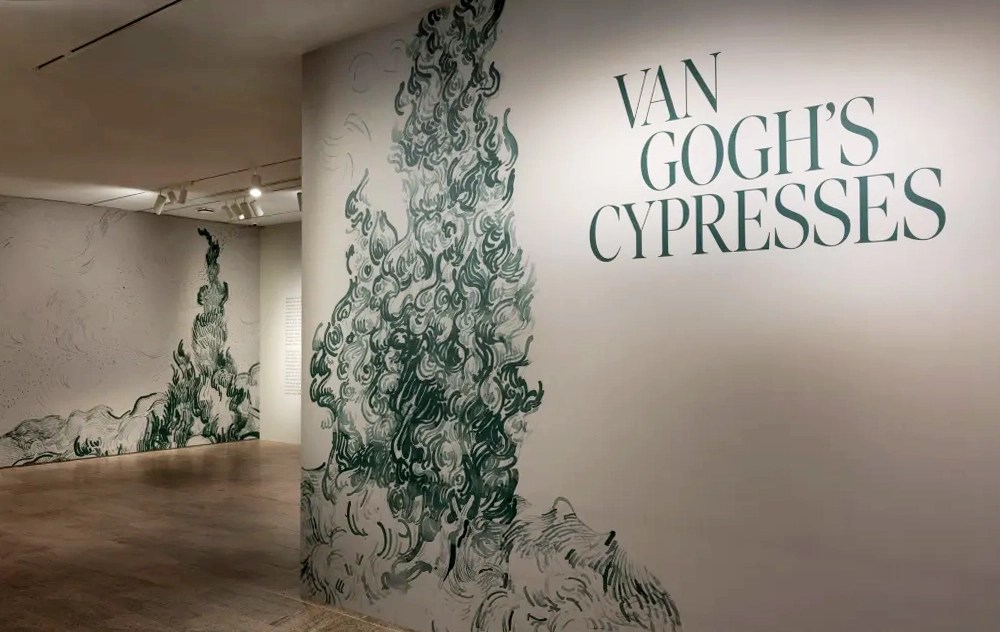
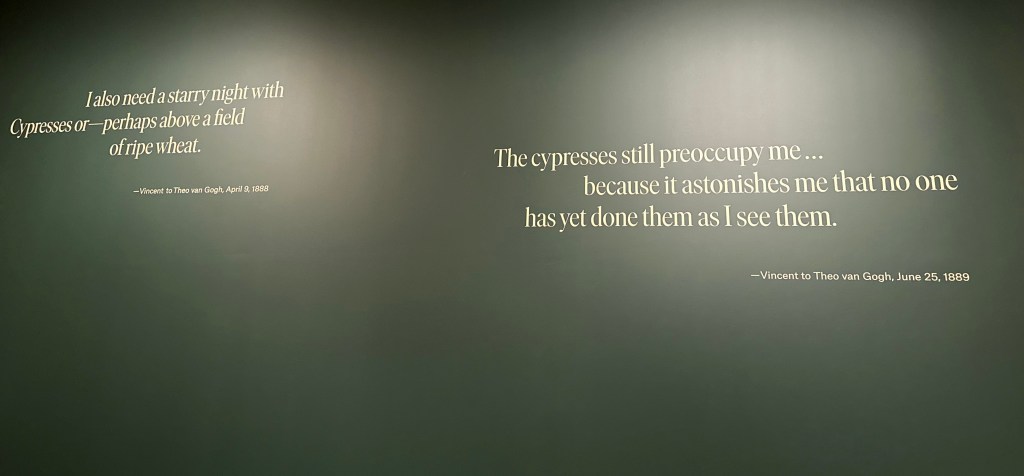
The exhibition design transforms viewing into an immersive experience. Alternating green and white walls create a subtle rhythm through the galleries, while carefully selected quotes from Van Gogh’s letters provide intimate context. Despite my usual habit of heading straight to Monet’s galleries at the MET, I found myself lingering here, drawn into Van Gogh’s world. The curators’ thoughtful arrangement makes the cypress trees feel present beyond the frames – each wall, each transitional space becomes part of the narrative, enhancing our understanding of Van Gogh’s deep connection to these solemn sentinels.
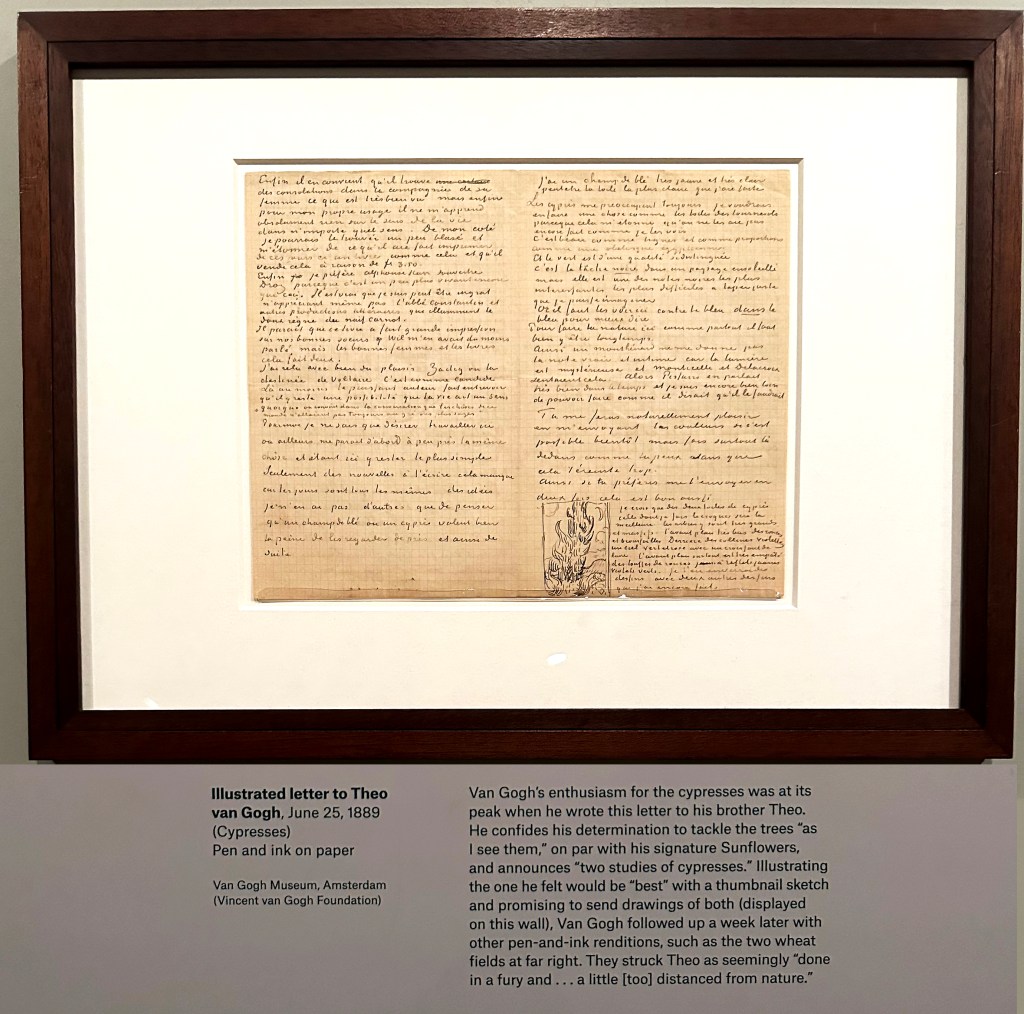
Looking around the packed gallery that Sunday morning, I noticed how each visitor found their own connection with Van Gogh’s solitary cypresses, perhaps seeing in them what the artist himself saw – not just trees, but powerful symbols of life’s persistence.


Leave a Reply