
In Search of Van Gogh’s Final Days
Though not a visit to see his original paintings, I joined my family on a trip to the small town near Paris where Van Gogh spent his final days. Walking through the actual locations that inspired his famous works seemed like a different, yet meaningful way to understand his art.
The quiet, modest town of Auvers-sur-Oise welcomes visitors with its peaceful countryside charm. Walking up to his grave, I encountered the church I knew so well from his paintings. The Auvers church stands more imposing in reality than in his work, with heavy, somber colors that contrast sharply with Van Gogh’s interpretation. His painting of this church, with its intensely blue sky and diverging paths, suggests an unsettling restlessness – perhaps reflecting his inner turmoil during his time here.
The surrounding wheat fields bring his last painting to mind. The deep blue sky against golden wheat, the ominous crows, and his aggressive brushstrokes – all create a vast, lonely landscape without a single human figure. Van Gogh took his life here in July 1890, at just 37. His brother Theo, his lifelong supporter, followed six months later. While debates continue about the circumstances of Van Gogh’s death, these fields clearly speak to his profound isolation during his final days.
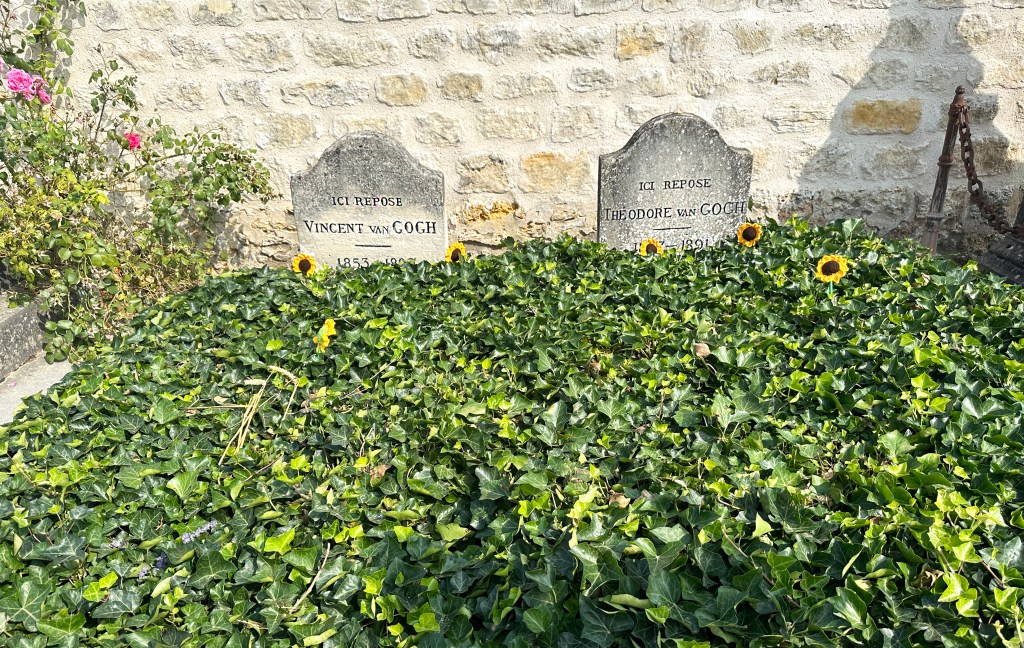
Leaving the cemetery where the brothers rest side by side – a sad yet touching reminder of their bonda poignant reminder of their bond – I noticed the wheat fields stretching beyond the walls. Few tourists venture this far, making the scene feel as solitary as it must have been in Van Gogh’s time.


Leave a Reply