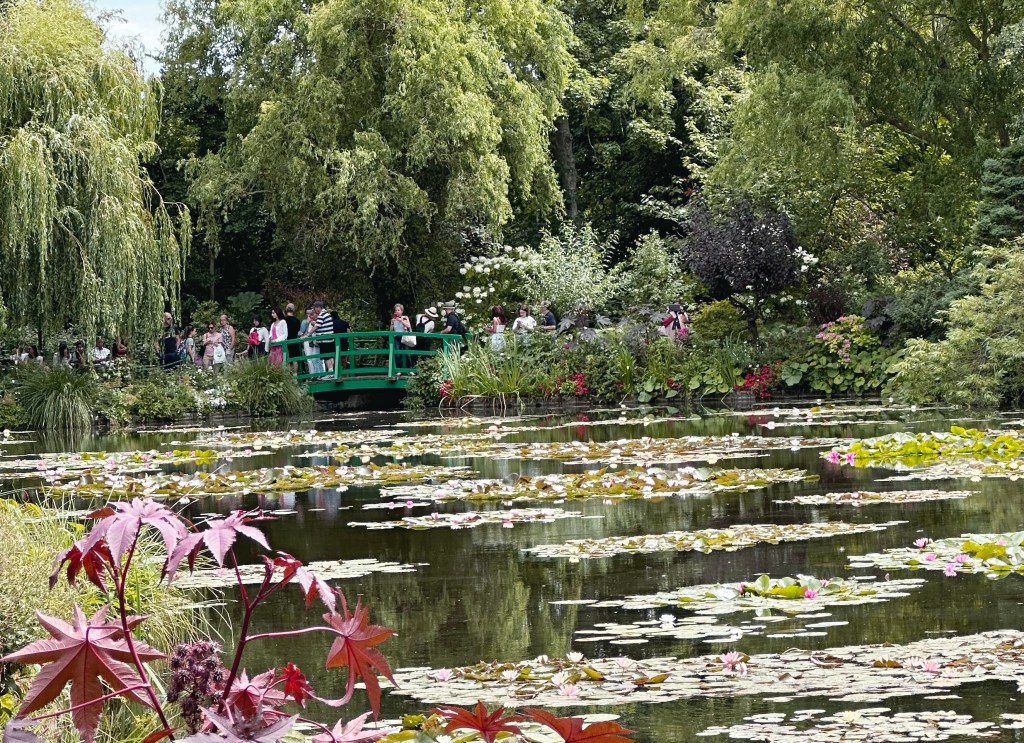
A House in the Country for Painting en Plein Air
Before Giverny, there was Orangerie. Standing before Monet’s massive water lilies in Paris, their scale and luminosity had already left an indelible mark. At Giverny, each garden path revealed the living inspiration behind those masterpieces. The summer light streamed across blooms in impossible colors, some familiar, others unexpected, while morning haze lifted from the lily pond like scenes from the Orangerie walls come to life.
The museum guards mentioned how each March, as the gardens reopened, art lovers from across the globe converged here by the thousands. Standing amid these paths, it was clear why these gardens had drawn generations of artists and visitors. This wasn’t just Monet’s garden – it was the birthplace of masterpieces, a living canvas that bridged the gap between the monumental works in Paris and their natural inspiration.
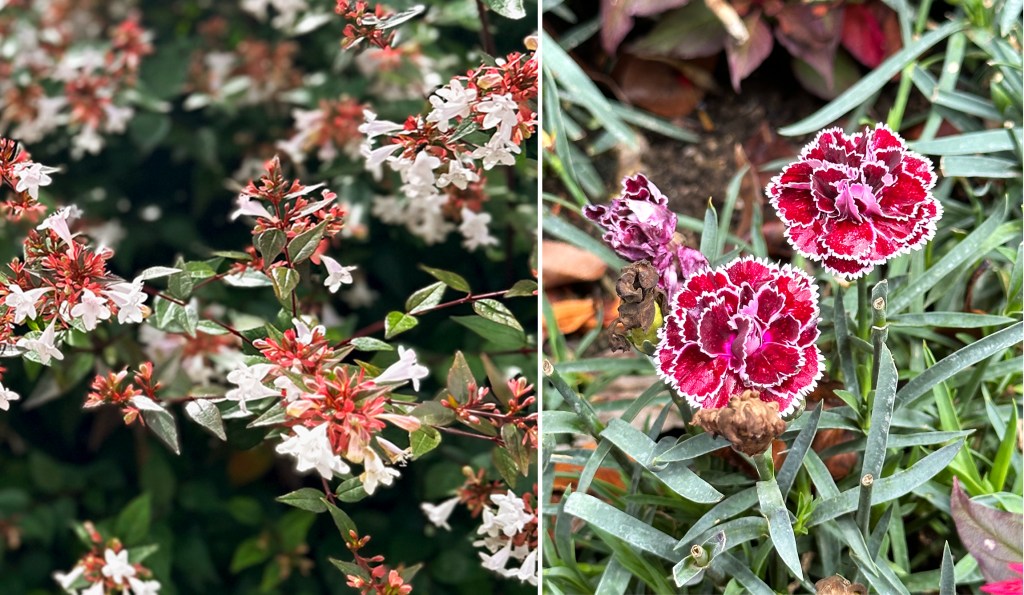
Near the Japanese Bridge
The noonday sun bleached some of the garden’s famous contrasts. From under the weeping willows, I noted how morning light might better capture the scene’s vibrancy – useful knowledge for painters who still frequented these grounds. The Japanese bridge ahead displayed its striking cobalt green, a bold choice that seemed more at home in a pop artist’s imagination than an Impressionist’s palette. Yet there it stood, complemented by lilac blooms.
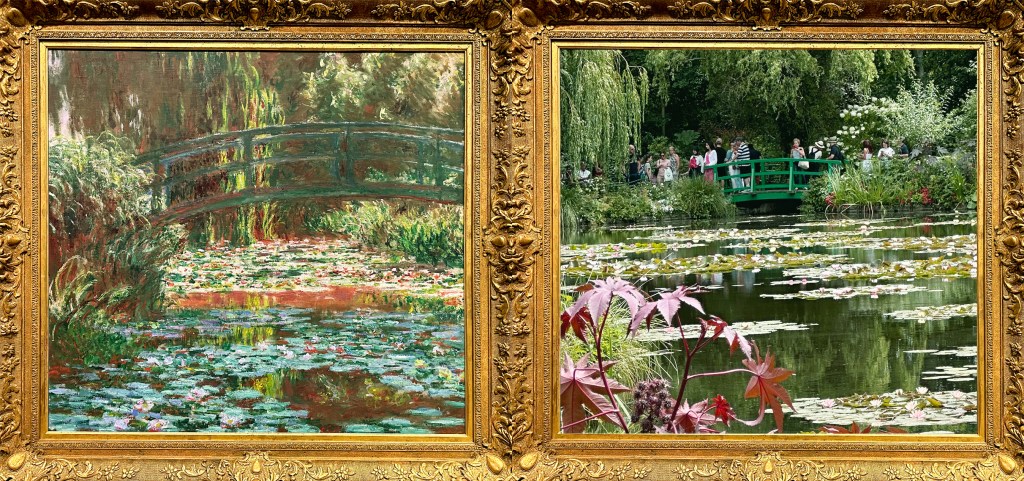
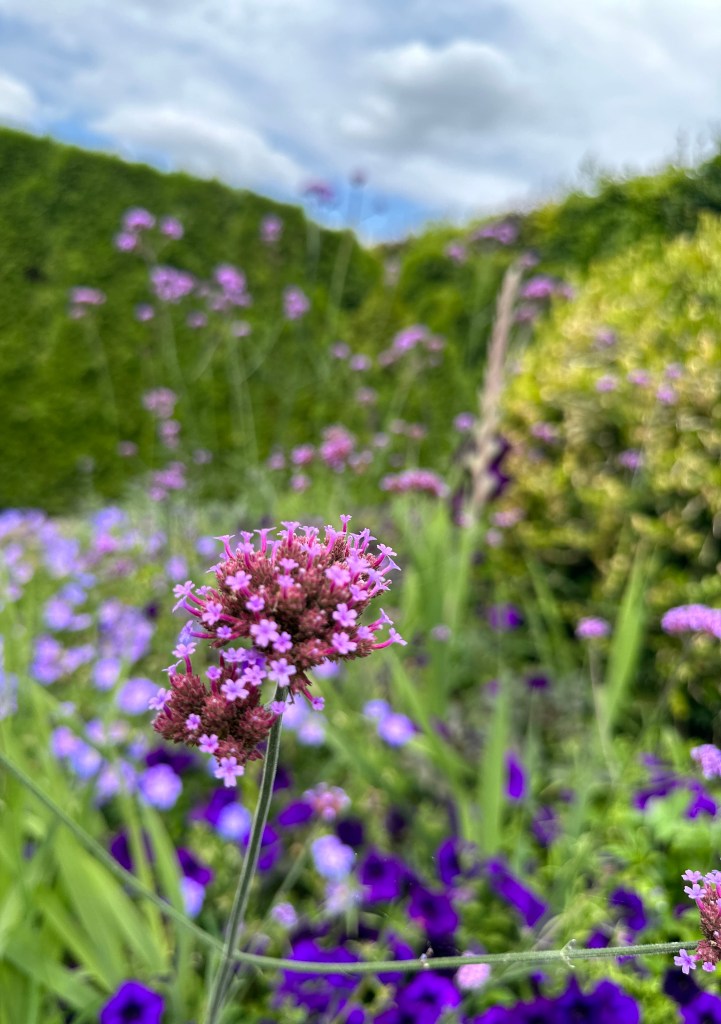
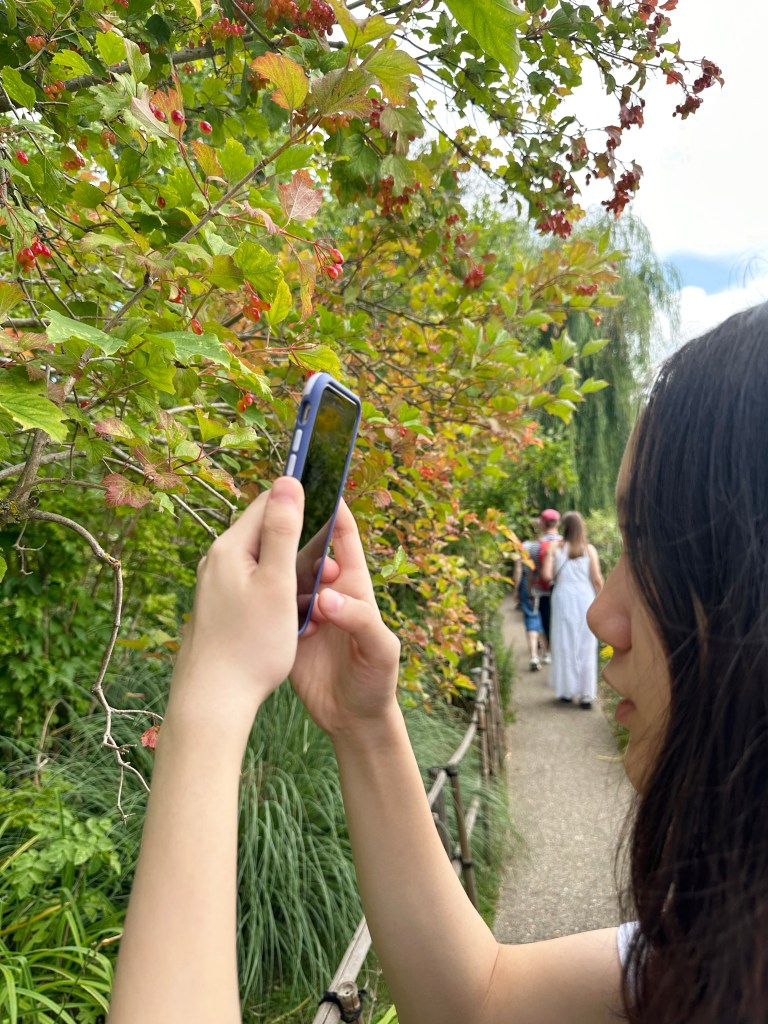
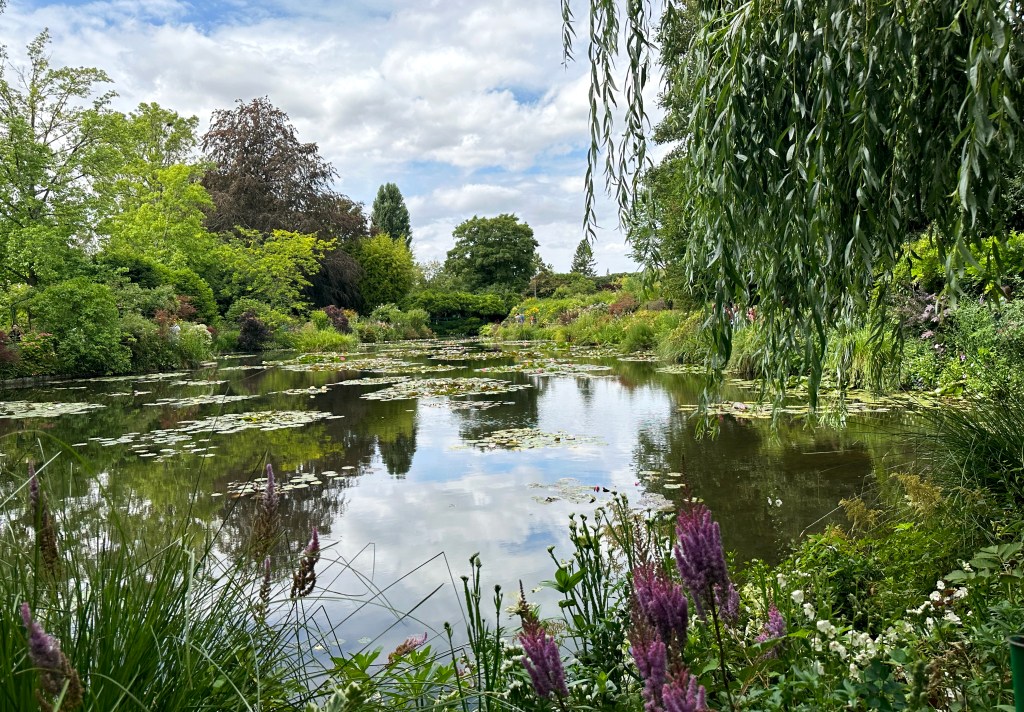
Moving toward the house, I traced possible spots where Monet’s easel might have stood. The same vivid cobalt green appeared on the house’s shutters and doors – a surprising architectural choice that created an unexpected dialogue between garden and dwelling.
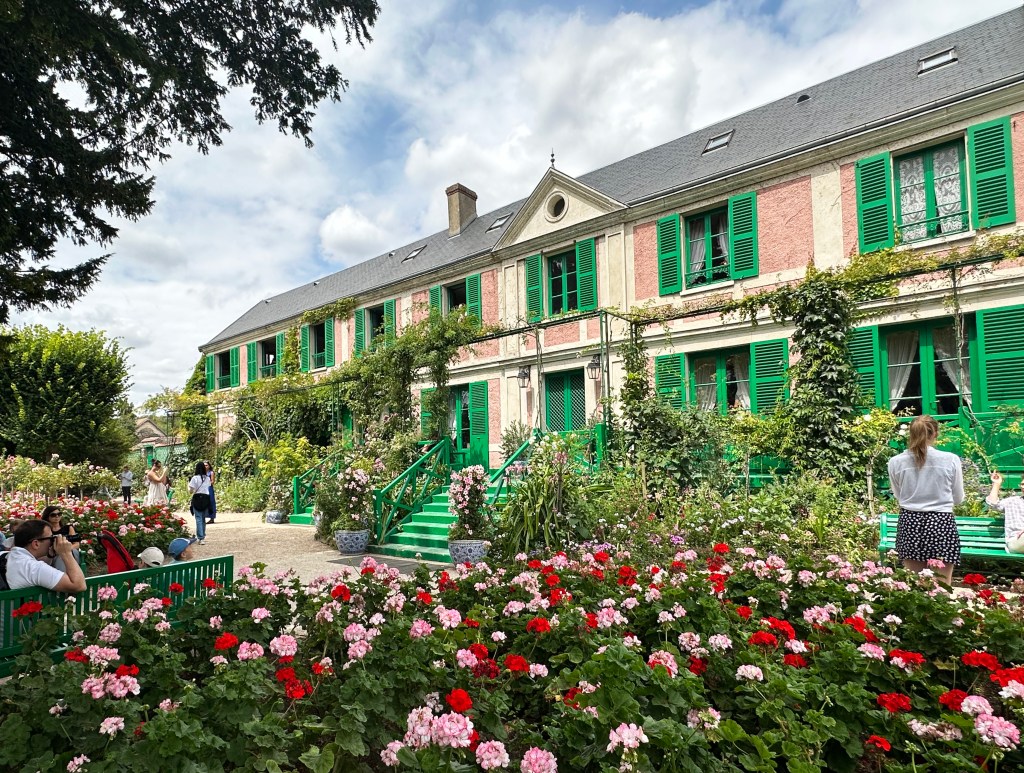
Between Plein Air and Ukiyo-e: Monet’s Private World
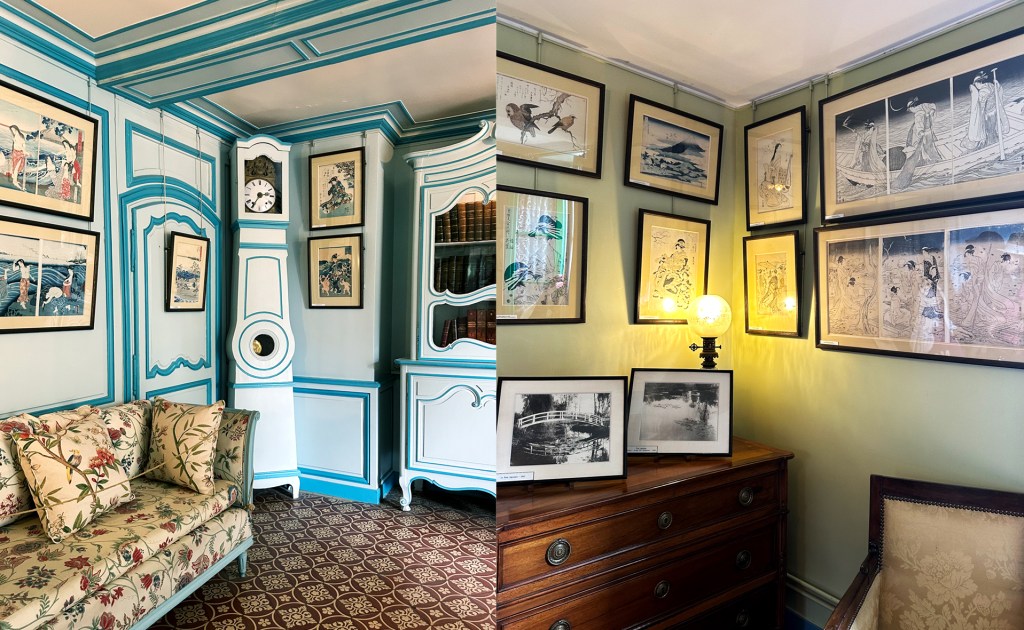
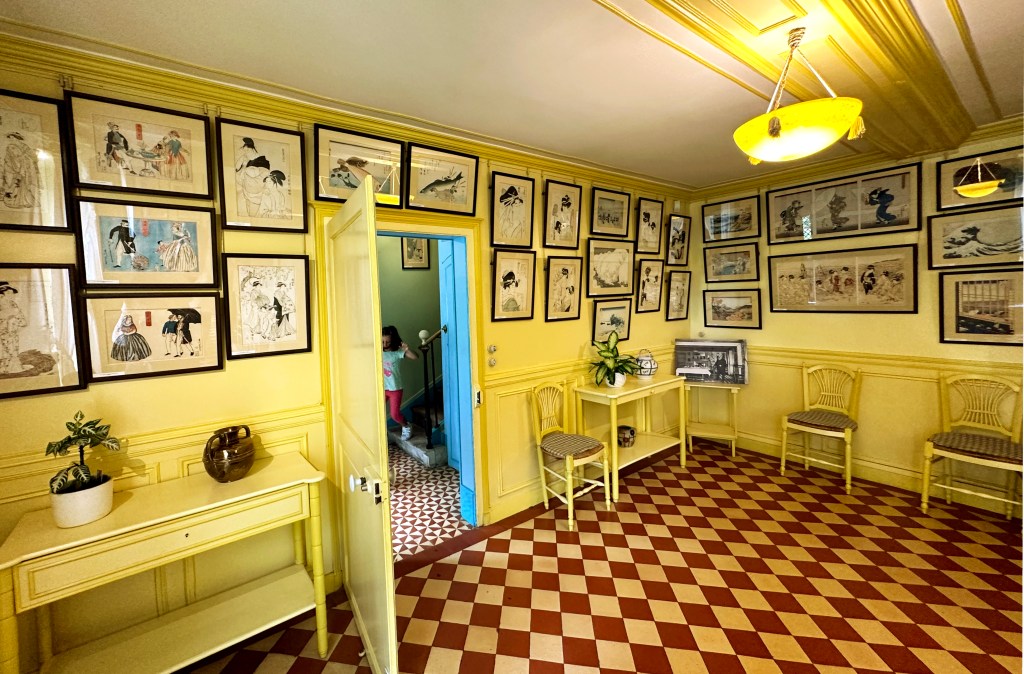
The interior revealed two distinct insights into Monet’s artistic vision. His remarkable collection of ukiyo-e prints – easily over a hundred – lined the walls. As an artist who devoted himself to painting en plein air, his attraction to these transformative Japanese prints suggested unexpected dimensions of his creative treasury. Perhaps these works, so different from his own pursuit of natural light, offered fresh patterns of seeing.
The house itself served as another canvas. Each room featured bold color combinations – yellows, greens, and blues in surprisingly bright tones. These weren’t the subtle impressionist hues of his paintings but rather confident architectural choices that marked this unmistakably as an artist’s domain.
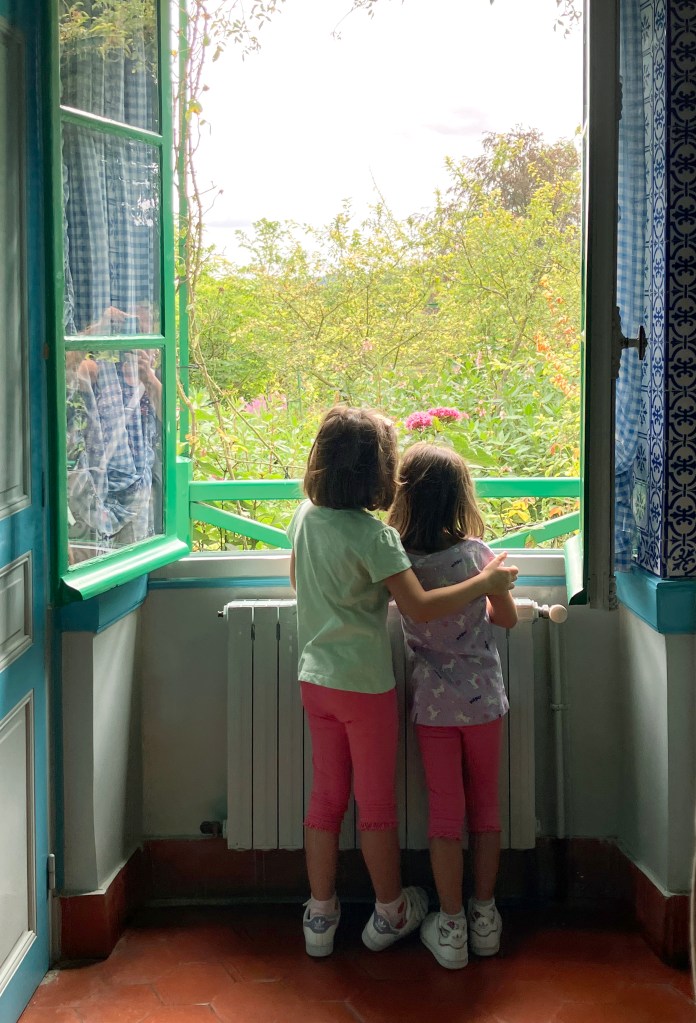
Near a window, a small group of girls studied the garden below, their silhouettes framed by the vibrant walls – a composition worth capturing someday.
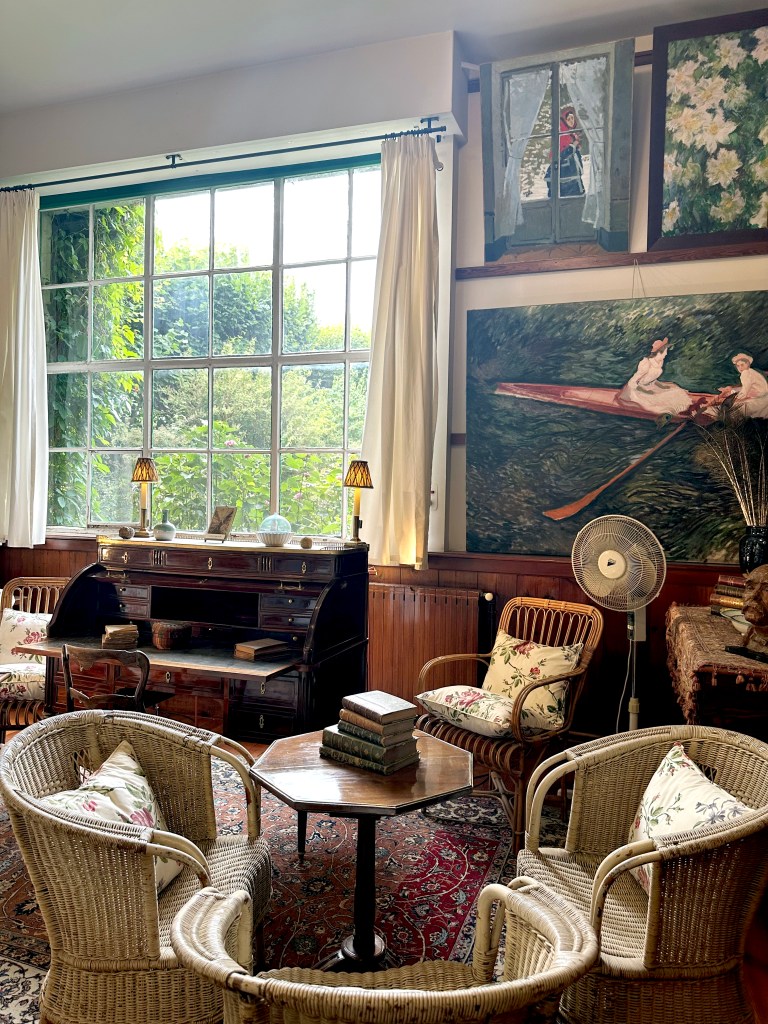
The guard told me that about 80 percent of the furniture in Monet’s house was actually used by him. Even though they’ve done some restoration work, it’s amazing that the next generation can still understand what the artist’s studio felt like. It’s such a privilege to be able to step into his world like this.
Time constraints kept me from visiting the Museum of Impressionism, which is just steps away. Yet perhaps it was fitting to end there—this garden and lily pond were Monet’s final masterpiece, a living artwork that transcended his canvases. I look forward to returning someday, curious to see how years of artistic growth might transform my perspective on this ever-changing landscape.

Gallery Tales: Monica Yoon Art Journey
 Gallery Tales: Monica Yoon Art Journey
Leave a comment