
Where Modern Meets Impressionist Magic
“You’ll love it – they have an incredible collection of Impressionists.” My friend’s description was simple yet enticing. I prefer visiting museums this way – with just enough knowledge to orient myself, leaving room for genuine discovery. The Barnes Foundation proved to be one such revelation, beginning with its architecture.
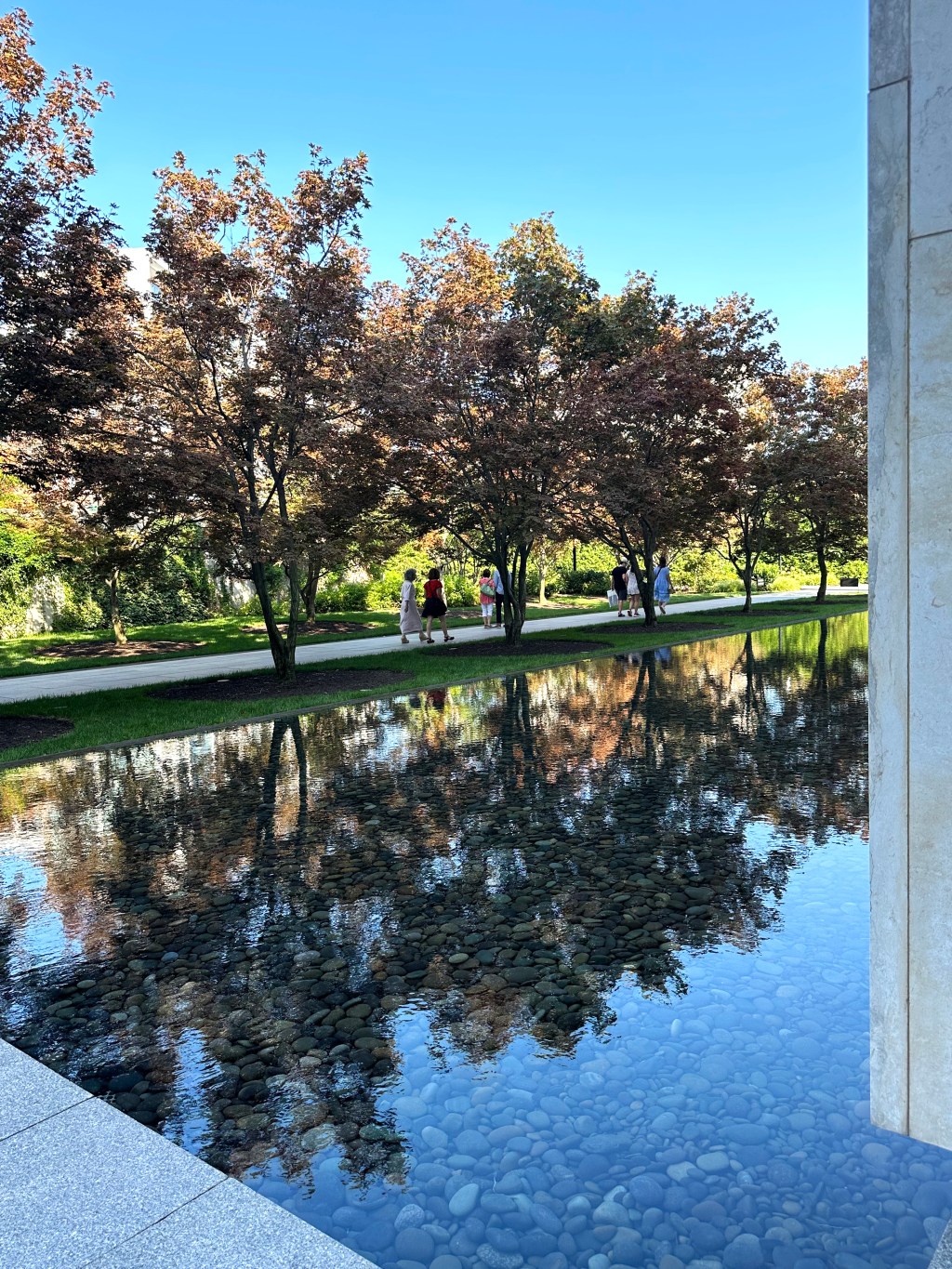
The building itself challenged my expectations. Clean geometric lines in grey concrete and glass stretch horizontally, while shallow reflecting pools trace the entrance path. It could easily be mistaken for a contemporary design firm or a thoughtfully constructed department store – more urban sophistication than traditional art museum. Here is a space that seems to say that art doesn’t always need the grandeur of classical columns or ornate doorways. Like the Gardner Museum in Boston, the Barnes Foundation refuses to be a conventional museum experience, though there’s something compelling about these museums born from private collections and own philosophy.
The Art of Seeing: Barnes’ Ensembles
The galleries of the Barnes Foundation challenge conventional museum expectations from the first glance. Here, an extraordinary collection reveals itself in an unconventional rhythm – masterpieces by Renoir, Cézanne, and Matisse share wall space in surprising combinations, free from traditional categorizations of period or style. The numbers alone are staggering: 181 Renoirs, 69 Cézannes, and 59 Matisses, yet these works mingle freely, creating unexpected dialogues across centuries and styles.
Dr. Barnes called these distinctive arrangements “ensembles,” a reflection of his uncompromising vision for experiencing art. While the precise logic behind these groupings remains his own, their effect is surprisingly liberating. As an art student, I found this approach refreshing – freed from the usual chronological or biographical frameworks, each piece speaks first through its visual presence. The absence of prominent labels further emphasizes this direct visual dialogue.
Despite the strict photography restrictions and watchful security, visitors move through the spaces with quiet intensity. Perhaps it’s the sheer quality of the collection, or maybe it’s Barnes’ unique display philosophy at work – encouraging us to trust our eyes before our art history knowledge.
The Studio Boat: A Personal Discovery
Wandering through rooms of celebrated masterpieces, I almost missed this small Monet tucked between grander works. The moment I noticed it, the surrounding paintings seemed to fade away. Here was Monet’s floating studio on the Seine – not a scene he painted, but where he painted from. A simple white cabin on a boat, its reflection stretching long in the silvery water, with a dark figure visible through the doorway.
The longer I looked, the more the painting revealed. The loose brushstrokes capturing ripples in the water, the wild greenery of the riverbank rendered in soft greys and greens, the moody atmosphere of what must have been an overcast day. This wasn’t Monet the master of grand water lily panoramas, but Monet the working artist, documenting his own creative space.
Among all the museum’s masterpieces, this modest scene kept drawing me back. Here was the actual boat where many of his river scenes might have been painted, captured with the same attention he gave to his more famous subjects. For me, this unexpected glimpse into his working method proved more captivating than any of his iconic works.
 Gallery Tales: Monica Yoon Art Journey
Leave a comment