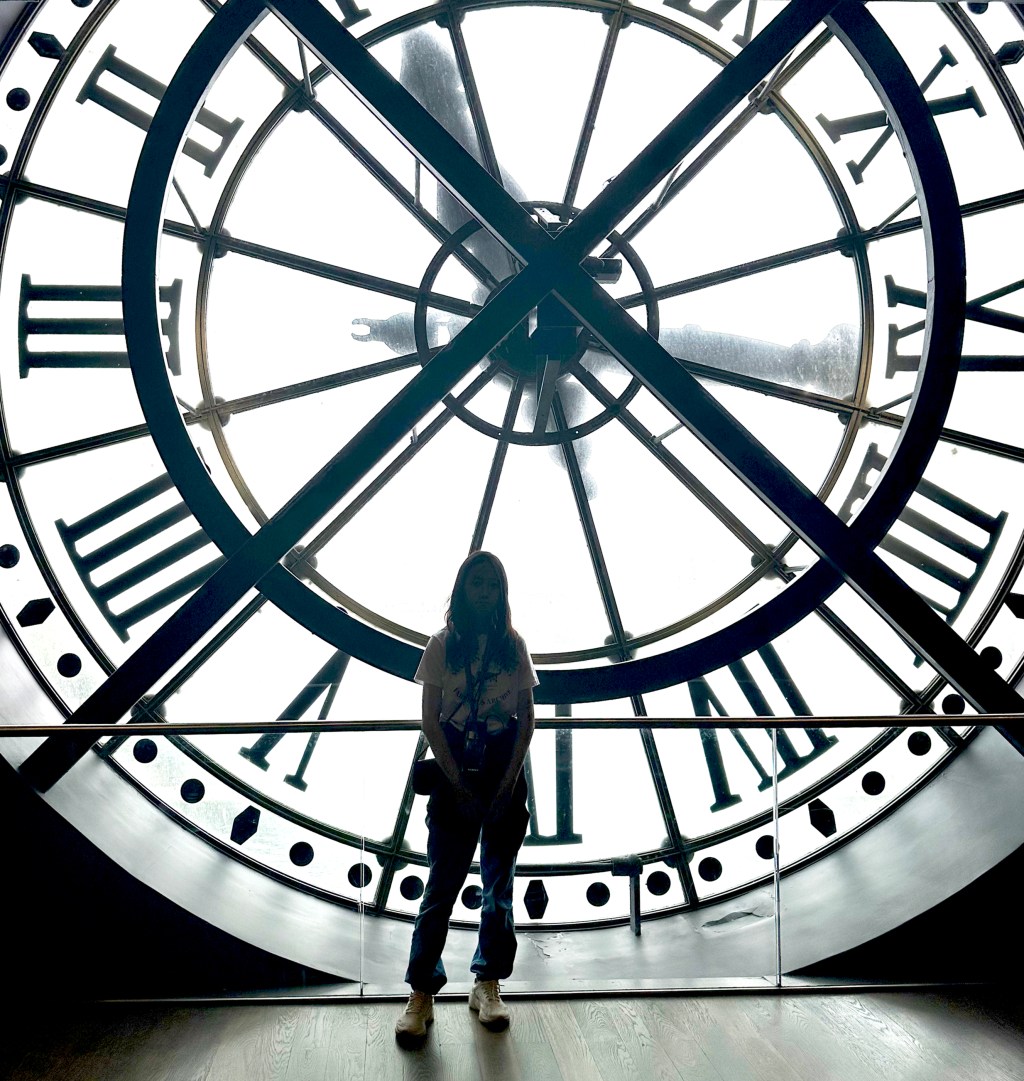
A Morning at Musée d’Orsay
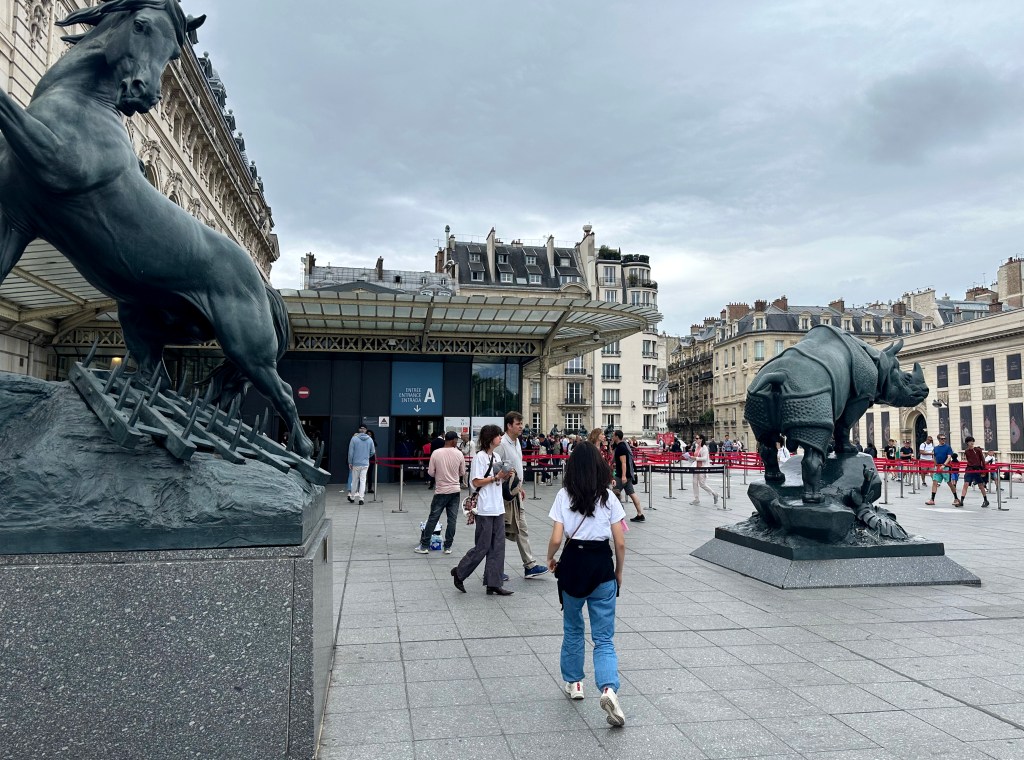
Paris’s Musée d’Orsay became my choice for my final day in the city. While the Louvre beckoned with its vast collections, I preferred to spend my morning with 19th-century art at a quieter pace. Even then, the Orsay proved larger than my morning could contain, so I settled on my tried-and-true strategy: choosing a few galleries to explore properly rather than racing through them all.
Manet/Degas: An Unexpected Dialogue
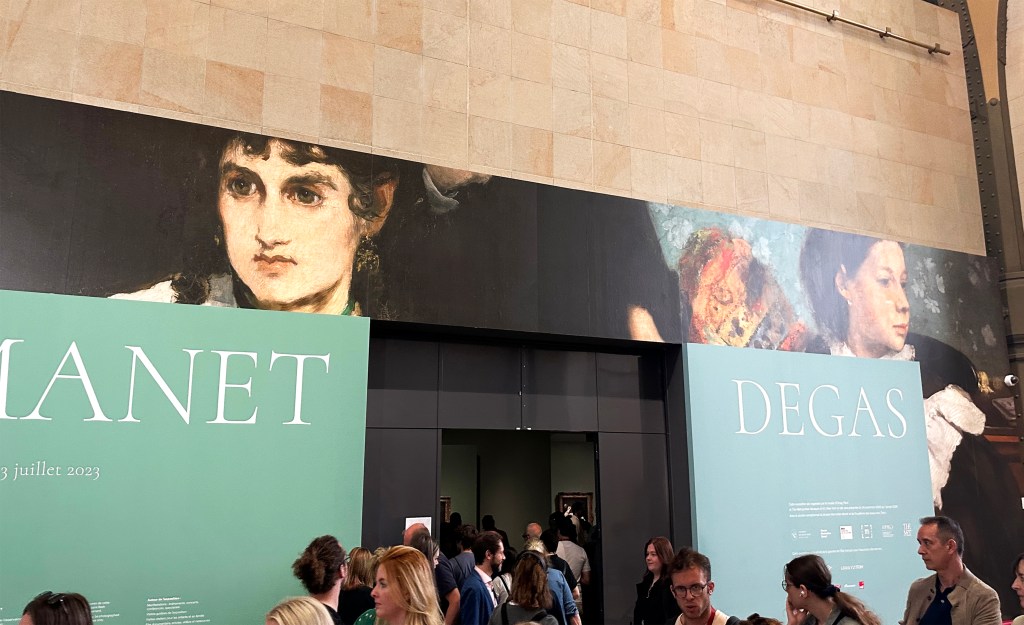
The long line for the special exhibition gave me time to wonder what connected these two artists – names I knew well separately but had never considered together. Inside, their self-portraits opened the show, revealing an unexpected story: these masters weren’t just
contemporaries but close friends sharing similar backgrounds. Still, their artistic paths took distinctly different directions.
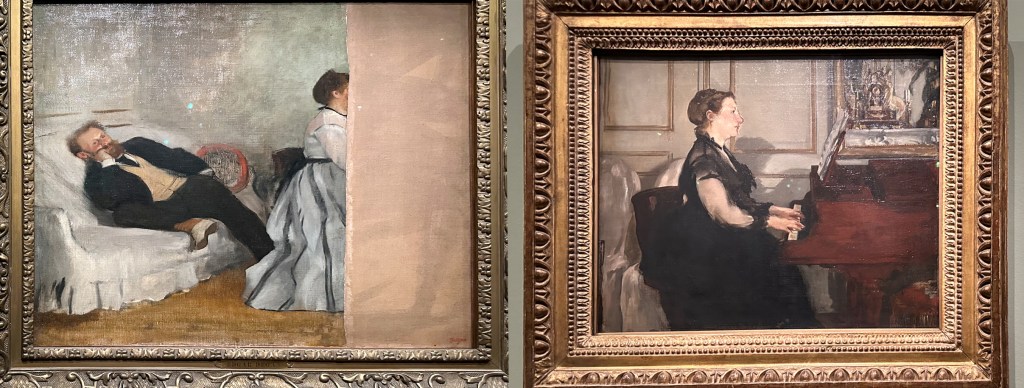
As I moved through the galleries, this fascinating relationship unfolded. Despite their well-known stylistic differences, they shaped each other’s work in surprising ways. One story particularly caught my attention: Degas once painted Manet’s wife, only to have Manet destroy the work in disapproval and create his own version. Their contrasting approaches appeared throughout – Manet’s bold, revolutionary compositions alongside Degas’s meticulous observation and subtle play with light.
Watching their story unfold through this exhibition showed me something unexpected – how two strong-minded artists could challenge each other while maintaining respect and friendship. Their relationship seemed both competitive and supportive, leading each to grow in their own unique direction. What an interesting lens through which to view these familiar artists anew! With these thoughts, I headed upstairs to explore more.
The Heart of Impressionism
Finally, I reached the section I’d been most anticipating – the Impressionist galleries. Navigating through clusters of tourists while occasionally checking on my mom’s location in other rooms made the experience more hectic than I’d hoped. I promised myself that next time, I’d visit earlier, before the crowds fill these grand halls.
Natural light streamed through the ceiling, creating a perfect setting for these luminous works. While Monet’s Water Lilies had initially drawn me here, it was his Houses of Parliament series that captured my thoughts. In an era when photography was making precise representation less relevant, how uncertain must it have been to paint like this – the building’s silhouette barely visible through fog, the sun tinted an unexpected pink. Yet standing here now, I understand completely how the artist’s eye captured that romantic interplay of light and mist. I indulged in a dream: someday, surely, someone will gather all of Monet’s Parliament paintings, now scattered across different countries, in one breathtaking exhibition.
I spent as much time as possible with works by Van Gogh, Cézanne, Seurat, and others, though each could easily demand a full day’s attention. The Musée d’Orsay felt perfectly balanced – its 19th-century collections neither too historically remote nor too oo abstractly complex, but comfortably engaging.
A Station Turned Museum
Since 1986, Paris’s former Gare d’Orsay has lived a second life as an art museum. My map became a frequent companion as I explored its unexpected turns and levels, but such moments of wandering only added to the building’s charm.
The grand central hall takes your breath away. Where trains once arrived, sculptures now stand beneath the soaring ceiling, with visitors relaxing on scattered benches nearby. Unlike the strict barriers and “no photography” signs common in many museums, the Orsay offers surprisingly close access to its masterpieces. As much as I enjoyed this intimate atmosphere, I couldn’t help wondering what the museum’s conservation team might think.
Manet’s Bold Vision: Olympia and Le Déjeuner sur l’herbe”
I’d always known these paintings sparked intense controversy in their time, primarily for depicting everyday women rather than mythological figures. Yet standing before them that day, I found my attention caught by details beyond their famous nudity.
In Olympia, the model’s gaze is remarkably defiant – almost challenging, as if saying “So what?” She wears flowers and fine jewelry with unmistakable confidence. The painting’s scale surprised me – much larger than expected, drawing numerous visitors to sit and contemplate it properly. My eyes were particularly drawn to the Black maid, rendered in notably dark tones. I tried to recall other European paintings of this era that included Black servants – few, if any, came to mind.
In Le Déjeuner sur l’herbe, fully dressed gentlemen sit casually beside nude women – a scene that would raise eyebrows even today. I could only imagine the shock it caused in Manet’s time.
Manet never achieved recognition during his lifetime, facing harsh criticism instead. Looking at these works that day, I was reminded how the role of a pioneer often comes at a personal cost.

Gallery Tales: Monica Yoon Art Journey


Leave a Reply