
Reflecting Absence: The 9/11 Memorial
I’ve lost count of how many times I’ve accompanied visiting relatives to One World Tower. While the observatory visits have become routine, the Memorial pools below never fail to stir something deep within. Two vast squares now occupy the footprints of the former Twin Towers, their endless waterfalls creating a powerful void in the heart of Lower Manhattan.
The architect titled this design “Reflecting Absence” – a name that captures its essence perfectly. Water cascades continuously down all four sides of each pool, creating North America’s largest man-made waterfalls. Names of those lost trace the bronze parapets, their letters cut deep enough to hold roses placed by visitors. Here, in the midst of one of the world’s most valuable real estate locations, nearly two acres have been dedicated solely to remembrance.
Standing at the edge of these pools, I’m struck by how artistic vision can transform collective grief into shared healing. The decision by New York City and the Lower Manhattan Development Corporation to preserve this space for remembrance rather than commerce speaks volumes. These pools, with their perpetual flow of water, highlight how thoughtful design can create a space where public emotion finds its own quiet expression.
Underground Memorial: The 9/11 Museum
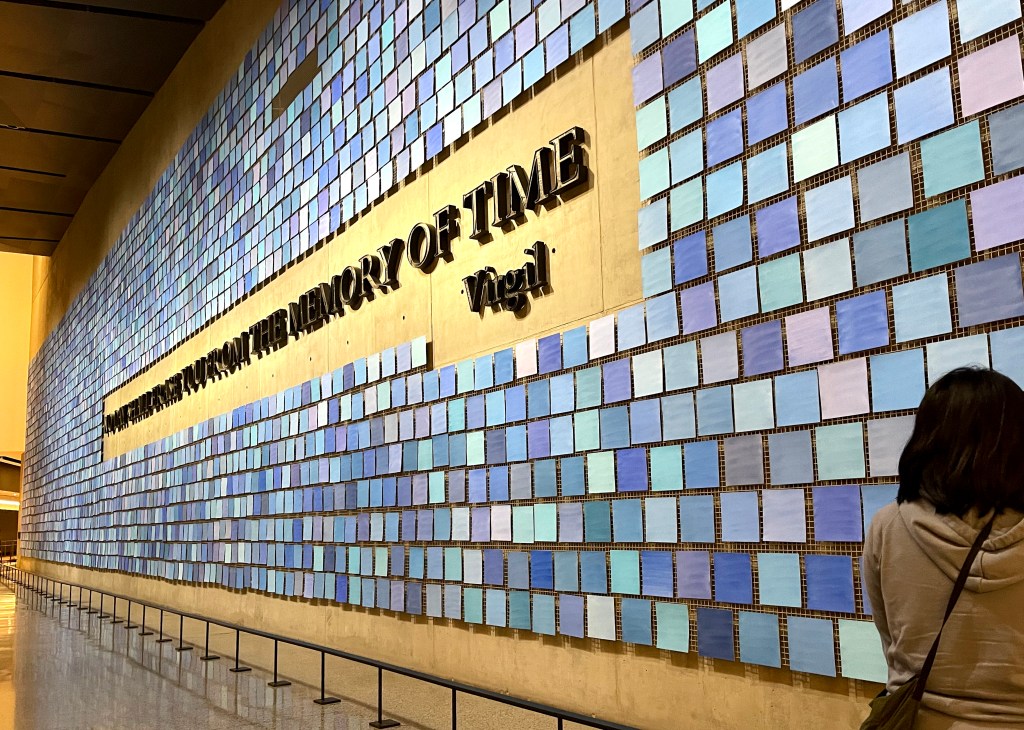
My first visit to the 9/11 Museum revealed an unexpected vastness beneath the ground. What appears as a modest single-story structure above ground unfolds into an enormous subterranean space, preserving much of the original World Trade Center’s foundation walls and structural elements. The sheer scale becomes apparent only as you descend – this isn’t just a museum, but a preserved archaeological site of recent history.
The museum’s spaces are carefully orchestrated to balance documentation and remembrance. Moving through the galleries, factual exhibits about the events of September 11 gradually give way to more personal narratives. Original artifacts command attention through their physical presence alone – massive steel beams twisted into forms that could pass for abstract sculptures, a fire truck compressed beyond recognition. Each piece maintains its raw power while being thoughtfully integrated into the museum’s contemplative environment.
What strikes me most is how everyday objects have been elevated to artifacts of historical significance – a simple pair of shoes, a crumpled appointment book, a worn desk chair. These personal items, displayed alongside larger structural remains, create an intimate connection to that morning’s events. As an art student, I found unexpected inspiration in how this space transforms profound loss into powerful artistic expression, proving that art can bridge the gap between historical documentation and human experience.


Leave a Reply