
The Art Institute of Chicago: Where City Meets Art
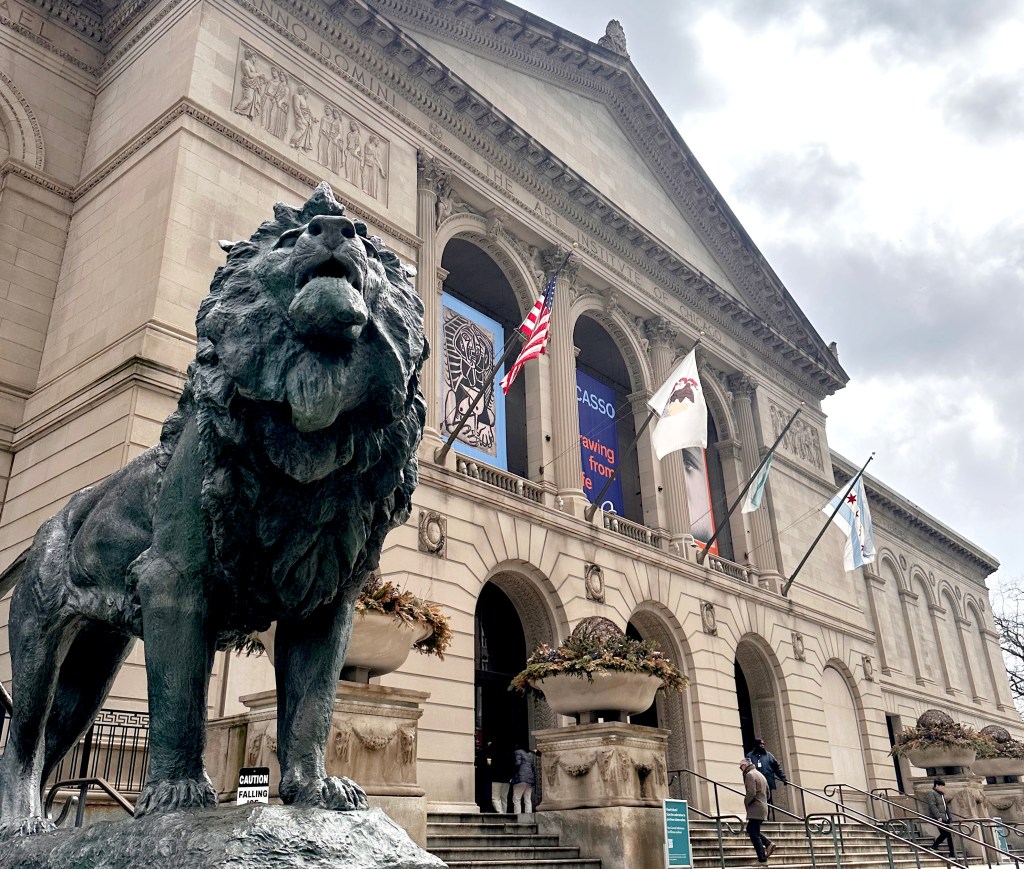
Mid-March in Chicago lives up to the city’s reputation. The wind sweeps across Michigan Avenue with enough force to make the St. Patrick’s Day celebrations – including the traditionally dyed green river – more of a brief photo opportunity than a lingering experience. Yet this weather seems fitting for approaching the Art Institute, where two bronze lions stand guard against the elements.
The Institute stands more powerfully than even its East Coast counterparts like the Met or Boston’s MFA. Rising from the ashes of the Great Chicago Fire, the building embodies the city’s renaissance – its Classical Revival architecture and rows of flags speaking to civic ambition as much as artistic appreciation.
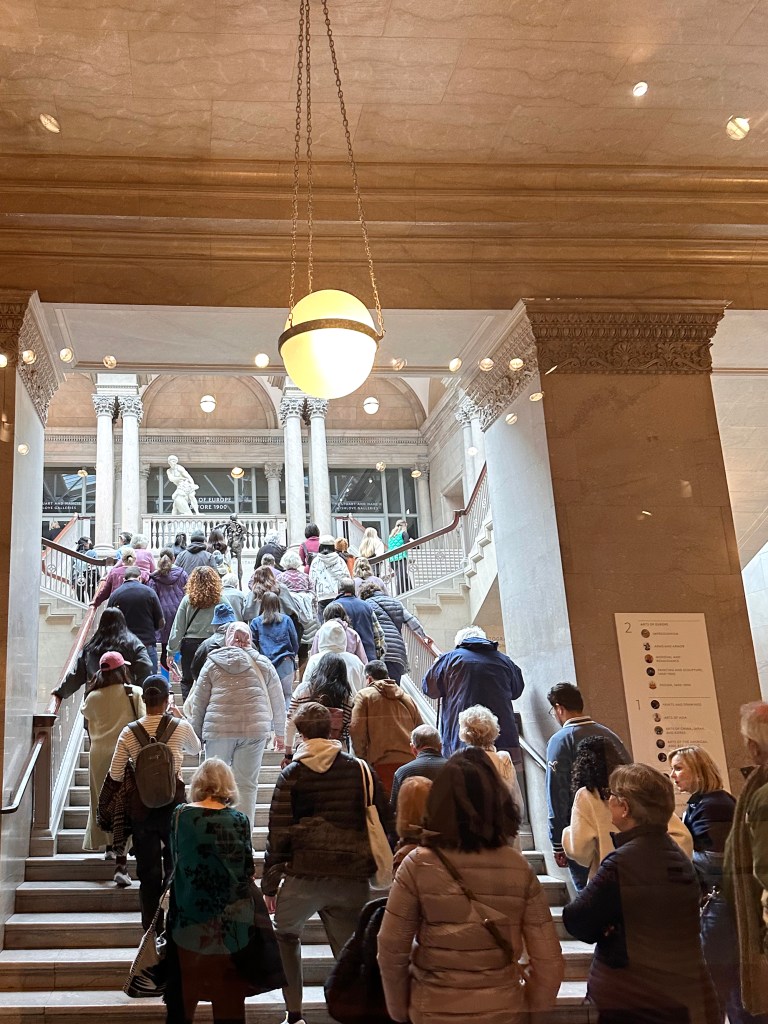
Climbing these entrance stairs feels like preparing for more than just viewing art – each step reinforces the weight of the city’s cultural legacy. Inside the lobby, however, this sense of gravitas meets reality: despite the biting wind outside – or perhaps because of it – the space hums with visitors, offering a reminder that great art museums balance accessibility with aspiration.
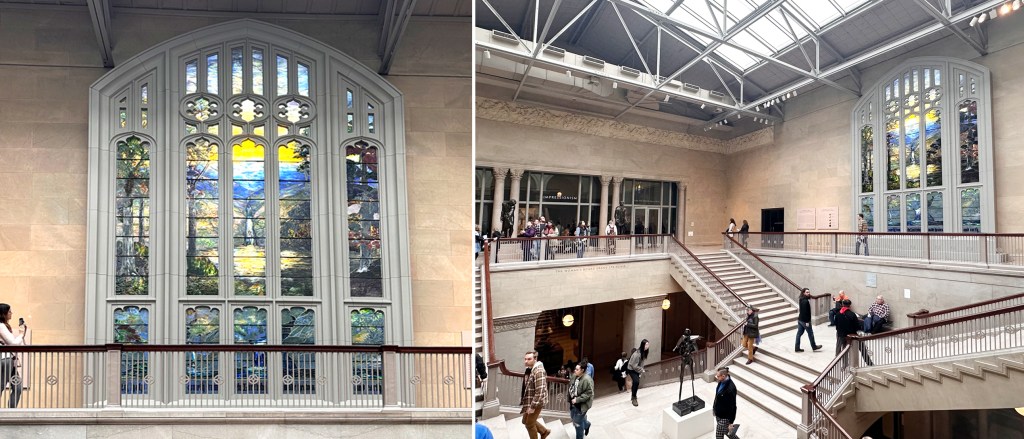
Design attributed to Agnes F. Northrop for Tiffany Studios
An Unexpected Detour: Radical Clay
I was heading to the Impressionist and Modern American galleries when I saw a sign for “Radical Clay.” The Japanese ceramic exhibition wasn’t on my list, but I stepped in anyway. These weren’t your typical ceramic pieces – they looked more like photographs turned into 3D. A crumpled newspaper caught my eye – every fold, every printed letter perfectly detailed in clay and paint.
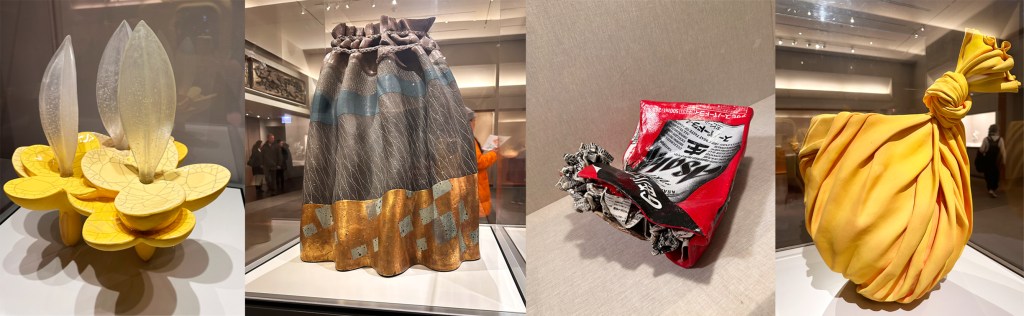
Looking at such precise work made me think about Michelangelo’s famous line about his marble sculptures – “I simply removed everything that wasn’t needed.” These artists took the opposite approach, building up every detail from scratch. As a young artist, I felt inspired to challenge myself with this detailed approach to 3D work and hopefully add it to my portfolio someday.
Drawing from Life: A Different Picasso
The next gallery showcased “Drawing from Life” – a Picasso exhibition. Picasso and drawings? My knowledge of him didn’t extend beyond his Cubist paintings, so curiosity pulled me in. The exhibition focused on his works on paper – drawings and prints – revealing his relationships with family and friends through these more intimate pieces.
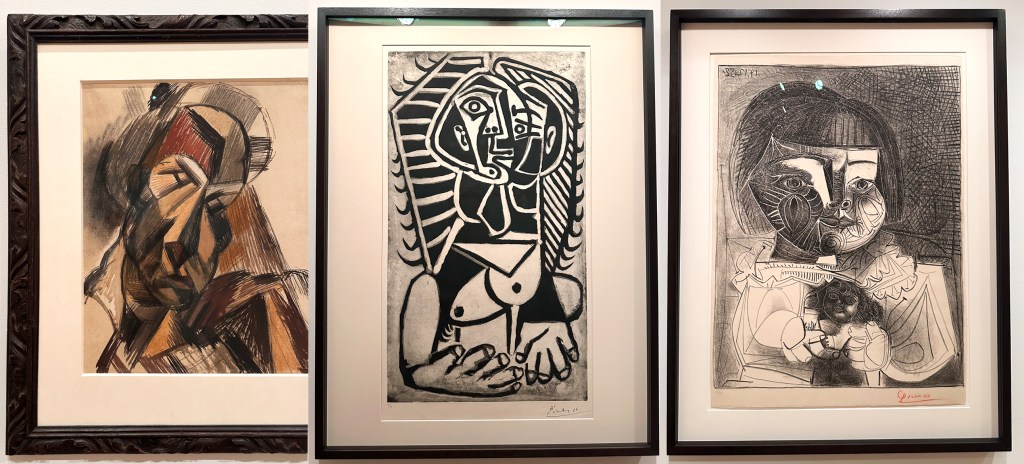
While his Cubist work often feels challenging to interpret, these drawings showed a surprisingly approachable side of Picasso. The delicate lines capturing his wife and daughter’s features suggested a gentler artist than his bold paintings might indicate. I never expected to find Picasso’s work this accessible, especially as a young artist still learning to appreciate modern art.
A Hall of Steel and Power
On my way to the Impressionist galleries, I stepped into the Arms and Armor room – and froze. The sheer scale of the collection against deep red walls created an immediate impact. While I’d seen armor before at the Neue Galerie’s Lauder collection, this display felt different. Full suits of armor, both human and equestrian, stood in dynamic poses as if ready to charge into battle, making me feel like an unarmed witness in a 17th-century European battlefield.
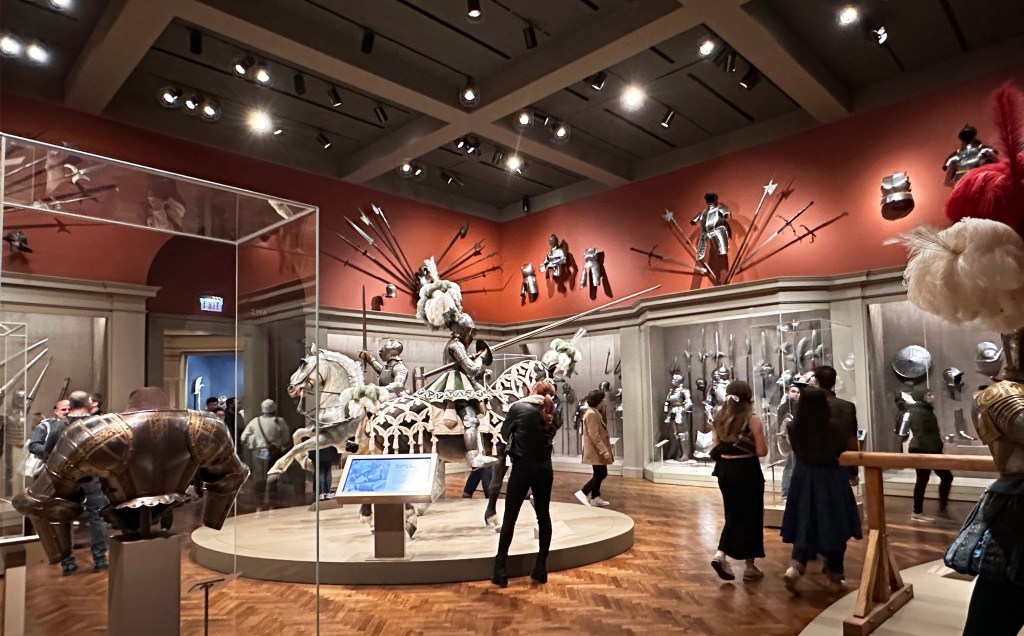
Each piece revealed intricate details that sparked questions about their original owners. The sophisticated metalwork and custom details suggested different ranks and status – perhaps the more elaborate pieces belonged to high-ranking commanders? The craftsmanship invited closer inspection, transforming these instruments of war into works of art.
The Triumph of Impressionism
Finally – the sign I’d been waiting for: “The Triumph of Impressionism.” Walking into this gallery felt like stepping into a personal wishlist come to life. The Chicago Art Institute’s Impressionist collection spread before me, each piece exactly what I’d hoped to see.
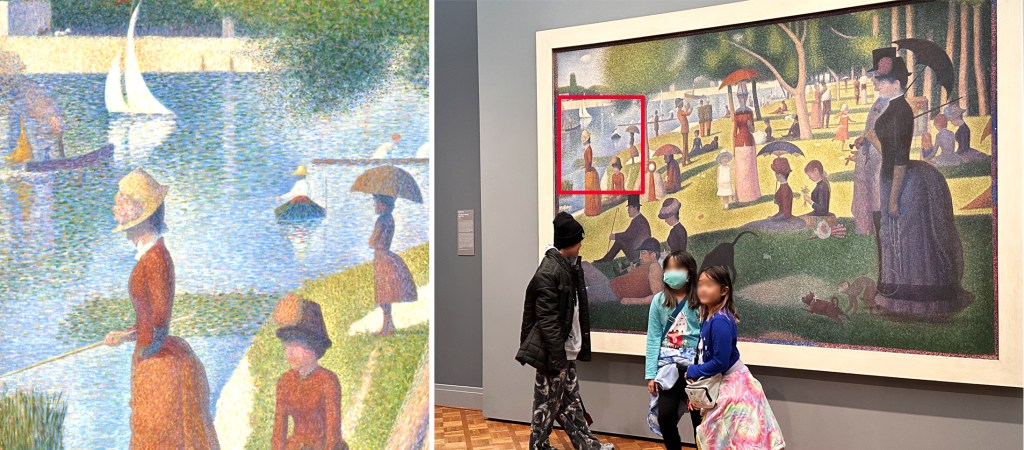
Seurat’s “A Sunday on La Grande Jatte” made me do a double take – it was as if my textbook reproduction had come to life on a massive scale. The actual size was mind-boggling – seeing it in person completely changed my understanding of pointillism. Each dot of color suddenly represented hours of patient work, building up that perfect light and tone.
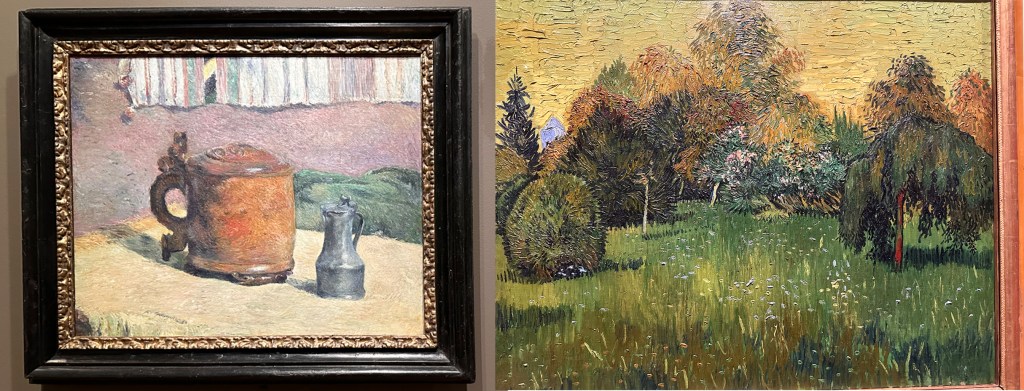
This gallery seemed to capture Impressionism at its warmest. Even artists known for bolder styles were represented by their gentler works – Van Gogh’s “The Poet’s Garden” and Gauguin’s “Wood Tankard and Metal Pitcher” showed their softer side. I guess the curators might have deliberately chosen pieces that emphasized light and warmth over dramatic expression.
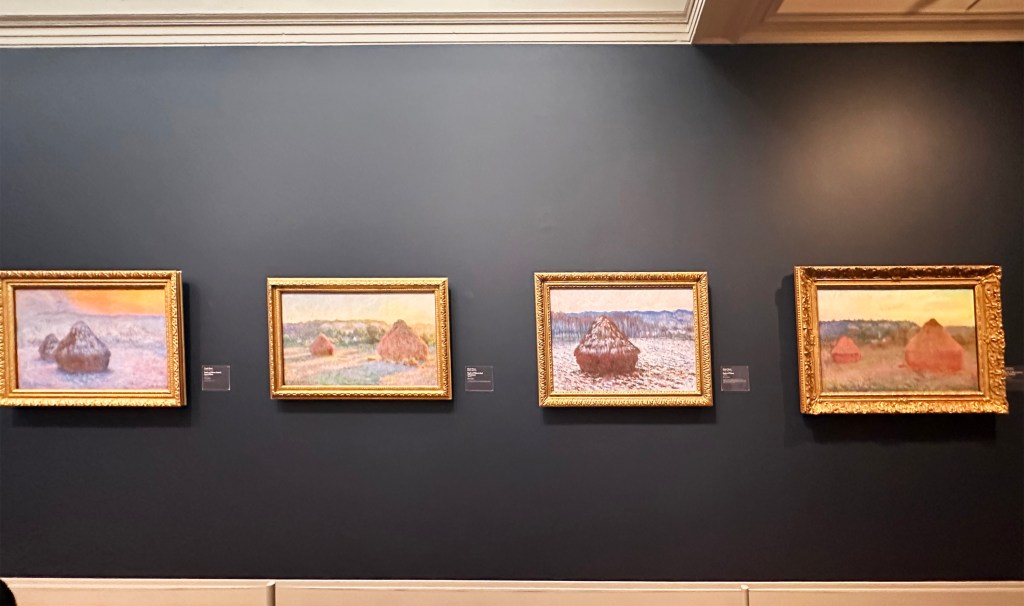
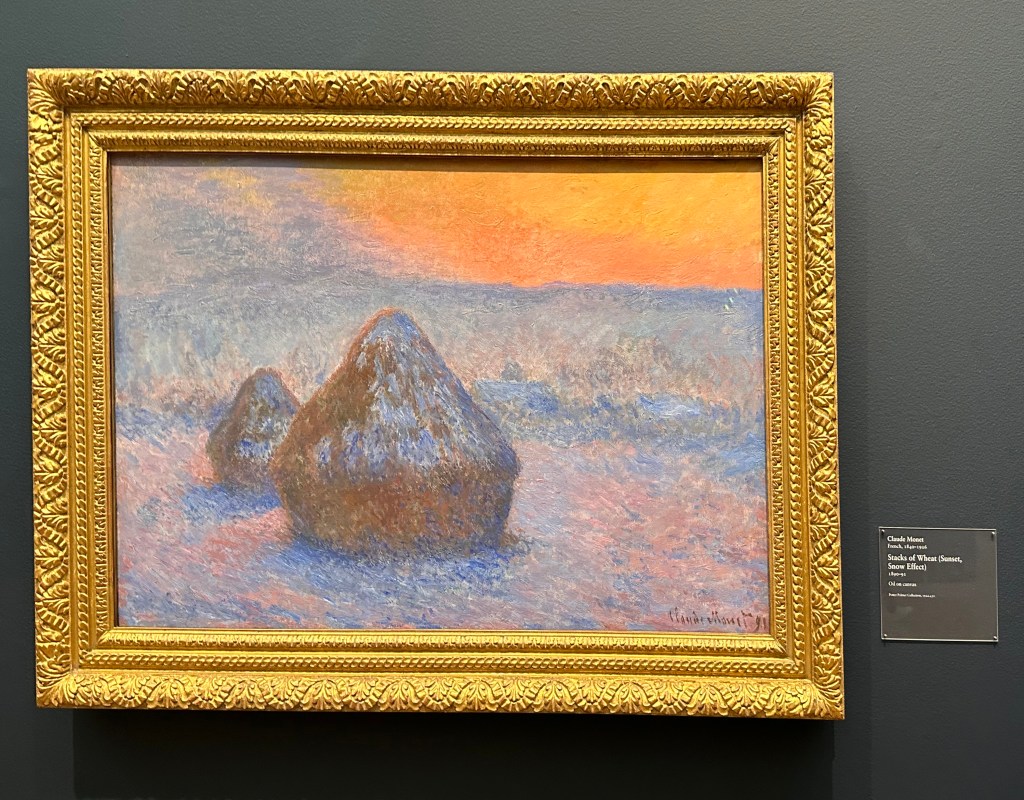
But the real surprise? Four of Monet’s Haystacks displayed together! The museum owns six from his series of 25, though only four were on view today. “Stacks of Wheat (Sunset, Snow Effect)” particularly caught my eye – the way Monet found winter’s chill in sunlit hay showcased his artistic vision perfectly.
His ability to capture fleeting moments extended through other works, from the familiar Water Lilies to Pissarro’s “Woman Bathing Her Feet in a Brook.” In this space, Chicago’s bitter wind felt worlds away.
 Gallery Tales: Monica Yoon Art Journey
Leave a comment