
Finding unexpected Art Space
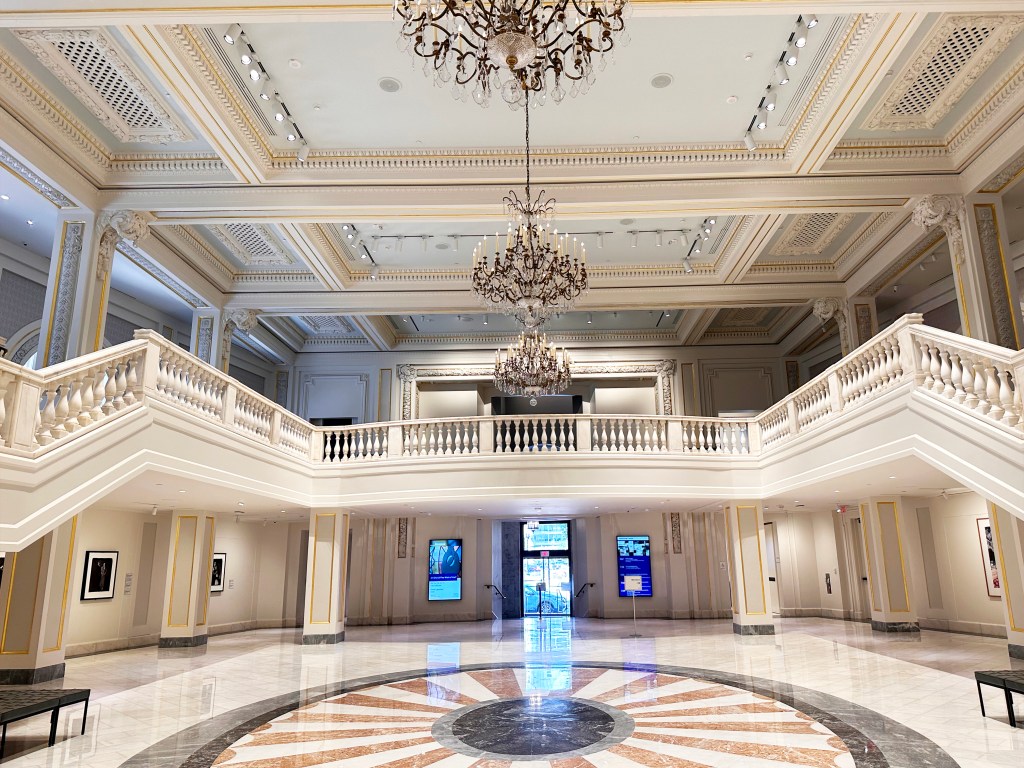
Growing up in New York, I’ve grown used to sprawling museums where art sometimes gets lost in the sheer scale of the space. That’s why the National Museum of Women in the Arts in Washington D.C. caught me off guard. Hidden away from the tourist-packed National Mall, this former Masonic Temple turned museum feels more like discovering a secret art haven.
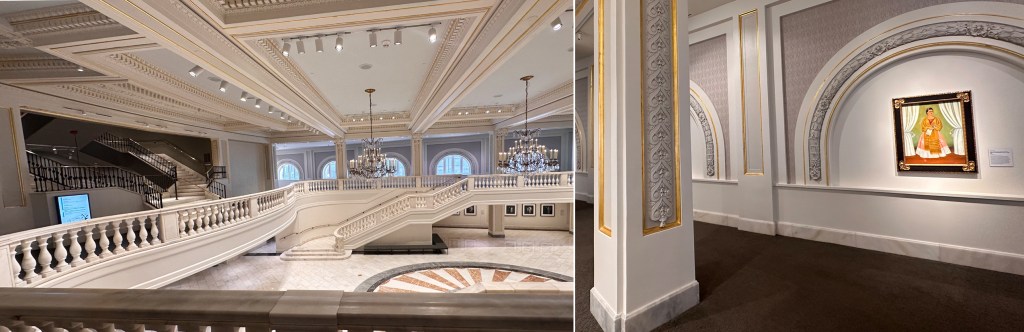
The Renaissance Revival building’s grand lobby and twin staircases mark just the beginning of this space’s transformation. Built as a Masonic Temple in 1908 when women couldn’t join its ranks, the building now houses one of the most significant collections of women artists’ works. The recent renovation project didn’t just modernize the space – it turned a symbol of exclusion into an accessible art museum.
Moving between galleries, the layout creates natural viewing spaces that break from the usual museum traffic patterns. Instead of the long, crowded halls typical of larger museums, these compact rooms hold fewer pieces but offer clearer sight lines and better viewing angles. The restored windows bring in natural light that changes throughout the day, highlighting different aspects of each work.
The collection might be smaller than those I’m used to, but it’s purposeful. Frida Kahlo’s “Self-Portrait Dedicated to Leon Trotsky” – her only painting in D.C. – hits differently here than it might in a larger museum. Instead of being just another masterpiece in a vast collection, it stands as a powerful testament to a woman artist’s voice. This building’s evolution from a men-only Masonic Temple to the National Museum of Women in the Arts reflects this same spirit – a space that transforms limitations into opportunities for recognition.
New Worlds ; Woman to watch 2024
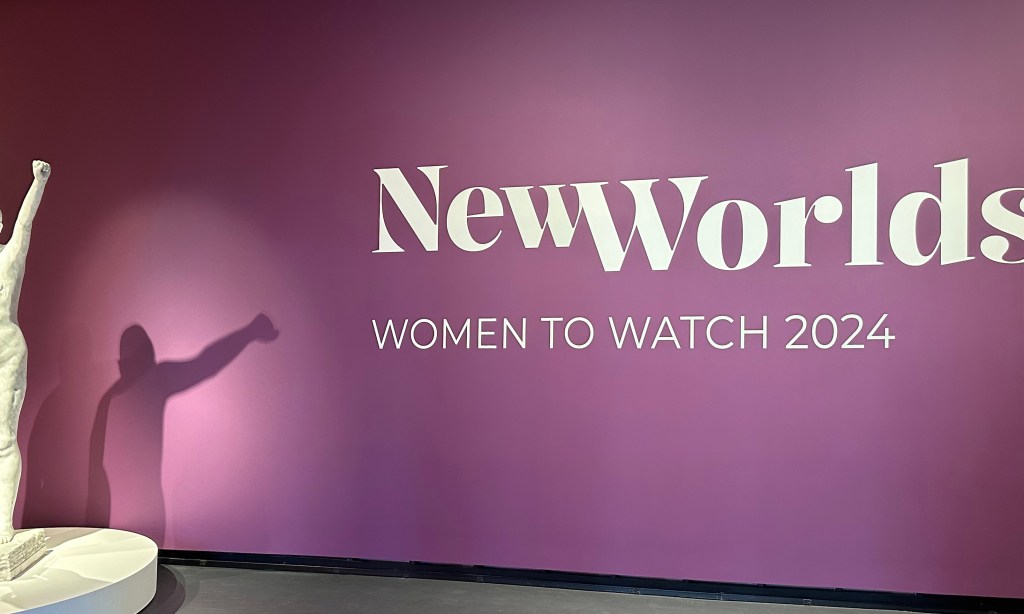
The exhibition title ‘New Worlds’ set expectations for forward-looking, progressive statements. Instead, what unfolded was a thoughtful examination of overlooked present realities and lingering past concerns. The contrast itself became a powerful curatorial statement.
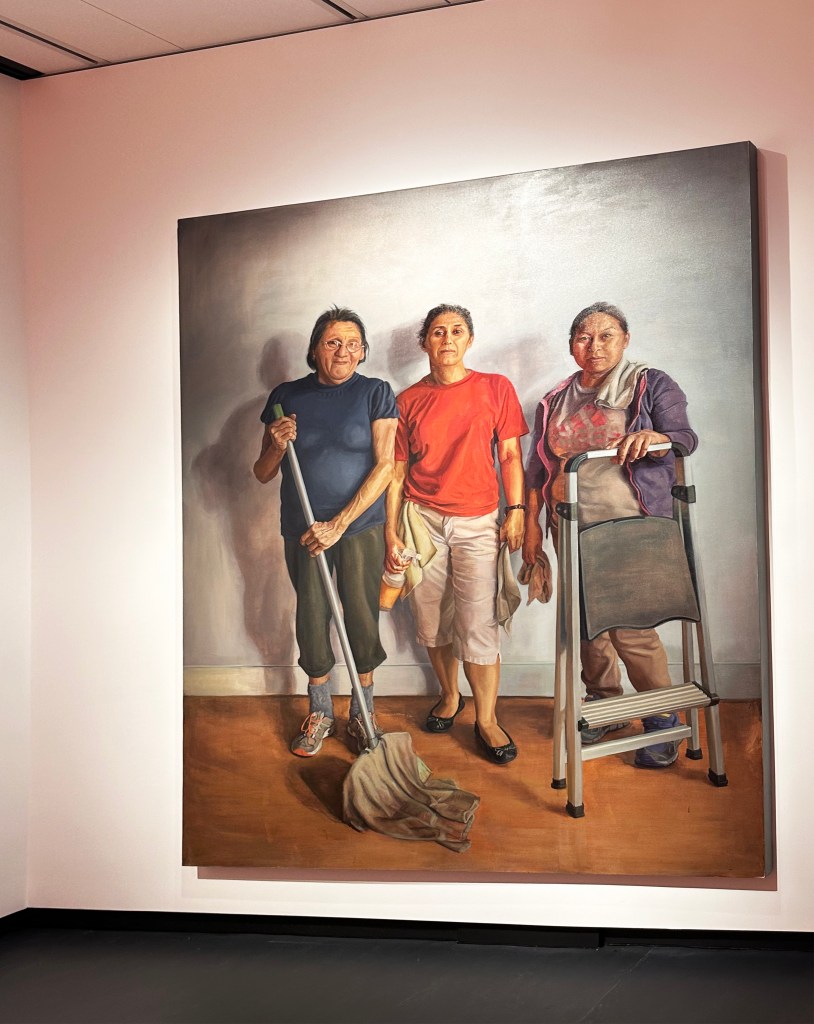
Arley Morales’s ‘una por una’ dominated an entire gallery wall. Three Latin American women stood life-sized, holding their cleaning implements – a mop, cloth, and ladder. The stark realism and sheer scale of the portraits transformed these essential workers from abstract pandemic-era terminology into an undeniable presence. Their direct gazes and commanding poses reclaimed dignity for labor often rendered invisible.
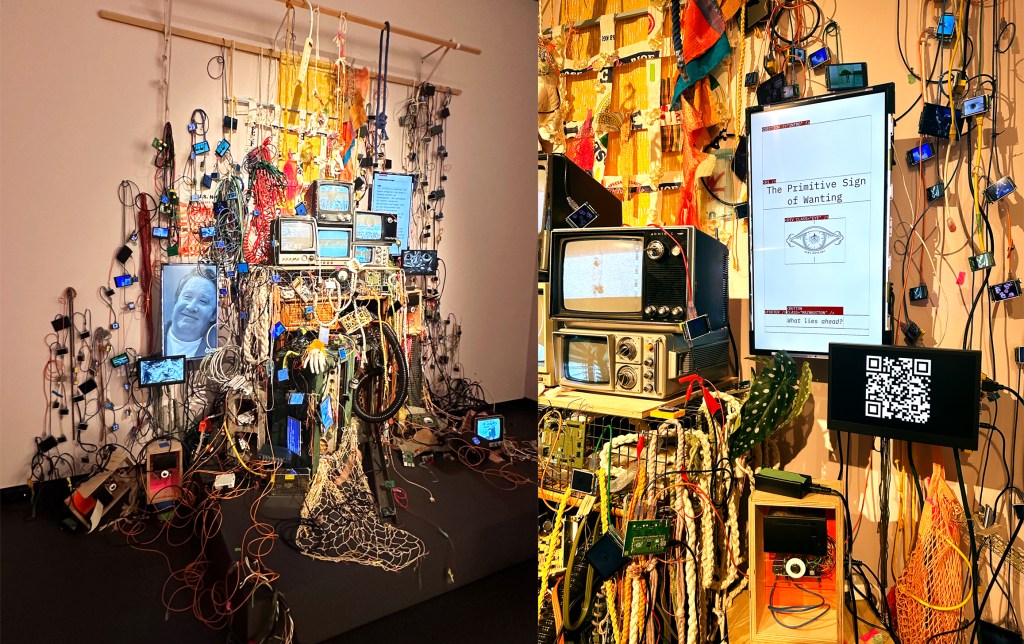
Across the gallery, ‘Primitive Signs of Wanting’ turned discarded technology into commentary on our consumption patterns. The installation’s powered-up vintage devices, all interconnected by visible wiring, served as artifacts of our recent past. As an early adopter who’d cycled through countless gadgets, seeing these obsolete machines reactivated made the environmental cost of constant upgrades impossible to ignore.
Hung Liu’s Portraits
On NMWA’s fourth floor, Hung Liu’s portraits line the walls like visual poetry. Even from across the gallery, these works command attention – not with bold colors or dramatic size, but through their distinctive artistic language. Each portrait combines traditional Asian elements with contemporary techniques in a way that feels both familiar and unexpectedly harmonious. The artist’s signature drips and washes transform historical photographs into ethereal visions, where soft pink backgrounds meet precise brushwork detailing traditional clothes and ornaments.
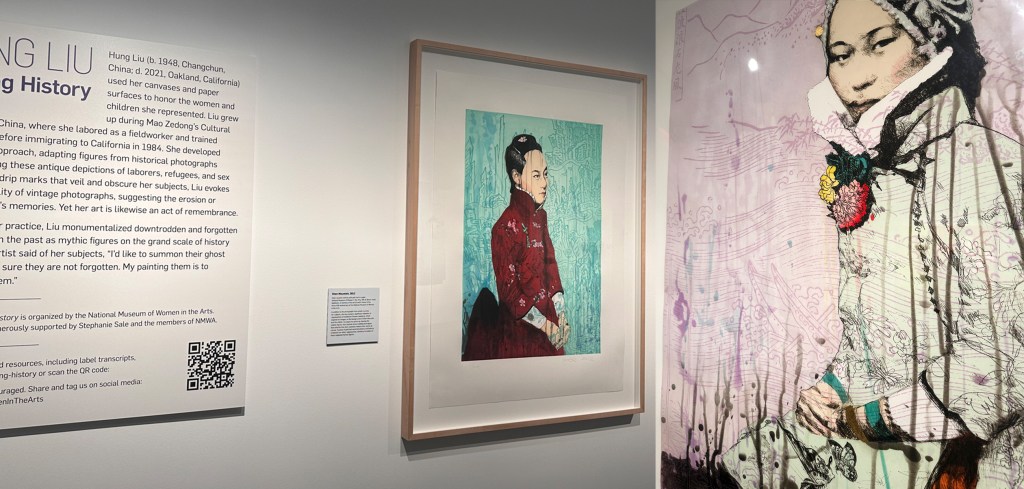
What draws me to these portraits is Liu’s masterful balance of dualities. Her Asian women subjects wear traditional dress, yet their gazes hold a thoroughly modern confidence. Through her distinctive wash technique and carefully placed splashes of color, Liu achieves something remarkable – her subjects exist simultaneously in past and present. It’s a delicate conversation between cultural heritage and contemporary identity, one that particularly resonates as an Asian viewer. These aren’t just artistic interpretations of historical photographs; they’re meditations on how feminine identity transcends time.
As I made my way back down those grand marble stairs, the museum’s purpose crystallized in my mind. While women artists have gained recognition in recent decades, their historical struggle for artistic expression spans centuries.
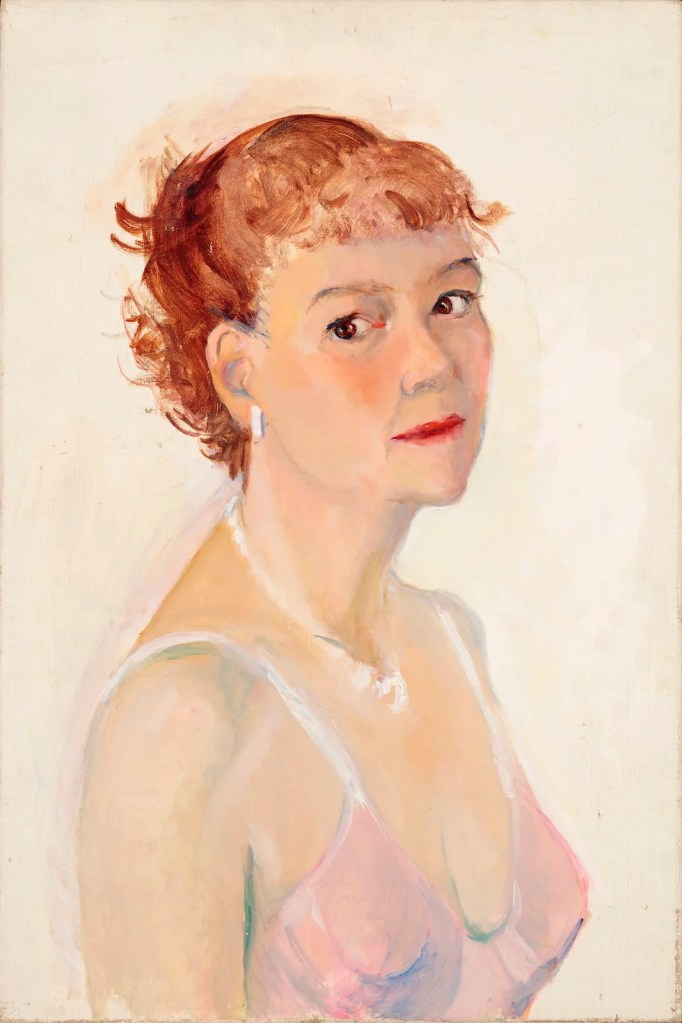
In a world where major museums still grapple with gender representation in their collections, NMWA quietly but persistently illuminates overlooked narratives in art history. Standing in these thoughtfully curated galleries, I couldn’t help but think of Josephine Hopper, whose own artistic identity merged into her husband Edward’s shadow. Had spaces like this existed earlier, perhaps her works – and those of countless other women artists – might still be with us today, telling their own distinct stories.


Leave a comment