
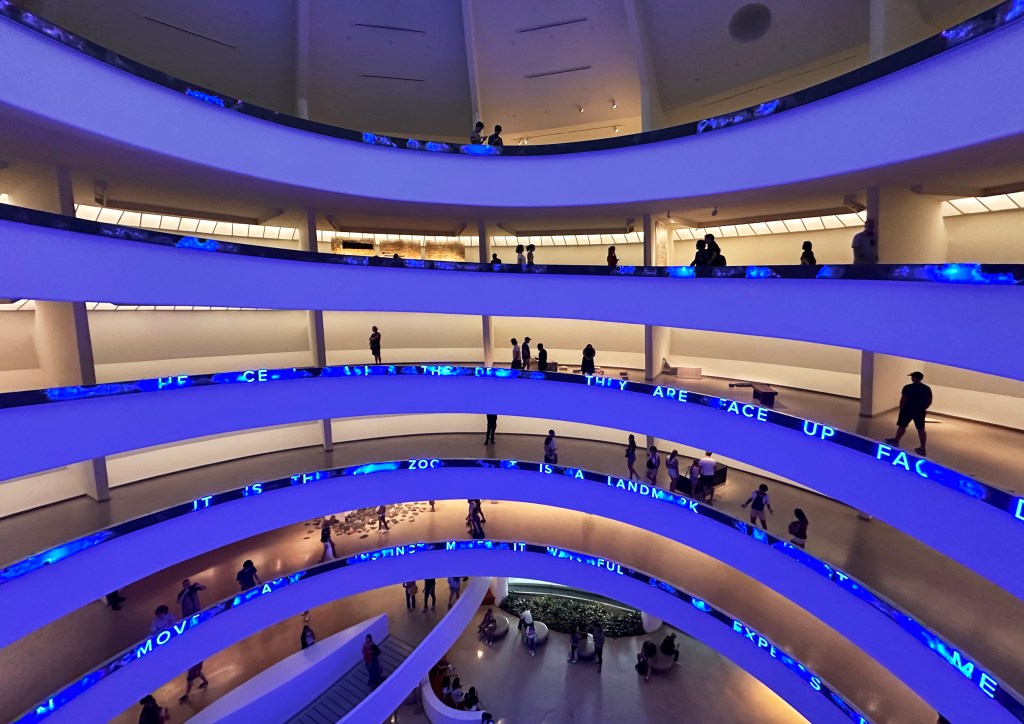
Spirals and Surprises: A Morning at the Guggenheim
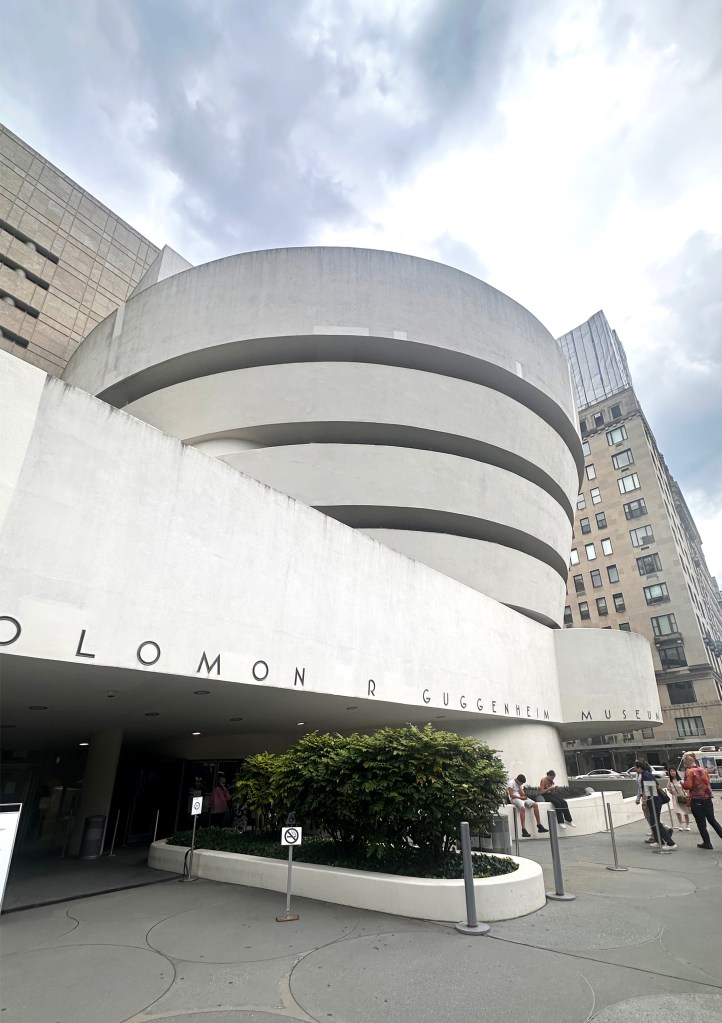
Living close to the Guggenheim means watching it change with New York’s seasons. From my regular walks through Central Park, I’ve seen this white spiral catch morning light, afternoon shadows, and evening glows. Its shape reminds me of something surprisingly simple – the continuous ribbon of apple peel my grandmother would create in one unbroken spiral. The building does more than just house art – it shapes how we experience it. Unlike traditional museums where you choose your path, the Guggenheim guides you in a gentle downward spiral from top to bottom.
Walking past on my way to class, I often notice how tourists stop to photograph the building itself, treating Wright’s architecture as another piece in their New York art collection.
Words in Motion: Jenny Holzer at the Guggenheim
The Guggenheim’s familiar spiral looks different this time. Jenny Holzer’s LED installations have turned my usual walk up Wright’s ramp into something new – a mesmerizing river of light and text flows through the rotunda, marking her first New York museum solo show in over 15 years.
Moving through the space feels like entering a conversation. Not the usual hushed museum exchanges, but an urgent dialogue spanning from government war documents to intimate poetry. A piece in cold blue light catches me – declassified military records about war crimes scroll past, each redacted line telling stories through its silences.
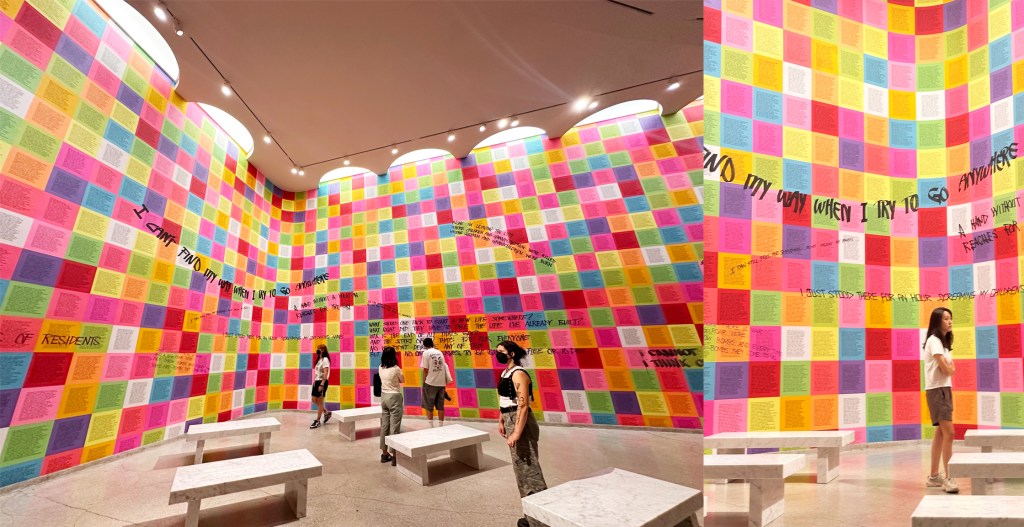
Holzer’s work demands both viewing and reading. Her texts aren’t just visual elements – each word carries weight, each phrase tells a story. The LED displays transform written thoughts into visual art, yet preserve their literary power. The scrolling military documents become both moving image and narrative, the censored lines as meaningful as painted brushstrokes. After studying text-based art in class, seeing Holzer’s work in person reveals why she pioneered this dual approach – creating art that engages both our visual and literary senses.
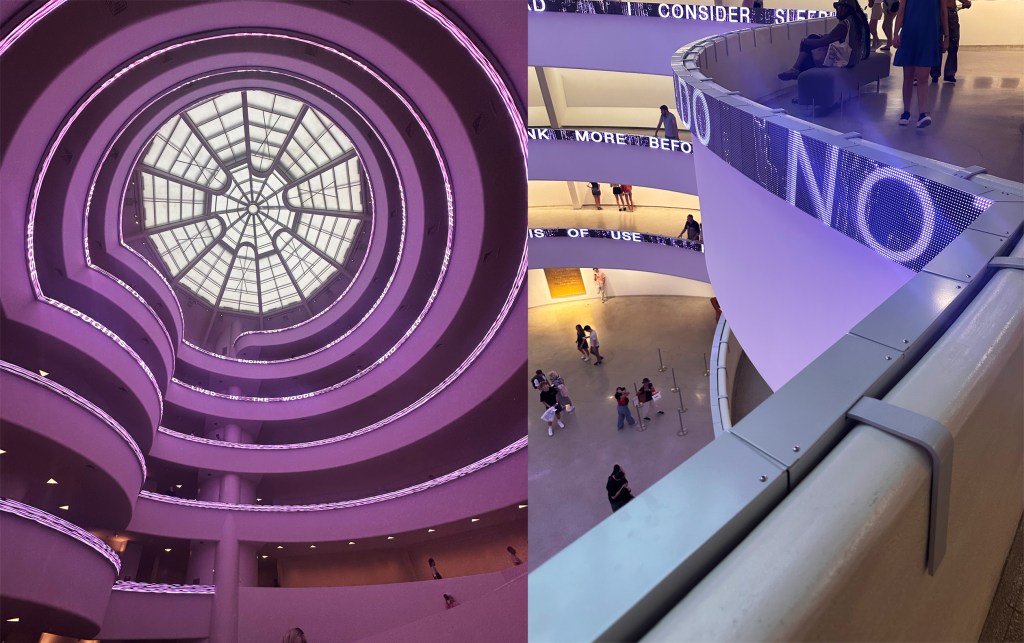
DEMENTED WORDS, stretching nearly 100 feet up the rotunda, turns Wright’s architecture into something entirely unexpected. The spiral I’ve walked so many times now pulses with new energy. Unlike traditional museum visits where I’d usually pause before each piece, Holzer’s work keeps me moving – stepping back to watch words cascade down the full height of the building, then moving closer to catch fragments of text, each change in position revealing new layers of meaning.


Leave a Reply