
Nordic Light: An Unexpected Discovery
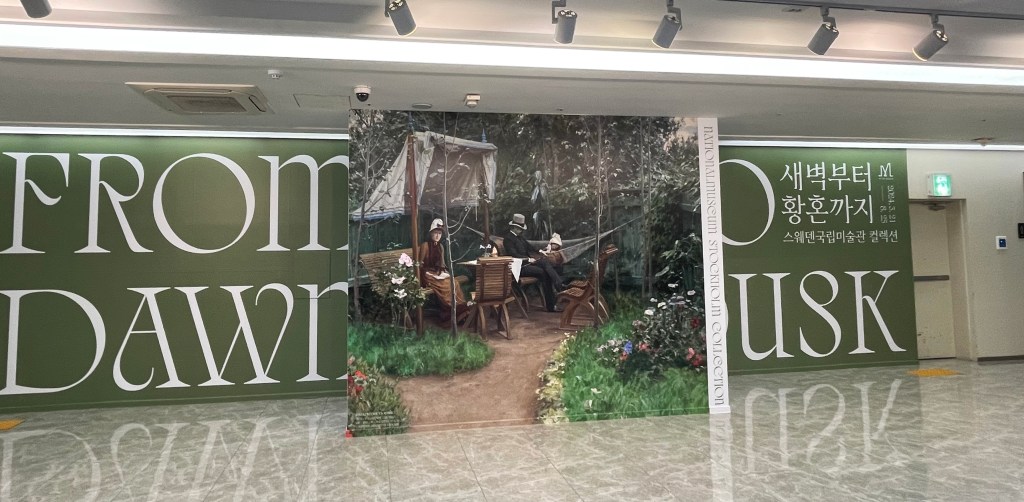
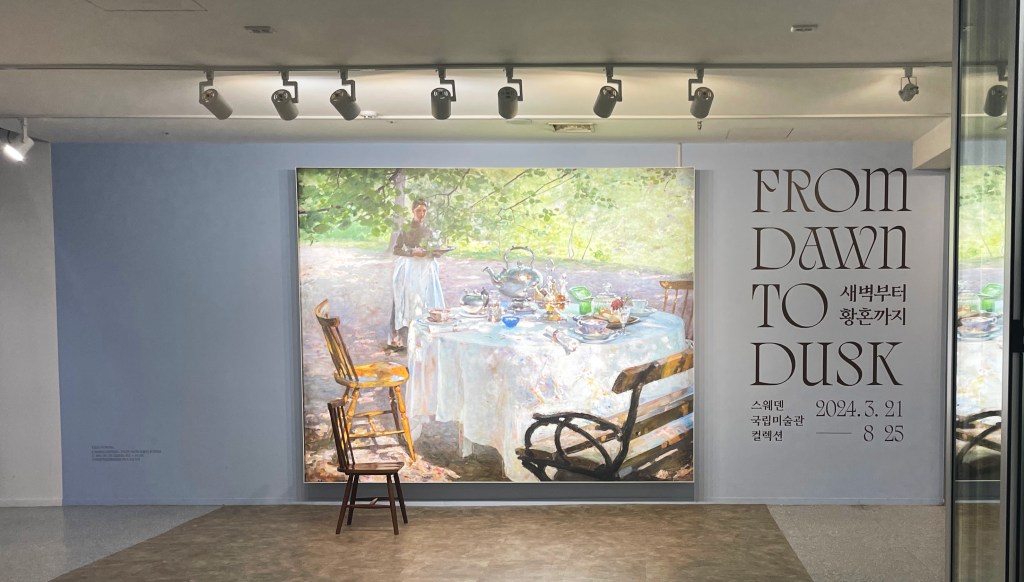
Last summer in Seoul, a poster caught my eye – ‘From Dawn to Dusk: Nordic Art Exhibition.’ Nordic art? Despite years of wandering through the Met and MoMA, surrounded by Monet’s impressionist strokes and Picasso’s bold forms, this term felt surprisingly unfamiliar. Curiosity led me to Seoul Arts Center on a humid afternoon, away from our planned family itinerary. There, Swedish landscapes merged impressionist techniques with something distinctly northern – a combination that expanded my neatly categorized understanding of Western art. These canvases revealed a whole artistic world that had somehow slipped through the cracks of my New York art education
From Dawn to Dusk: A Journey Through Nordic Light
The exhibition’s poetic title revealed itself as a clever metaphor for the evolution of Nordic art. ‘Dawn’ marked the late 19th century, when Nordic painters began breaking free from their academic traditions of historical and genre paintings. Influenced by French Impressionism, they discovered new ways to capture light and daily life, particularly scenes of labor and nature.
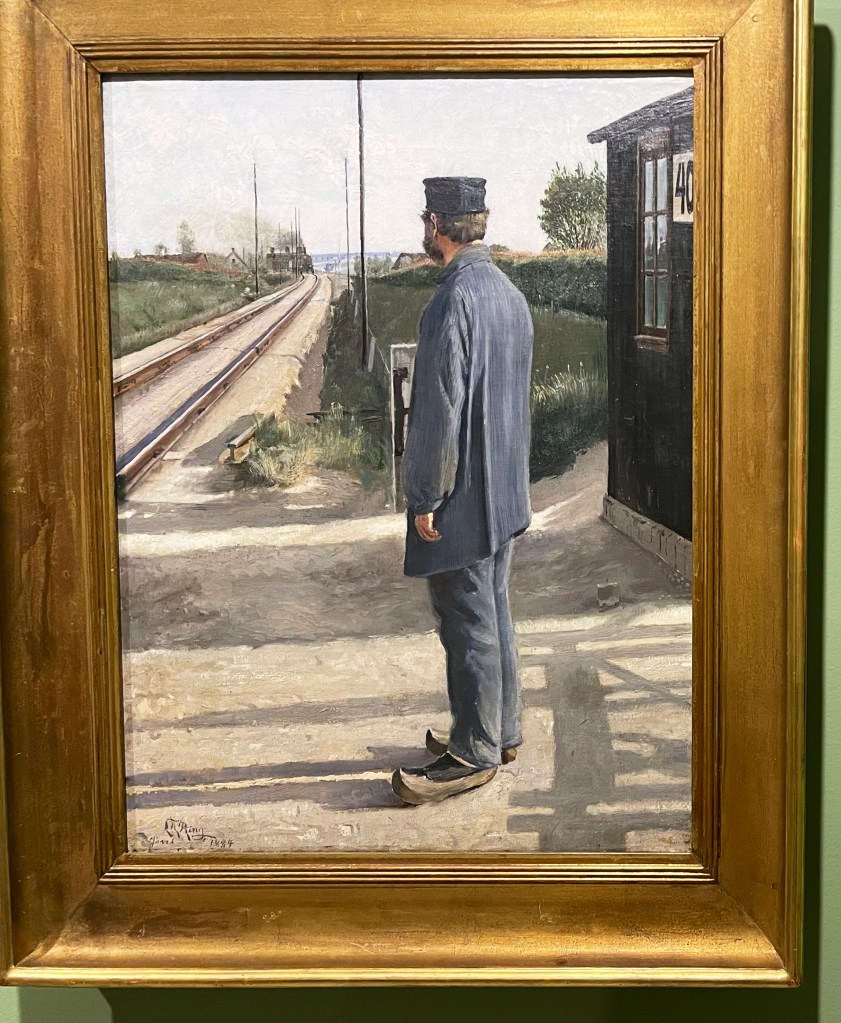
As the exhibition moved into the ‘Dusk’ period of the early 20th century, the paintings took on a more symbolic character. Here, Nordic artists projected psychological depth onto their landscapes, creating distinctive interpretations of the bright summer nights and mysterious blue light unique to their region. Hans Fredrik Gude’s ‘The Sandvik Fiord’ and Laurits Andersen Ring’s ‘The Lineman’ challenged my preconceptions.
Instead of the cold, harsh strokes I expected from northern artists, ttheir works revealed a warm sensitivity and mystical touch – a unique combination of technical precision and emotional warmth.
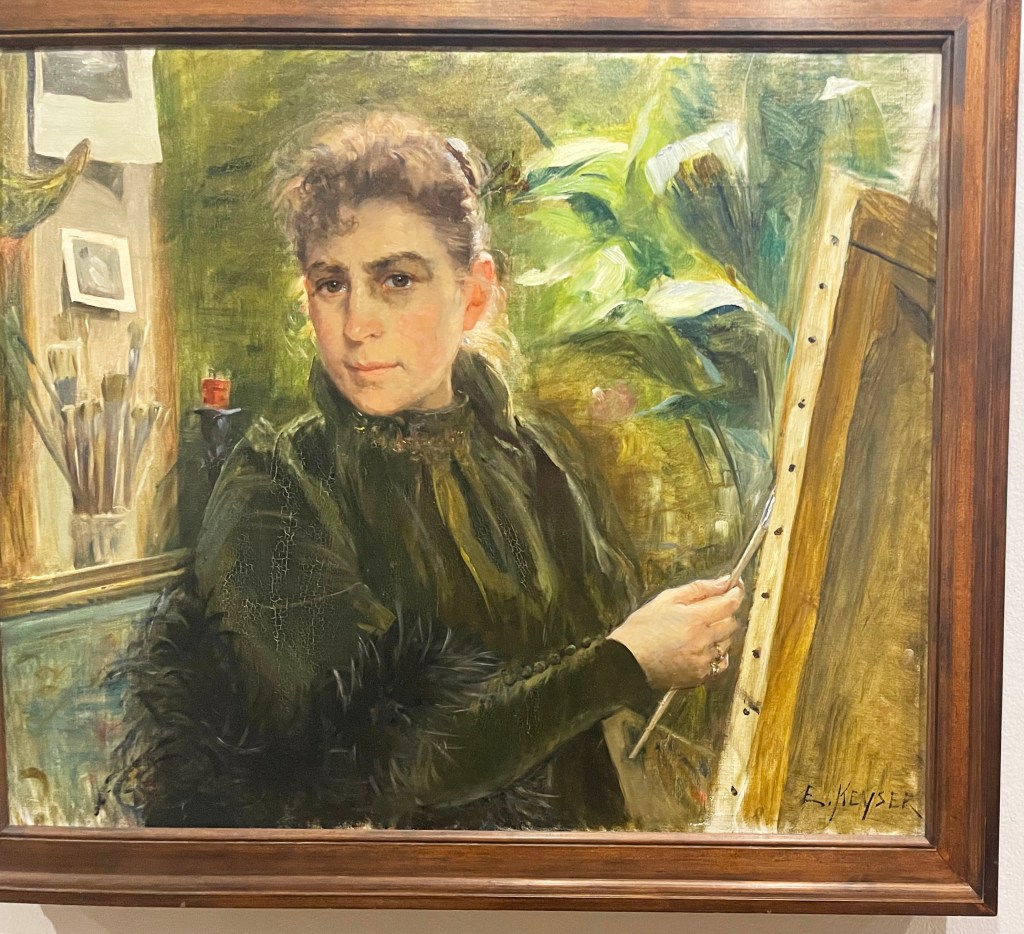
The exhibition’s thoughtful organization offered another surprise: a dedicated section celebrating Nordic women artists alongside the chronological display. While the late 19th century saw increasing recognition of women painters across Europe, this curatorial choice felt particularly meaningful. The exhibition also featured a distinct section showing how Nordic artists captured natural light in interior settings. This careful arrangement transformed my viewing experience from mere observation to a deeper appreciation of Nordic art’s distinct character and evolution.
Three Paintings That Stayed With Me
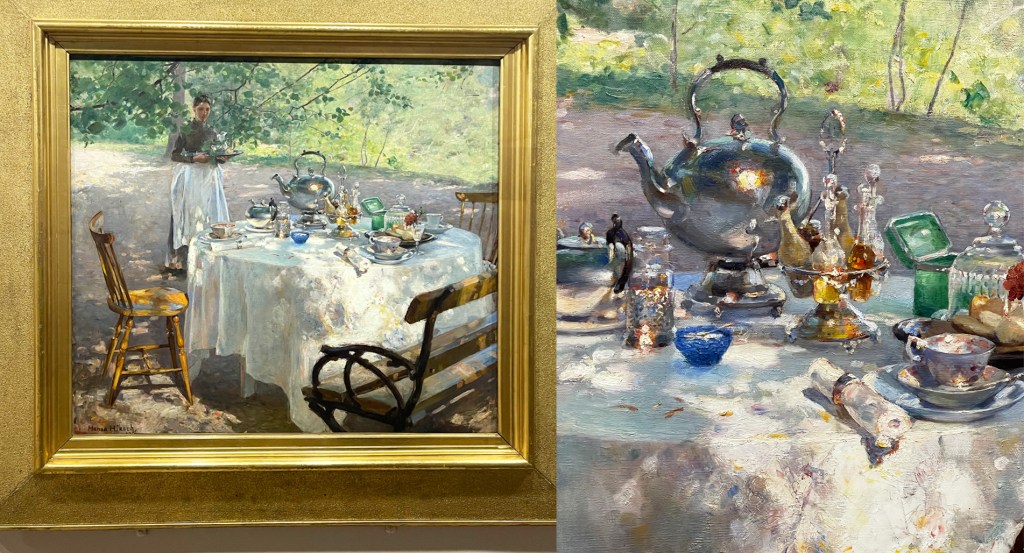
Hanna Pauli’s “Breakfast Time” caught my eye with its unusual composition. At first glance, it looks like a still life – a table set for breakfast outdoors. But the way Pauli frames the scene makes it feel larger than a typical still life. The morning light spills across the table and reaches into the garden beyond, blurring the line between indoor still life and outdoor landscape. Empty chairs around the table create a sense of anticipation, as if the diners have just stepped away for a moment. It’s this unique balance – between still life and landscape, between empty space and human presence – that makes the painting so captivating.
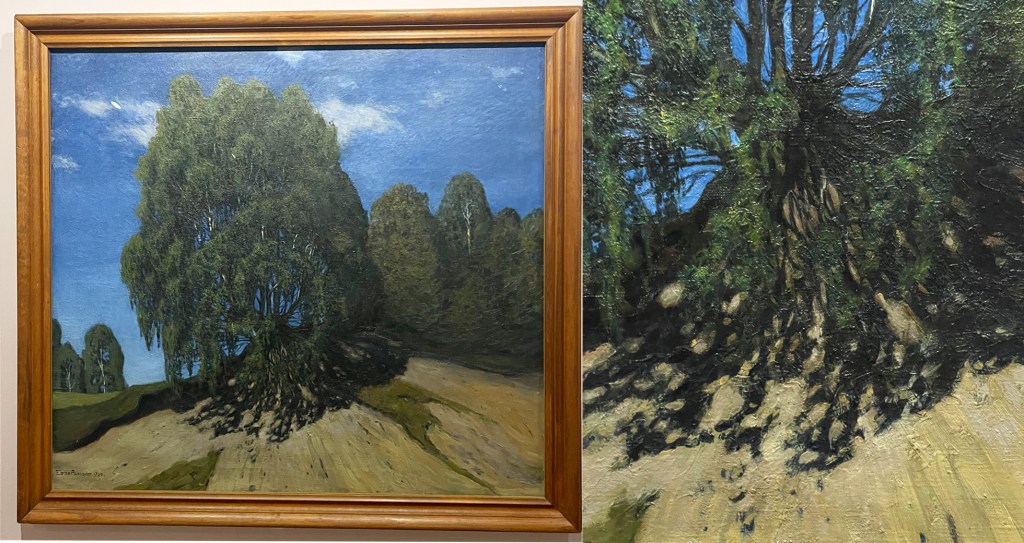
Ester Almqvist’s “The Weeping Birch” reminds me of early photography techniques that capture motion – like those vintage photographs of running horses or falling water. Her brushwork doesn’t just depict the birch tree; it captures it mid-movement. The thick strokes create a slight blur effect, similar to what you’d see in a photograph taken with a slower shutter speed. This technique gives the branches and leaves a remarkable sense of motion, as if Almqvist managed to freeze a single moment of the tree swaying in the wind. It’s a fascinating approach to making a static medium feel dynamic.
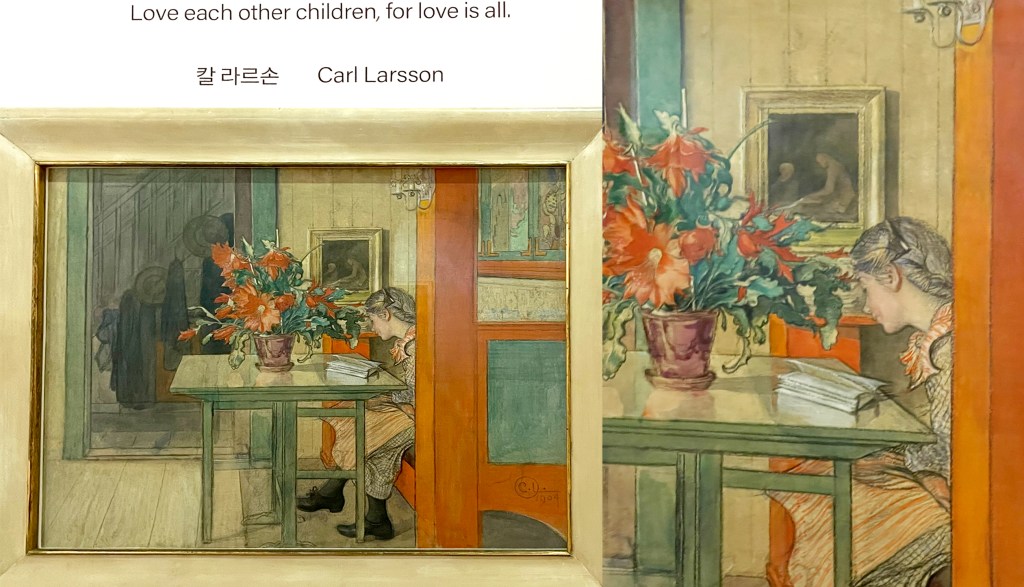
And then there was Carl Larsson’s “Lisbeth Reading.” Peeking through a doorway to see a girl lost in her book, I felt like I was discovering a secret moment. The red and green colors shouldn’t work together, but somehow they create the coziest atmosphere I’ve ever seen in a painting. Larsson has this way of outlining his figures that reminds me of the illustrations in my favorite childhood books, but more sophisticated. It’s the kind of painting that makes you want to step inside and spend an afternoon in that world.
Light: Beyond Illumination
This exhibition reshaped my understanding of light in art. I had always associated artistic light with the warm, vibrant outdoor scenes of French Impressionists. Yet here, Nordic artists used light differently – to amplify the vastness of nature and create moments of profound stillness. In their landscapes, light wasn’t just about warmth; it became a tool for expressing solitude and silence. Even more fascinating was their treatment of indoor light – how it filtered through windows to transform domestic spaces into intimate portraits of human emotion and family life. These artists showed me that light could do more than illuminate – it could tell stories of both solitude and connection.


Leave a Reply