
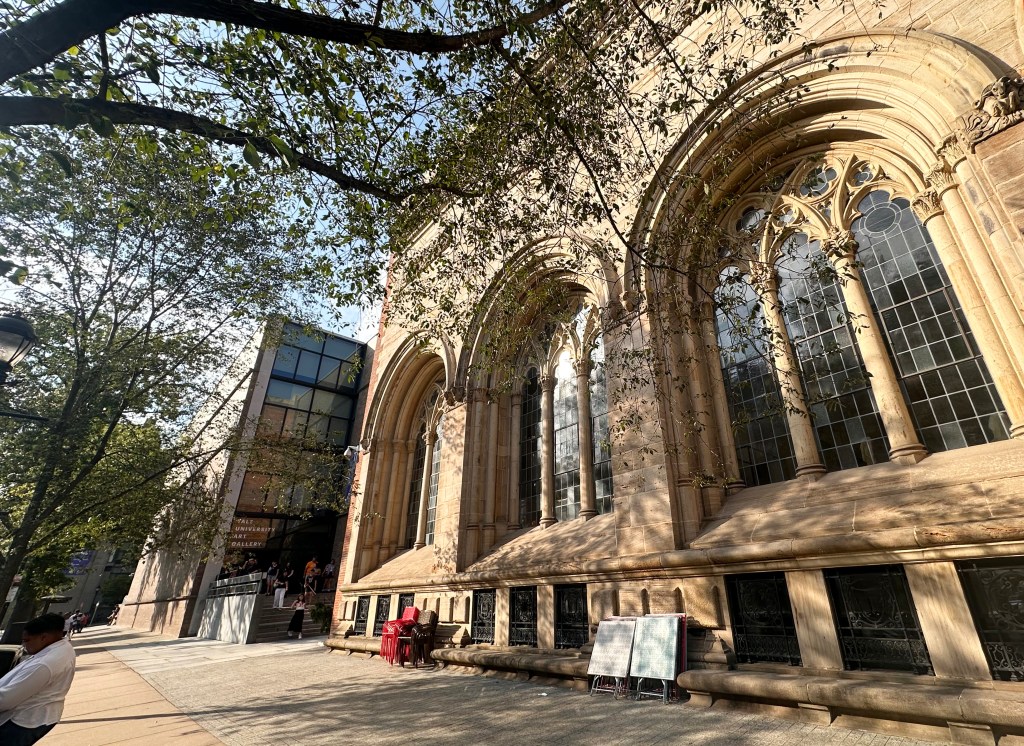
Hidden Treasures: Yale’s Art Museum
Research for Columbia’s “Age of Globalization” internship led me to an unexpected destination. After my only memory of university museums – a distant, boring sixth-grade trip to Cornell – Yale’s art museum didn’t exactly top my must-see list. The trip to New Haven seemed more obligation than opportunity.
Quiet Revelations
Walking through Yale’s marble halls changed everything I thought I knew about university museums. Unlike the rushed atmosphere of Manhattan’s major institutions, here was space to actually see art. No tourist crowds, no selfie sticks – just the luxury of time with world-class works. Between research meetings, each gallery offered new discoveries: ancient artifacts that spoke directly to our globalization research, modern masterpieces that added unexpected dimensions to our project.
What struck me most wasn’t just the quality of the collection, but how it transformed my understanding of what a museum could be. These weren’t just prestigious pieces stored away on a campus – this was carefully considered curation that made connections across centuries and continents. That sixth-grade assumption about university museums? Completely shattered.
Contemporary Dialogues: Art Beyond Time
Yale’s galleries strike a perfect balance – spacious enough for art to breathe, intimate enough for real connection. My research visit revealed three distinct moments that changed how I think about museum spaces.
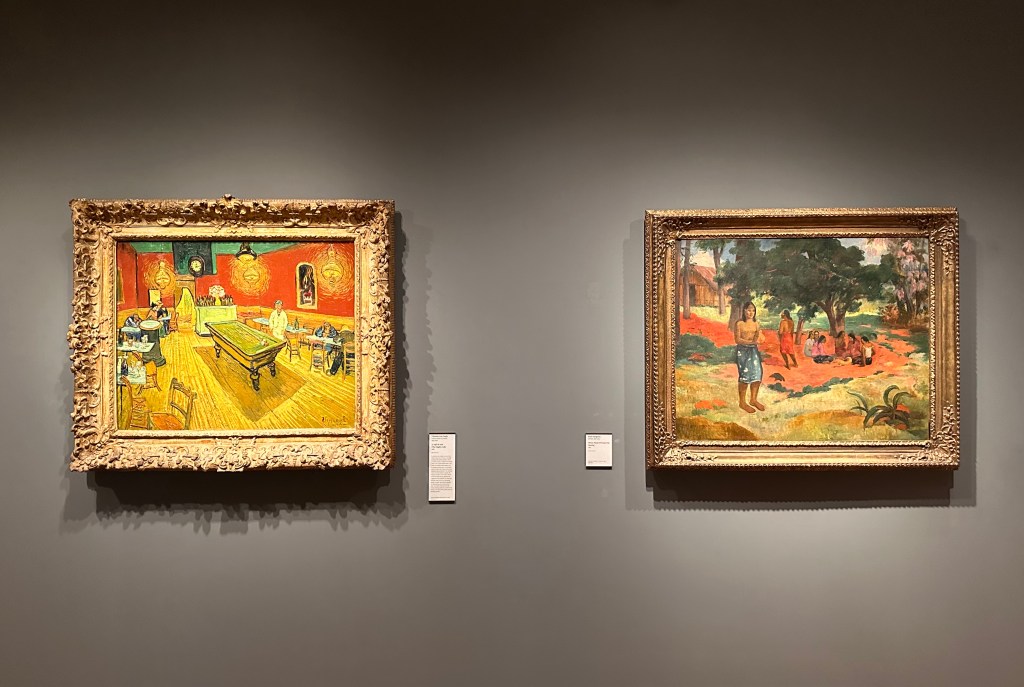
Past and Present Light : The Impressionist gallery sets up an unexpected conversation. Van Gogh’s “Night Café” pulses with urban unease – its distorted perspective and clash of sickly green walls against blood-red floors capturing a sleepless city night. Just steps away, Gauguin’s Tahitian scene offers tropical serenity, women in conversation (“Parau Parau”) surrounded by rich, warm colors. Having just studied these artists’ turbulent friendship in Arles for my art history class, seeing their works in such peaceful proximity feels particularly poignant.
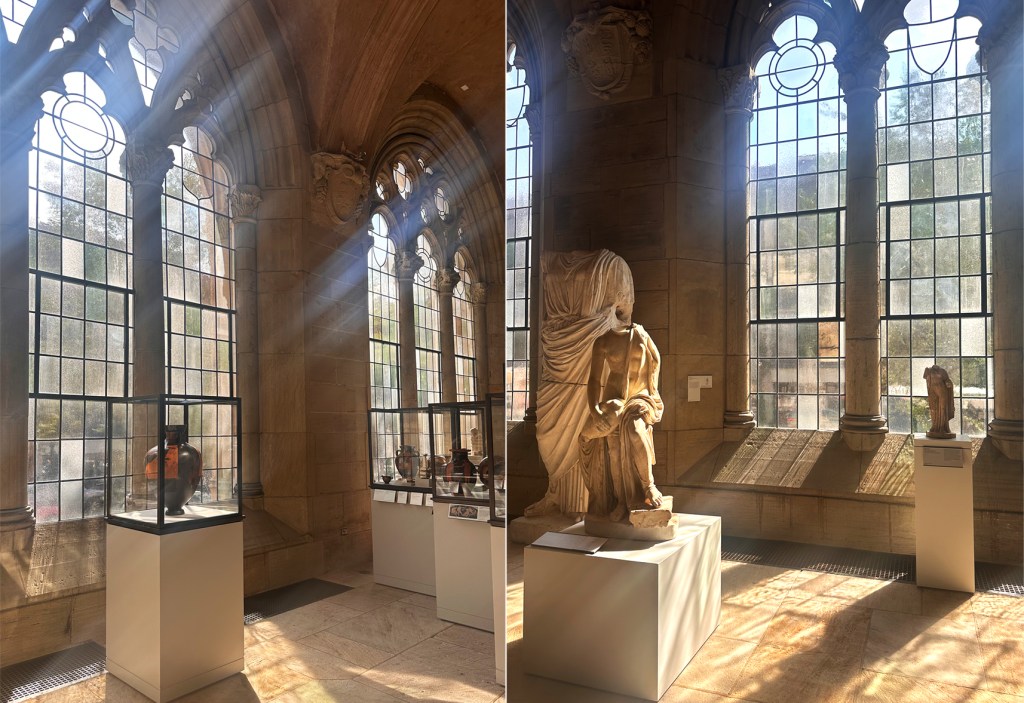
Natural light transforms the ancient art section in ways I’ve never seen before. Most museums keep these pieces in careful darkness, but here, sunbeams travel across Mediterranean amphoras and American artifacts throughout the day. The shifting natural light reveals subtle details in the clay and stone – surface textures that artificial lighting often flattens out.
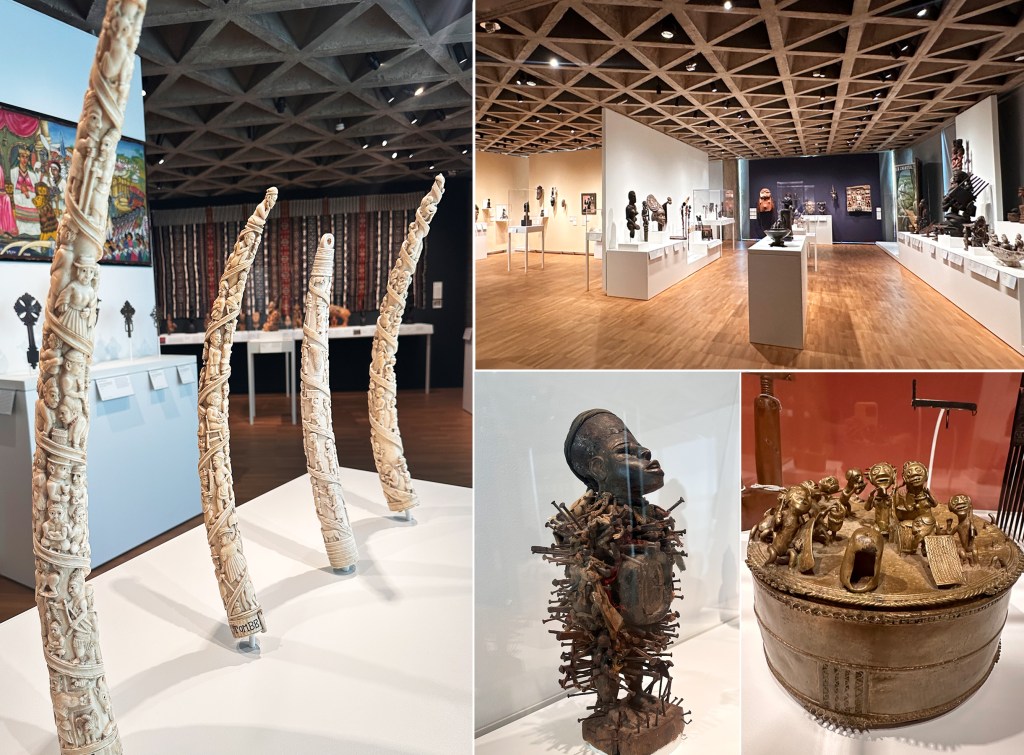
Breaking Boundaries : The African gallery challenges what I’d learned about traditional museum displays. Instead of isolating ancient pieces, the curators place contemporary African works alongside historical artifacts. This choice reveals artistic traditions as living, breathing practices rather than relics of the past. As someone studying how museums frame cultural narratives, this approach offers a valuable lesson in how presentation shapes understanding.
 Gallery Tales: Monica Yoon Art Journey
Leave a comment