
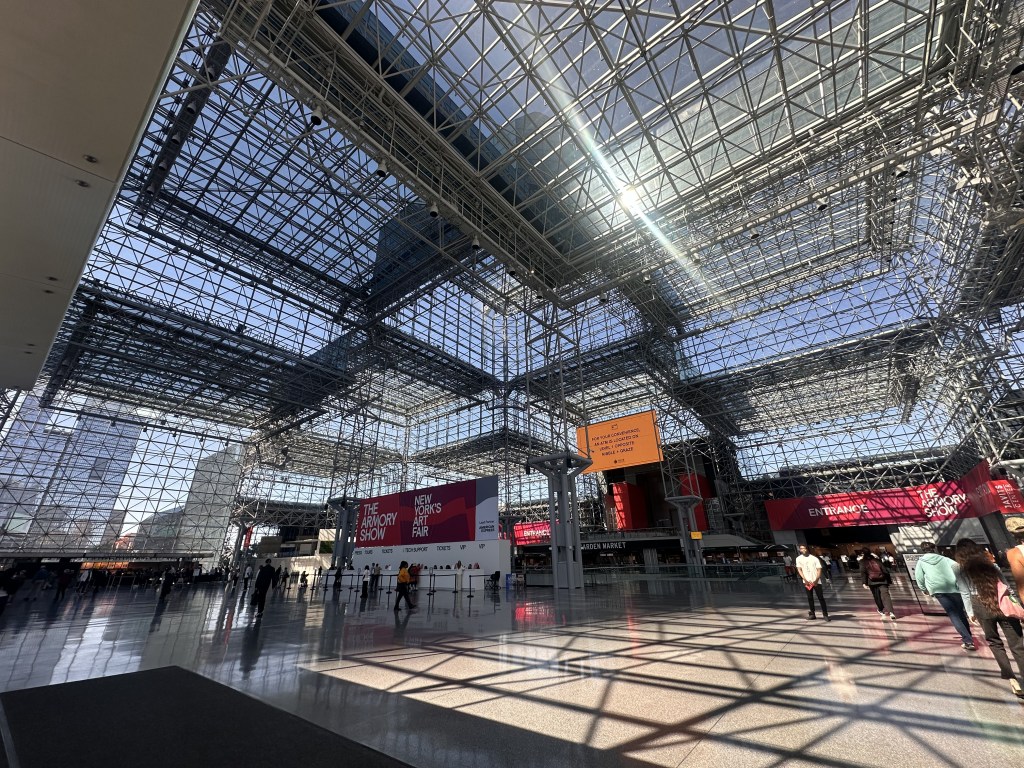
Market Forces: A Morning at The Armory Show 2024
The Shed’s soaring glass walls frame this year’s Armory Show differently from its usual venue. Fall sunlight streams across the industrial space, illuminating booth after booth of contemporary works. As an art student used to hushing museum galleries, the energy here catches me off guard – art dealers discuss prices openly, collectors huddle in conversation, and artists mingle with their audience, it’s a marketplace.
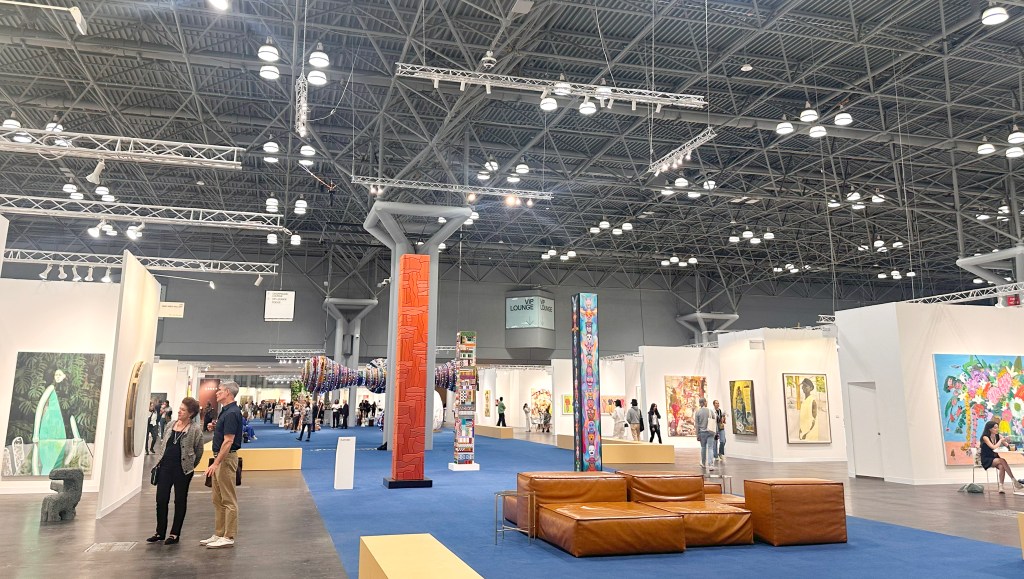
Just past the entrance, a Korean artist’s work draws my attention. A massive abstract piece transforms traditional calligraphy into three-dimensional space – the single brushstroke curves and loops like a Möbius strip, defying gravity. Watching collectors and students alike circle the piece throughout the day offers a unique perspective on how art values shift between creative and commercial spaces.
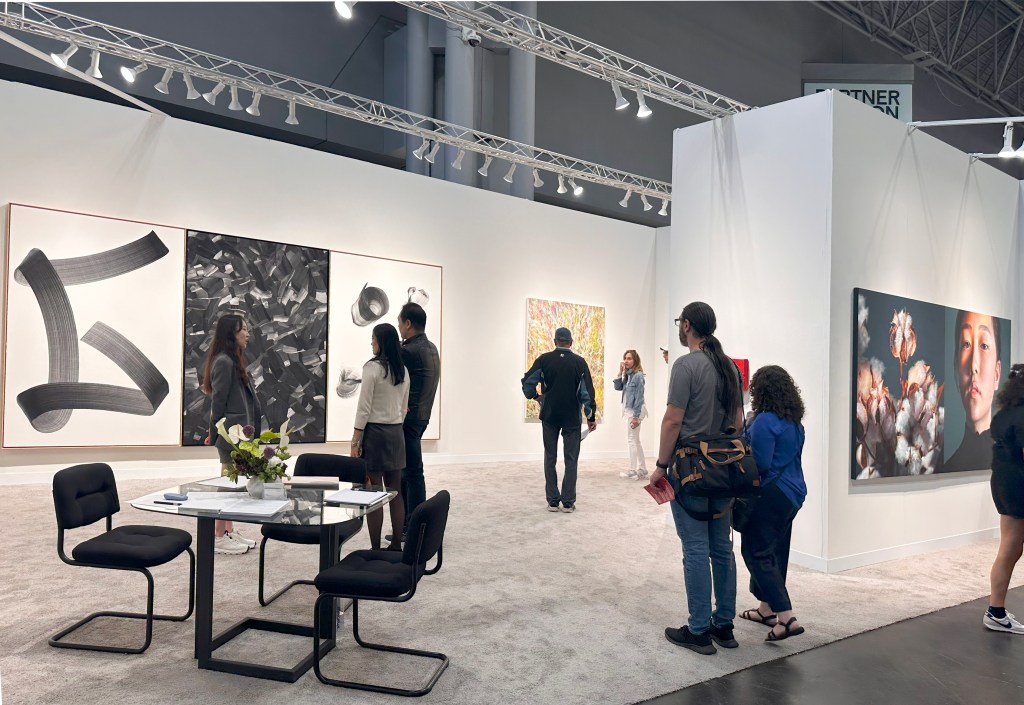
Moving through the show brings constant contrasts. In one booth, I overhear a critique between students about technique and concept, while in the next, a gallery owner discusses investment potential with clients. Each artwork here lives two lives – one in the realm of artistic innovation, another in the market’s reality. The Shed’s vast space holds these contradictions perfectly, its raw industrial framework hosting both art’s creative spirit and its commercial pulse.
Material Stories: Notable Moments
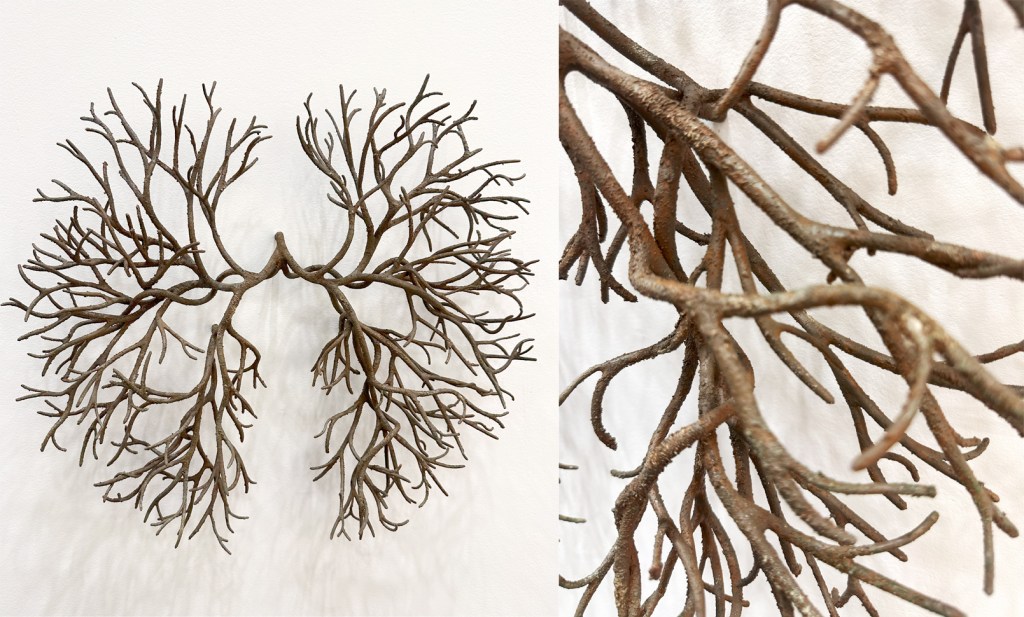
At Templon Gallery, children’s silhouettes lined the wall – simple turned backs that held more presence than any facial expression could. Nearby, tree branches twisted into the form of human lungs.
My anatomy studies from figure drawing class gave me a new appreciation for how the natural branching patterns mirrored our body’s airways.
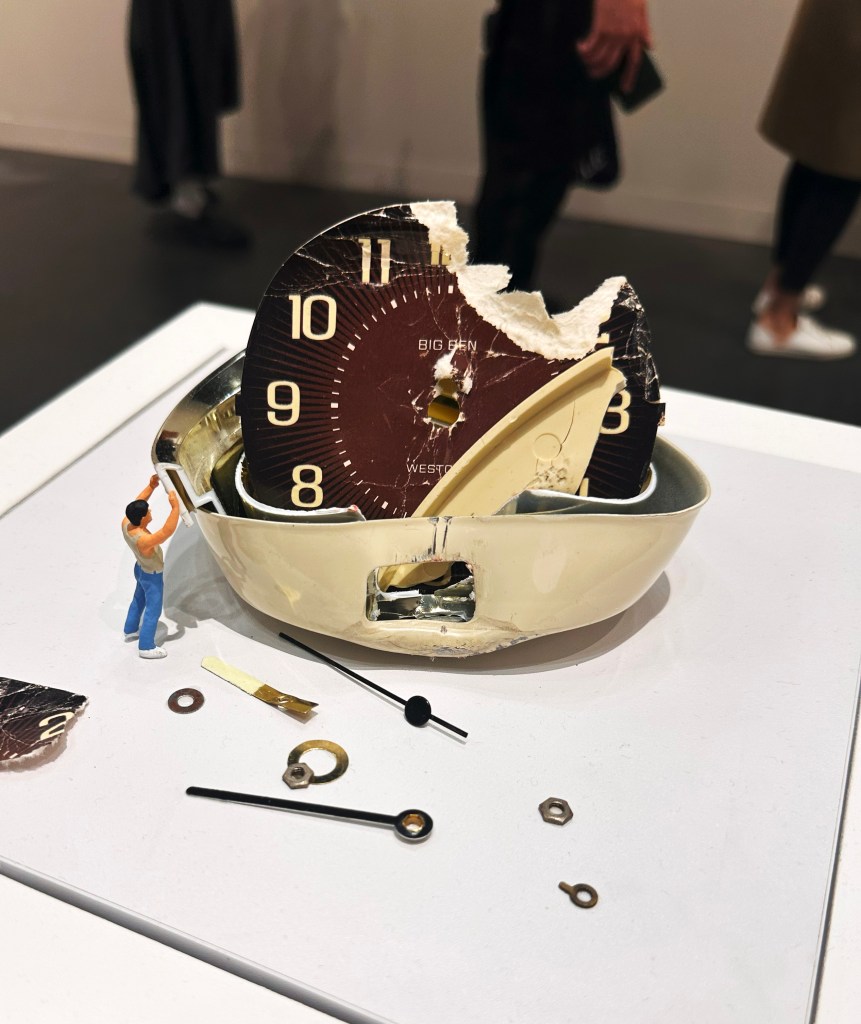
In another corner, miniature figures, no taller than a finger, created entire worlds among everyday objects. Each scene revealed new details as I leaned in closer – tiny books scattered across a shelf, microscopic coffee cups on windowsills. The scale made these ordinary moments feel like discovered secrets.
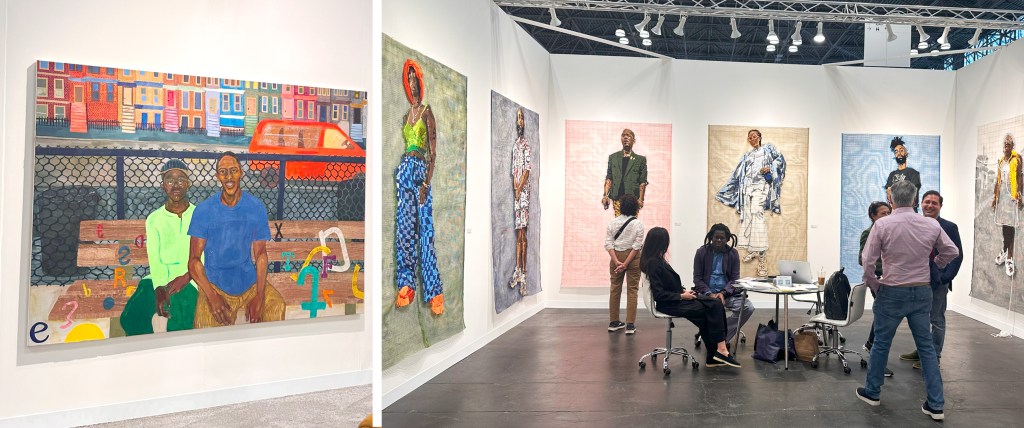
Several galleries featured works by African American artists, their distinctive styles reminiscent of Henry Taylor’s bold approach. The strong presence of these works reflected recent changes in gallery representations.
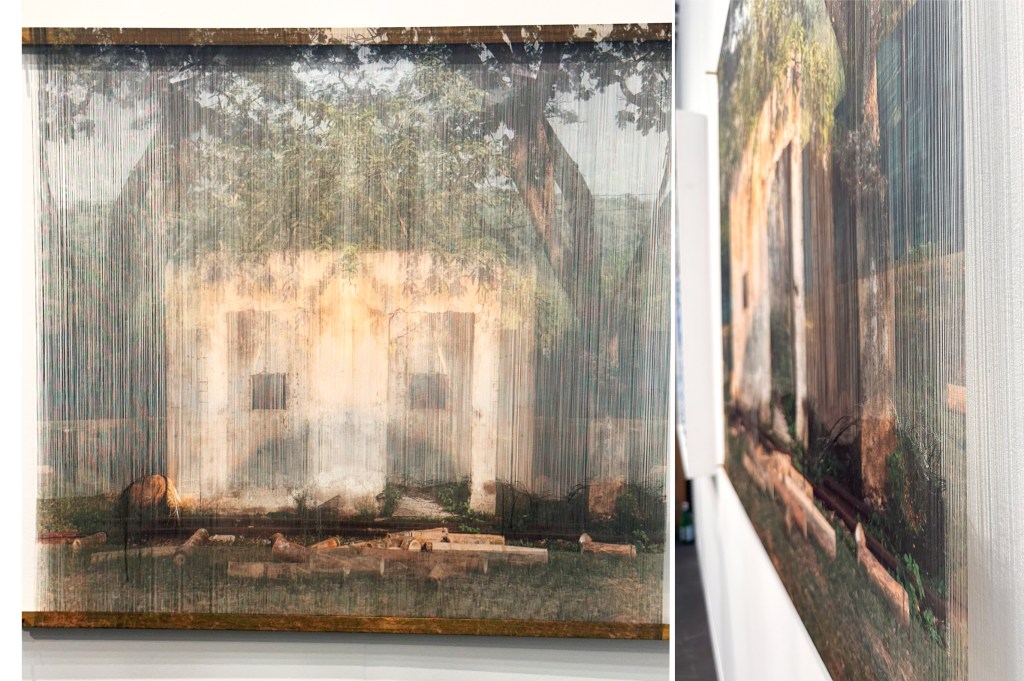
Reyla Cardenas’s installation played with unexpected materials – polyester silk partially unwoven to create transparent layers, anchored by wood and bronze elements. The contrast between floating fabric and solid forms showed how simple materials could transform space. As someone exploring mixed media in class, I found myself studying how the unwoven threads achieved their ethereal effect.


Leave a Reply